
On Wednesday, December 17, 2025, Ali Mahir Başarır—a deputy chair of the main opposition Republican People’s Party (CHP)—posted a blunt reminder of what many Turks still call “the week of theft and corruption.”
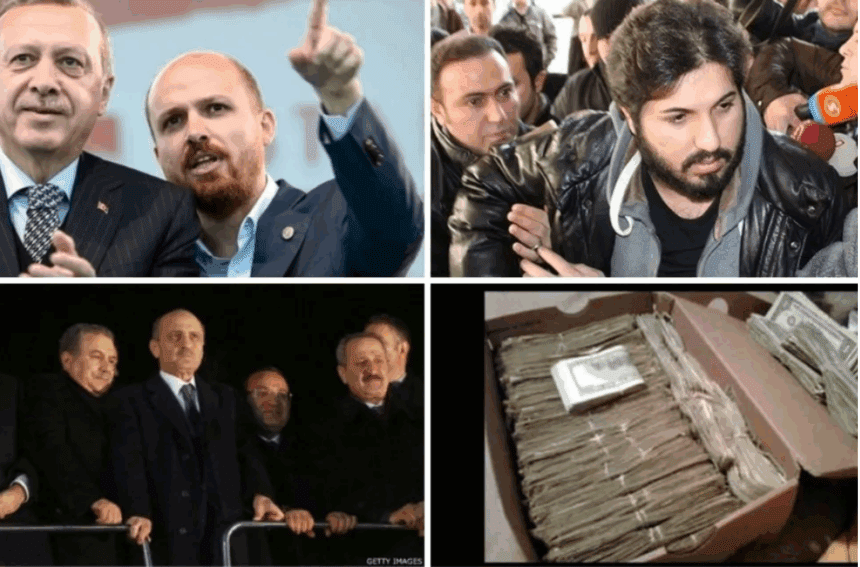
It was a deliberately loaded reference to December 17, 2013, when Turkish police launched predawn raids in İstanbul that rocked the ruling Justice and Development Party (AKP) and the government led by then–prime minister Recep Tayyip Erdoğan. Prosecutors detained dozens of suspects—among them the sons of three ministers, senior public officials, and business figures widely seen as close to the government. Within hours, the story had acquired images that would prove politically indelible: open safes stacked with banknotes, and shoeboxes filled with cash photographed as police evidence.
Twelve years later, Başarır’s message was not nostalgia. It was accusation in shorthand—aimed at a state that, in his party’s view, buried one corruption investigation and is now presenting another wave of probes as “clean hands,” this time directed at the opposition.
A raid that became a political symbol
The 2013 operation grew out of an anti-corruption investigation into allegations of bribery, tender rigging, and influence trading—the kind of claims that cut straight into Turkey’s construction-driven political economy, where permits, zoning decisions, and public contracts can make or break fortunes.
What fixed the scandal in public memory were not technical legal files but the visuals. Photographs circulated showing cash stacked in safes in the home of a minister’s son. Police also seized $4.5 million stuffed into shoeboxes at the home of Süleyman Aslan, the then-head of state lender Halkbank. The shoeboxes became both a literal piece of evidence and a cultural artifact—so instantly understood that protesters later dumped empty shoeboxes outside bank branches as a taunt, a meme before memes had fully conquered Turkish politics.
The investigation’s most internationally famous name was Reza Zarrab, an Iranian-Turkish gold trader who later became central to U.S. court proceedings over allegations that Iran moved money through trade schemes designed to evade U.S. sanctions. Years after the İstanbul raids, the case spilled into U.S.-Turkey relations: Halkbank executive Mehmet Hakan Atilla was convicted in New York and sentenced to 32 months in prison in a sanctions-evasion case that strained ties between Ankara and Washington and kept the shadow of 2013 alive far beyond Turkey’s borders.
If it had ended as a classic graft scandal…
In another political system, a scandal of that size might have led to resignations, trials, and reforms—an institutional immune response. In Turkey, some resignations did come, but the larger ending was different: the investigation itself became the target.
Rights groups warned at the time that the government’s first reflex was not to let prosecutors complete their work but to move against the police and officials tied to the probe. What followed was a rapid campaign of reassignments in the police and judiciary, and a political counterattack that framed the corruption file not as law enforcement but as an attempted political takedown.
By 2014, newly assigned prosecutors dropped corruption cases against dozens of suspects. Later that year, Turkey’s top judicial body suspended prosecutors linked to the investigations. The message was clear: the raids were no longer treated as a corruption story; they were treated as a struggle over state power—and who would control the institutions tasked with oversight.
The Gülen movement label—and the birth of a purge logic
After December 2013, Erdoğan’s government cast the scandal as a political assault by the Gülen movement, a faith-based network inspired by Muslim scholar Fethullah Gülen, who passed away in the United States in 2024.
That framing mattered because it didn’t merely rebut the allegations; it redefined them. Under this logic, the corruption files were not evidence of wrongdoing but evidence of conspiracy. And once a corruption probe is treated as an attack on the state, the institutions that produced the probe—police units, prosecutors, judges, journalists—can be treated as enemies.
In that way, a graft investigation became a state-building event. The response to the scandal helped accelerate a deeper consolidation of control over courts, police, and media, leaving fewer effective checks on executive power. For critics, the long-term consequence was not simply that the 2013 allegations went unresolved, but that the country’s ability to investigate future wrongdoing was structurally weakened.
Why December 17 matters again—right now
This is why Başarır’s “shoebox” reminder is still politically combustible. In today’s Turkey, Erdoğan’s government has spent the past year pursuing a sweeping set of corruption investigations targeting officials in CHP-run municipalities, describing an “octopus” network of corruption with tentacles across local administrations. Government-aligned commentators argue the investigations show the state is finally enforcing accountability at scale. Opposition figures counter that the judiciary is being used to damage Erdoğan’s strongest rivals ahead of electoral contests and political succession battles.
Pro-government media have also amplified the alleged magnitude of municipal corruption. Daily Sabah, a pro-government newspaper, quoted İstanbul Chief Public Prosecutor Akın Gürlek as calling one probe “the biggest corruption case of the century.” The phrase itself became part of the political theater: to supporters, it signaled overdue reckoning; to critics, it signaled prosecutorial branding—an effort to win the narrative war before the courts finish their work.
In this context, the “shoebox” reference functions as a compact political argument: the people who once destroyed an anti-corruption investigation are now selling another set of investigations as justice—using police power and court power against the opposition.
A turning point—and a mirror
December 17 has become less a date than a marker: a pivot point in modern Turkish governance. Erdoğan branded the 2013 corruption scandal a “judicial coup,” and in doing so turned it into a legitimizing story for reshaping the state. The state that emerged, critics argue, was designed to prevent a repeat of December 2013 against Erdoğan—while leaving other political actors perpetually vulnerable.
But the story also contains an uncomfortable mirror for the CHP.
The party regularly cites the December 17 corruption files as proof of AKP-era impunity, yet it has not turned the fate of the original investigators into a central cause—despite the fact that former İstanbul police chiefs tied to the probe were later convicted of attempting to overthrow the government and handed aggravated life sentences. That silence has fed an argument heard from some analysts: that parts of the opposition—at least at key moments—either joined or tolerated the ruling party’s campaign to discredit the 2013 graft probe, only to discover later that the same toolkit can be turned outward.
In this view, what the CHP faces today is political blowback: a party that did not fully defend the integrity of anti-corruption institutions a decade ago is now confronting corruption investigations from a state shaped by the discrediting of anti-corruption institutions.
The shoebox as shorthand for selective justice
The enduring power of the shoebox image is that it requires no legal footnotes. It bypasses the complexity of indictments, prosecutors, jurisdiction, and procedure—and lands directly on a moral claim: we all saw the money.
That is why Başarır revived it now, and why it still stings. Not because it conclusively proves guilt in a courtroom sense, but because it symbolizes a political transformation: from a system where a corruption probe could shake the government to a system where corruption probes can be channeled as instruments of power.
Turkey’s December 17 is no longer just a memory of alleged graft. It is a reminder of how a corruption scandal can become a constitutional moment—one that redraws the boundary between law enforcement and politics, and leaves a country arguing, twelve years later, not only about who stole, but about who gets to accuse whom—and with what kind of state behind them.