
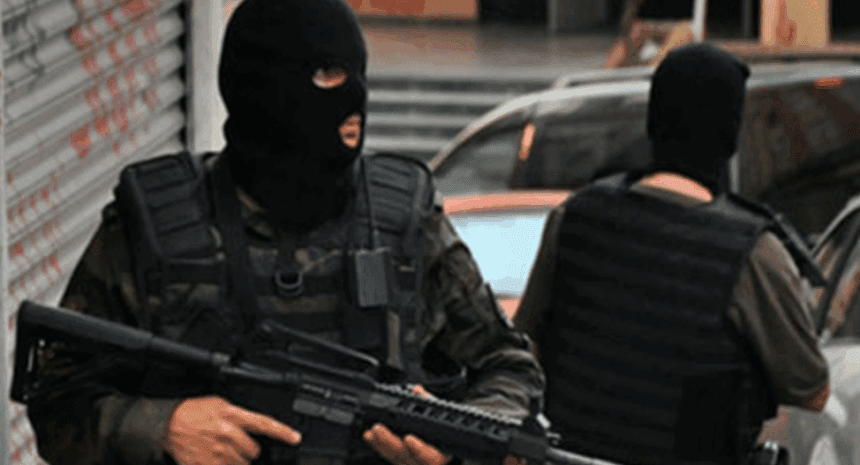
Turkish security forces detained 357 people suspected of links to the so-called Islamic State (Daesh/ISIL/ISIS) in coordinated raids across 21 provinces on Tuesday, Interior Minister Ali Yerlikaya said, expanding a crackdown that followed a deadly operation in Yalova that turned into an hours-long gun battle and left three police officers dead.
Yerlikaya said the Tuesday raids targeted suspected ISIL networks in provinces including İstanbul, Ankara, and Yalova. Media reports tied to the operation said İstanbul detentions alone involved multiple addresses searched as part of a wider counterterror sweep.
The Yalova clash
The escalation was triggered by a predawn raid in Yalova on Monday, where suspects allegedly opened fire on police during an attempt to storm a residence. Authorities said six suspected ISIL militants were killed, while eight police officers and a neighborhood night watchman were wounded. Yerlikaya said the six killed were Turkish citizens, and that five women and six children found with them were evacuated safely.
Justice Minister Yılmaz Tunç said prosecutors in Yalova opened an investigation and assigned five prosecutors to the case. President Recep Tayyip Erdoğan issued condolences for the officers killed.
Competing narratives—and a familiar reflex to control the story
Political reactions quickly pulled the incident into Turkey’s polarized narrative battlefield.
Nationalist Movement Party (MHP) leader Devlet Bahçeli, a key Erdoğan ally, described the clash as a “bloody provocation” and portrayed ISIL as a tool of “Zionist imperialist” forces—language that frames a jihadist threat through an external-conspiracy lens rather than focusing on domestic radicalization, security lapses, or operational failures.
From the opposition side, CHP deputy parliamentary group chair Murat Emir criticized a broadcast restriction imposed on reporting related to the operation, arguing the public should not be prevented from learning what happened while security personnel were under attack.
Meanwhile, Yerlikaya said 16 people were detained for what he called “provocative posts” about the Yalova incident—an approach critics often see as shifting attention from accountability questions (how the cell operated, whether it was being monitored, whether there were earlier warnings) to policing speech and shaping the narrative.
Why now: New Year threat warnings and ISIL’s long shadow in Turkey
Authorities have cited intelligence warnings about possible attacks around Christmas and New Year’s events as a driver of the recent operations. Turkey has endured major ISIL attacks over the past decade, most notoriously the January 1, 2017 Reina nightclub attack in İstanbul that killed 39 people.
Taken together, the Yalova shootout and the scale of Tuesday’s detentions underscore both realities at once: ISIL networks remain an active security concern, and Turkey’s instinct in such crises is not only to raid cells but also to manage information tightly, even as the political class competes to pin blame on preferred villains