
Syria’s Ministry of Local Administration and Environment has issued a new delegation of authority that shifts a wide set of administrative and financial powers from the ministry to provincial governors, a move officials say is intended to speed procedures and deepen “service decentralization.” According to the decision circulated by state media, governors are now authorized to form executive offices in their provinces, approve and validate a broad range of contracts—including sales, leases, and investment agreements—without returning to the central ministry for sign-off, and exercise expanded discretion over procurement mechanisms and bidding procedures.
Governors are also granted authority linked to environmental oversight, including approving inspection reports and ordering the closure of facilities deemed in violation, as well as powers related to public housing evacuations, blacklisting contractors in breach of contract, and a larger role in personnel management as defined by the relevant civil service framework.
Notably, the decision also widens the mandate of mayors in provincial capital cities. In addition to the broader push to empower governors, heads of city councils in governorate centers are delegated decision-making powers over staff and administrative affairs within their municipalities—effectively giving mayors more room to manage local human resources and day-to-day administration inside the city limits.
The timing has drawn attention because it lands as Syria’s political and security files were under international scrutiny at the Munich Security Conference. On the sidelines of the conference, Marco Rubio met with Asaad al-Shaibani and Mazloum Abdi, with Washington publicly emphasizing implementation of the northeast ceasefire and integration track and the protection of rights for all Syrians. In parallel, a bipartisan group of U.S. senators and representatives also held talks with al-Shaibani and Abdi in Munich, focused on Syria’s transition and regional stability. Emmanuel Macron also met Abdi at the conference.
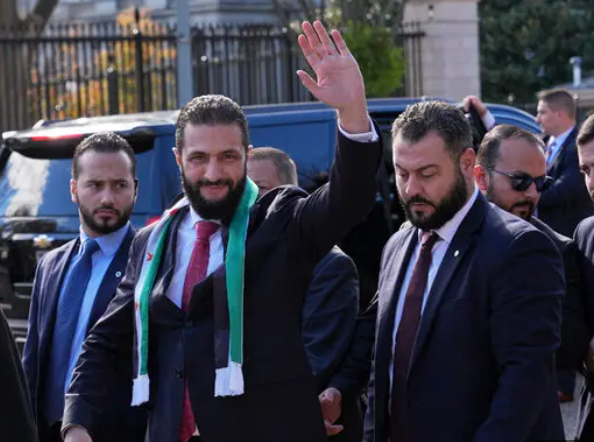
Sharaa has done similar things in the past, using limited administrative or political concessions at critical moments. Now he is doing it again. By expanding local powers and signalling a degree of decentralization, he may be creating political space for the United States and Western governments to make amends with the Kurds. Many Kurdish actors and observers describe the recent stance of these governments as a betrayal during the conflict last month between the Kurds and Damascus.
Against that diplomatic backdrop, the new delegation of powers is being read in two different ways. Officially, it is presented as administrative streamlining—reducing bottlenecks in Damascus and accelerating local service delivery. Politically, however, the move arrives after Damascus has repeatedly drawn red lines against federalism and far-reaching autonomy demands, including previous rejections of Kurdish calls for a decentralized system. That contrast—centralization in principle, paired with selective devolution in practice—has encouraged speculation that the government is offering limited local autonomy as a confidence-building measure while continuing to insist on a unitary state framework in negotiations over the northeast.