
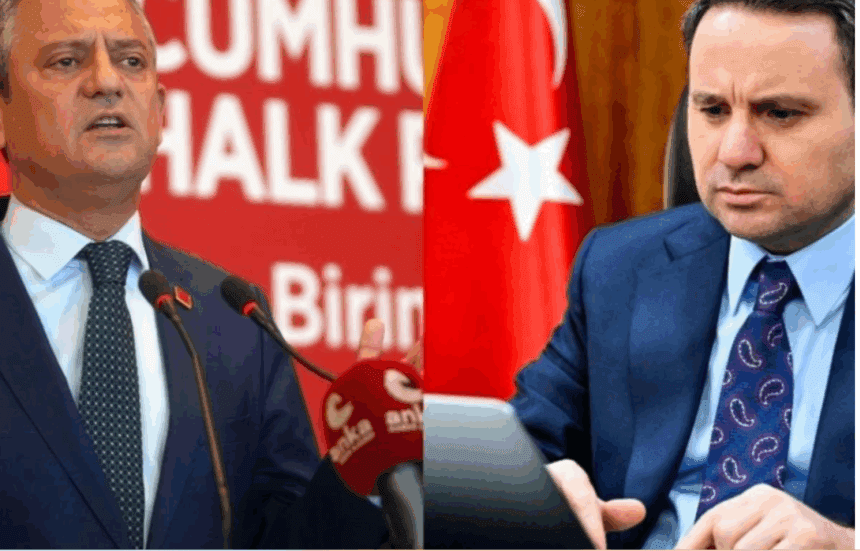
Turkey’s main opposition Republican People’s Party (CHP) is facing an awkward internal storm after a trove of documents alleging unexplained wealth and misconduct by Istanbul Chief Public Prosecutor Akın Gürlek circulated to journalists—triggering accusations that CHP leader Özgür Özel sat on explosive material and only acted once the leak became unavoidable.
The controversy erupted after journalist Serdar Akinan said an email reached CHP-friendly media figures containing extensive attachments—described as including property and financial records—about Gürlek, a figure the opposition has frequently portrayed as a political operator driving prosecutions against CHP-linked politicians and municipalities. Akinan suggested the party had held the file back, fueling claims of a “non-aggression pact” between Özel and Gürlek.
A delayed complaint, a louder backlash
CHP officials insist the party did take action, pointing to a criminal complaint and an application to the Judges and Prosecutors Council (HSK). CHP deputy parliamentary group chair Murat Emir said the file was submitted to the HSK and argued that the mass email to journalists went out only after the dossier reached the council—implying the leak was not the CHP’s preferred method of escalation.
CHP-aligned outlets reported that the party filed a criminal complaint accusing Gürlek of offenses including unjust enrichment and irregular asset declarations, citing claims that certain acquisitions and income streams appeared inconsistent with his official salary
But critics say the timeline still raises damaging questions for Özel: Why was the complaint not publicized immediately, and why did the party’s media ecosystem initially avoid the story before pivoting to full coverage? Those doubts intensified after Özel’s own remarks in parliament and at a party group meeting, where he framed the episode as a byproduct of infighting within the ruling bloc and warned against being used as a tool in internal power struggles.
Özel’s messaging under fire
Özel’s most controversial response was not the filing itself, but his tone. In speeches this week, he dismissed outside pressure and suggestions with sharp language—an approach that critics say looked less like opposition leadership and more like damage control.
Critics argue that an opposition leader who receives a detailed dossier alleging serious wrongdoing by a prosecutor at the center of high-profile cases has a responsibility to take it public—rather than “bury” it, file it quietly, and then berate critics once the story breaks.
This episode reinforces a broader suspicion among parts of the opposition electorate: that CHP’s leadership repeatedly softens its posture at pivotal moments, allowing the government to regain initiative. That narrative—fair or not—has long haunted Turkish opposition politics, and it is politically corrosive because it shifts the debate away from Gürlek’s alleged conduct and toward Özel’s credibility and resolve.
CHP’s defense: “We acted—then it leaked”
Emir’s statement seeks to reverse the logic of the scandal: not “Özel hid the file,” but “the file was weaponized via leaks after we initiated formal procedures.” He has publicly referenced allegations in the dossier and argued that the appropriate route was submitting the evidence to the HSK and prosecutors—while also acknowledging the email dissemination that followed.
Still, even that defense leaves Özel exposed on a key political point: In a climate where institutions are widely seen as politicized, the opposition’s leverage often comes less from paperwork and more from public pressure. By choosing a quieter procedural path—then speaking sharply once the leak forced the issue—Özel handed critics the opening to argue he squandered momentum.