
Turkey’s football federation has referred Amedspor and its club president to the Professional Football Disciplinary Board after the Diyarbakır-based team shared a short social-media video that echoed a viral hair-braiding campaign linked to Kurdish forces in northeastern Syria.
In its referral, the federation said Amedspor’s post “damaged the reputation of football” and amounted to “ideological propaganda,” citing disciplinary provisions used in cases involving political messaging. The referral stated that the club’s Instagram post dated Jan. 22, 2026 triggered the case, and that club president Nahit Eren was also sent to the board in connection with the same post.
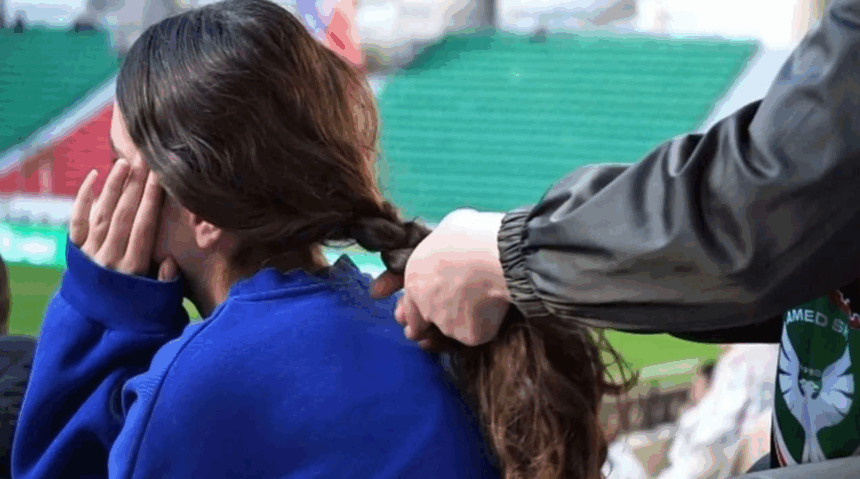
The clip, described as roughly 20 seconds long, shows a woman sitting inside Amedspor’s stadium while her hair is braided. The soundtrack includes the Kurdish slogan “Jin, Jiyan, Azadî” (“Women, Life, Freedom”), a phrase that has been used widely in Kurdish political culture and gained international visibility during Iran’s 2022 protests.
The disciplinary move comes as hair braiding has become a prominent symbol of solidarity with Syrian Kurdish fighters in recent days. The trend accelerated after a video from Raqqa circulated online in which a man holds up a braid and claims it was cut from a Kurdish woman fighter after Syrian government forces retook the city from Kurdish-led forces. The claim and the circumstances surrounding the braid have not been independently verified; separate circulating footage and posts suggested the braid shown may have been staged or “handmade,” but those assertions have also not been independently confirmed.
Regardless of the competing claims, the imagery prompted widespread online backlash, with women posting videos of themselves braiding their hair and framing it as a response to humiliation or violence directed at Kurdish women. In Turkey, some lawmakers from the pro-Kurdish DEM Party shared their own braiding videos as a gesture of support.
The campaign has also triggered legal scrutiny. A nurse in Istanbul was detained after posting a hair-braiding video online and was later released under judicial measures, according to reporting that cited her lawyer and official statements. Health authorities also announced an administrative review into her actions.
The symbolism has spread beyond Turkey as well. In Erbil, the capital of Iraq’s Kurdistan Region, groups of women gathered in public to braid each other’s hair in a show of solidarity, footage of which has circulated widely on social platforms.
Amedspor occupies an unusually sensitive place in Turkish football. Based in the country’s Kurdish-majority southeast, the club is closely associated by supporters with Kurdish cultural identity, and its public messaging has periodically drawn scrutiny in a political climate where expressions linked—rightly or wrongly—to the Kurdish armed movement are often treated as security issues. Turkey regards the Syrian Democratic Forces as tied to the outlawed PKK, a designation that shapes Ankara’s approach to both events across the border and related symbolism at home.
The disciplinary board will now review the federation’s referral and determine whether the post violates the cited rules and, if so, what sanctions should be imposed. Potential penalties in such cases can range from fines to broader sporting measures, depending on how the board interprets the post and the relevant provisions