
The Iraqi Ministry of Foreign Affairs summoned Turkey’s ambassador in Baghdad on Wednesday, escalating a fresh diplomatic dispute with Turkey after remarks by Foreign Minister Hakan Fidan that Iraqi officials said crossed diplomatic lines.
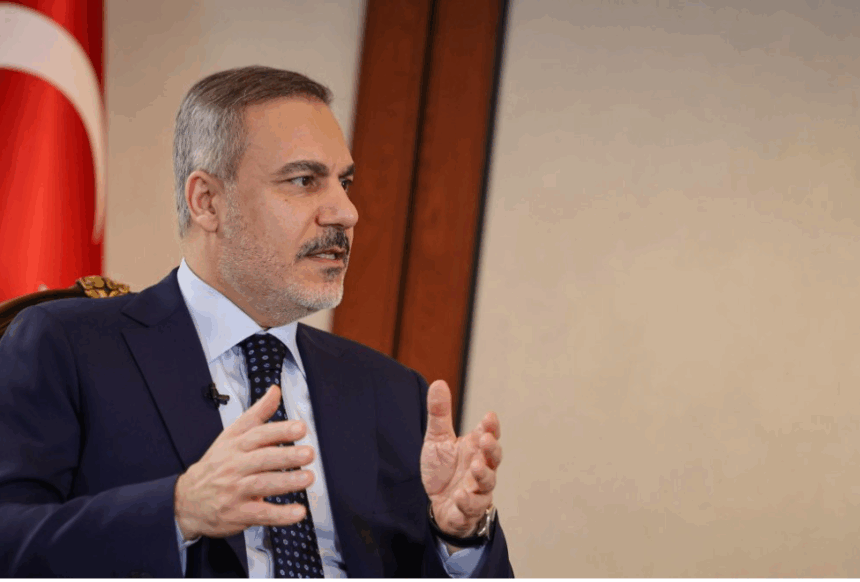
According to reporting by Anka news agency, the summons followed Fidan’s comments in a televised interview on CNN Türk earlier in the week, where he argued that developments in Syria would be followed by an “Iraq leg,” a phrase widely interpreted in Baghdad as implying the issue could shift—politically or militarily—toward Iraq.
Fidan’s remarks came amid rapid movement in Syria after the Kurdish-led Syrian Democratic Forces (SDF) agreed in late January to integrate into Syrian state structures following weeks of clashes and territorial shifts. Ankara has long treated the SDF and its backbone force, the People’s Protection Units (YPG), as linked to the PKK and has demanded that allied structures be dismantled or absorbed under state control.
In the same interview, Fidan said the PKK no longer controls territory inside Turkey but “occupies large areas” in Iraq, framing the problem as a challenge to Iraqi sovereignty and questioning how a “sovereign state” could tolerate it. He also signaled that “changes could soon take place” in specific areas—Sinjar, Makhmour, and the Kandil Mountains—remarks that fueled speculation about whether Ankara was hinting at expanded cross-border pressure or operations.
Iraq’s foreign ministry undersecretary for bilateral relations, Mohammed Hussein Bahr al-Uloom, conveyed Baghdad’s “discomfort” and described the remarks as damaging to friendly relations, an interference in Iraq’s internal affairs, and a breach of diplomatic norms, according to Iraqi statements carried by regional outlets. He stressed that issues tied to Sinjar and other Iraqi territories are “purely national” matters to be handled through Iraq’s own mechanisms and priorities, rejecting “imposed solutions” or the use of such files for political or military aims.
Turkey’s ambassador, Anıl Bora İnan, responded by arguing that Fidan’s comments were misunderstood due to an incorrect translation and were directed at PKK elements operating in Iraq—not at Iraq’s domestic politics or citizens—while reiterating Ankara’s stated position that it respects Iraqi sovereignty.
The flare-up comes despite a deeper security track that both sides have built in recent years. Turkey and Iraq have created a high-level security coordination mechanism and have held multiple meetings in Baghdad and Ankara to address the PKK file, according to public reporting. Iraq also listed the PKK as a banned organization in 2024—an Iraqi step that Ankara publicly welcomed—though the move has not resolved long-running disputes over Turkish military activity and the wider question of how (and by whom) armed groups are handled on Iraqi soil.