
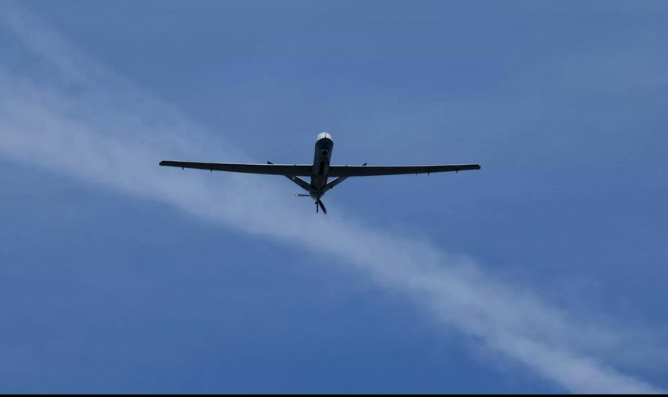
Turkey is debating how an unidentified unmanned aerial vehicle was able to get close to the capital before being shot down by F-16 fighter jets on Monday, December 15, an incident that has reopened old arguments about air-defense readiness, rules of engagement and the government’s habit of offering reassurance before offering detail.
The Defense Ministry said the aircraft was detected during routine surveillance as it approached Turkish airspace from the Black Sea, that it was identified as an “out of control” UAV, and that it was destroyed in a “safe” zone outside populated areas. The ministry has not disclosed the UAV’s origin, operator, model or payload, leaving a vacuum that opposition politicians and analysts have filled with questions that run from the technical to the political.
That vacuum is especially sensitive because the shootdown was not described as a coastal incident alone. The drone was downed between Ankara’s Elmadağ district and the neighboring province of Çankırı, with retired diplomat Namık Tan pointing to the village of Karacahasan and nearby strategic facilities to argue that “safe area” language can sound comforting without addressing what the public really wants to know: how an intruding aircraft could advance that far toward Ankara in the first place.
The practical disruption underlined the seriousness. The flight operations at Ankara Esenboğa Airport were briefly interrupted, and some flights were diverted as a precaution after the ministry’s warning. Turkey Today, citing operational details of the intercept, reported that four passenger aircraft approaching Esenboğa were diverted to Konya during the “critical minutes” of the engagement—an illustration of how quickly an air-policing incident can become an aviation-safety problem once the intercept point is near civilian traffic corridors.
In parliament, the main opposition Republican People’s Party (CHP) has pushed for an official accounting. CHP spokesperson and MP Zeynel Emre submitted a parliamentary inquiry to Defense Minister Yaşar Güler asking for the drone’s flight path, when it was first detected by radar and air-defense systems, what steps were taken between detection and engagement, what the wreckage indicates about identity, and whether Turkey’s early-interception capabilities were fully employed from the moment the target was tracked.
The opposition’s defense point-man, retired Rear Admiral Yankı Bağcıoğlu, has tried to walk a line that is common in Turkish civil-military debates: criticize the decision-making without feeding speculation. Turkish Minute quoted him as urging the ministry to use its next weekly briefing to explain detection, the sequence of actions taken after detection, and corrective measures—warning that if officials do not provide clear information, confusion and misinformation will.
One reason the questions persist is that “out of control” is not, by itself, a satisfying operational narrative. Even a wayward drone presents a decision tree—identify, classify, assess intent, deconflict civil air routes, select intercept geometry, and decide where debris should fall. Some critics raised precisely those gaps, asking whether the UAV could have belonged to the Turkish Armed Forces and malfunctioned, whether it could have been operated by another NATO country active in the Black Sea, and why it was not intercepted earlier over the sea—suggesting there may have been delay in the authorization chain for engagement.
The timing also matters. The incident landed amid heightened Black Sea tension tied to the Russia-Ukraine war and a string of maritime attacks and counterattacks that Turkey has repeatedly warned could spill over into broader confrontation. The Financial Times noted that the shootdown followed drone attacks on Russia-linked tankers and damage to Turkish-owned vessels in the region, a context that makes Ankara unusually sensitive to any hint that the war’s air and sea risks are creeping southward.
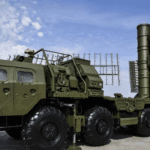
Against that backdrop, the drone episode has naturally fed into Turkey’s bigger air-defense argument: whether Ankara’s layered defenses and command-and-control architecture are as mature as officials claim, and how those ambitions sit alongside unresolved geopolitical baggage such as the Russian-made S-400 system. Reuters reported on December 12 that Turkey said there had been no change in its position on possessing the S-400 even as talks with Washington continue over sanctions and the possibility of rejoining the F-35 program—an issue on which U.S. officials have reiterated that U.S. law bars Turkey from rejoining while it operates or possesses the S-400.
At the same time, Ankara is trying to sell an opposite story: that Turkey is building an integrated, largely indigenous solution that reduces reliance on foreign systems and improves “whole-of-sky” awareness. AP reported that Erdoğan inaugurated the “Steel Dome” integrated air-defense initiative in August 2025, describing it as a major leap that links land- and sea-based sensors and platforms into a networked architecture; Reuters later reported new multi-billion-dollar contracts to reinforce the project. In today’s debate, the unanswered question is not whether these projects exist, but whether an incident like the December 15 drone can be used as a stress test for how quickly detection, decision and engagement flow through the system around Ankara.
For now, Turkey’s official position remains narrow: a UAV approached from the Black Sea, lost control, and was destroyed safely.