
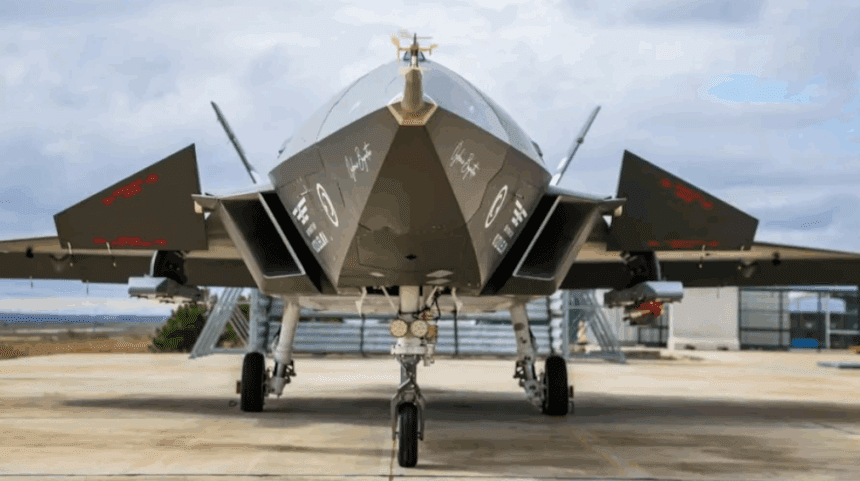
Turkey’s leading unmanned systems manufacturer Baykar has announced a significant technological milestone, saying two Bayraktar KIZILELMA prototypes successfully carried out autonomous close-formation flight and a coordinated Combat Air Patrol (CAP) mission without human intervention. According to the company, the test demonstrated intelligent swarm autonomy algorithms that allow multiple unmanned combat aircraft to maneuver together under a single command logic.
Baykar said the flight involved the third and fifth KIZILELMA prototypes, which took off sequentially and maintained close formation while executing maneuvers through an “autonomous combat pilot” system. The company described the test as a step toward transferring complex missions—traditionally performed by manned fighter aircraft—to networked unmanned platforms operating cooperatively.
The announcement highlights Turkey’s longer-term ambition to develop swarm-capable unmanned combat aircraft that could support or partially replace manned missions such as patrol, interception, and air defense coverage. Baykar argues that such systems could reduce pilot workload and expand operational reach by enabling multiple platforms to operate simultaneously with a high degree of autonomy.
However, the timing of the announcement has drawn attention to a contrasting reality: recent drone incursions into Turkish airspace have exposed unresolved challenges in air policing and layered air defense.
In December, Turkish authorities reported that an unidentified drone entered Turkish airspace from the Black Sea and was shot down by F-16 fighter jets only after it had flown deep inland, approaching the Ankara flight corridor and briefly affecting civil aviation. In subsequent days, drone wreckage was discovered inside Turkey, including one case identified as a Russian-made Orlan-10 reconnaissance drone. A further drone incident followed, intensifying public and political scrutiny.
An unnamed senior Russian diplomat later suggested the incursions could have been a “possible provocation,” without specifying responsibility. While the exact intent behind the incidents remains unclear, the episodes highlighted the difficulty of detecting and neutralizing small, low-altitude unmanned systems using existing tools.
These developments have fueled debate about the current condition of the Turkish Air Force, which continues to rely heavily on F-16s for air policing while modernization efforts remain incomplete. Critics argue that scrambling fighter jets against slow, low-cost drones is both inefficient and indicative of gaps in Turkey’s layered air-defense architecture.
Government officials have previously promoted plans for a national, integrated air-defense network—sometimes compared in public discourse to Israel’s Iron Dome. Yet the recent incidents suggest that no fully operational, comprehensive system capable of reliably countering small unmanned aerial threats is currently in place, particularly against drones designed to evade radar and exploit coverage gaps.
In this context, Baykar’s KIZILELMA demonstration represents a future-oriented capability rather than an immediate solution to present vulnerabilities. The company has not publicly released key operational details from the test, such as formation distances, autonomy limits, resilience under electronic warfare conditions, or integration with existing command-and-control and air-defense networks.
The contrast is increasingly apparent: while Turkey showcases advanced concepts such as swarm autonomy and unmanned combat formations, recent events show that foreign drones have still been able to penetrate Turkish airspace, raising questions about readiness, coordination, and prioritization. For now, KIZILELMA’s autonomous formation flight signals technological ambition and long-term intent, even as the drone breaches underscore the gap between emerging platforms and current airspace security needs.