
A high-profile launch for TÜGVA’s nationwide inter-high school football tournament, GençLig 2026, brought together senior government officials and the top brass of Turkish football this week—an unusually dense show of institutional presence at a youth foundation event that has revived a familiar argument in Turkey: where sport ends and politics begins.
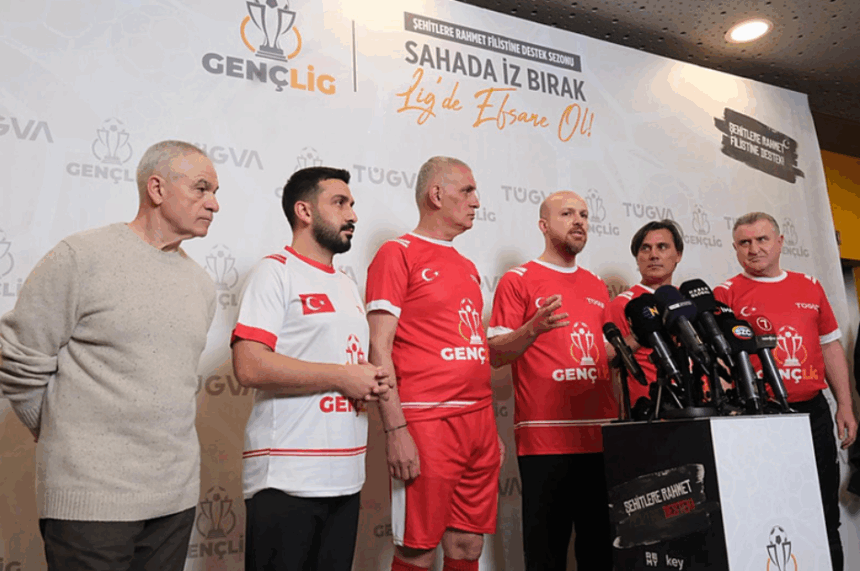
Held at Volkswagen Arena on January 12, the launch drew Youth and Sports Minister Osman Aşkın Bak, Turkish Football Federation (TFF) President İbrahim Hacıosmanoğlu, national team head coach Vincenzo Montella, and senior representatives from major clubs including Beşiktaş and Fenerbahçe.
At the center of the optics was Bilal Erdoğan, listed as a member of TÜGVA’s High Advisory Board. The Cumhuriyet daily—framing the event as an example of “sports and politics intertwined”—highlighted TÜGVA’s perceived proximity to the ruling establishment and stressed that Erdoğan, the president’s son, appeared alongside the state’s sports minister and the country’s football leadership.
A launch built around spectacle—and a message of “youth through sport”
Organizers and officials presented GençLig 2026 primarily as a mass-participation youth initiative. Minister Bak described youth sport as a tool to steer teenagers away from harmful habits such as digital addiction and drug use, while arguing that Turkey’s sports infrastructure has expanded significantly and that the country is preparing to co-host the 2028 European Championship.
Bilal Erdoğan said organizers aim to scale the tournament sharply this year, targeting around 60,000 high school students nationwide—up from more than 20,000 the previous year—and added that club scouts would follow the matches, presenting the tournament as both a social program and a potential talent pipeline.
That institutional messaging was wrapped in an event designed for maximum visibility. A demonstration match featured a lineup that mixed political officeholders, federation leadership, and well-known football names. The “red team,” coached by Hikmet Karaman, included Bilal Erdoğan, Minister Bak, TFF President Hacıosmanoğlu, and former players such as Emre Belözoğlu and Mario Jardel, while the “white team,” coached by Rıza Çalımbay, featured Mesut Özil and Volkan Demirel, among others.
Why the optics triggered criticism
Supporters argue that wide participation, sponsorship, and elite attention are precisely what gives youth tournaments momentum—and that the presence of the minister, federation leaders, and club representatives can help expand facilities, scouting, and long-term pathways for students. The official framing repeatedly emphasized sport’s “unifying” power and positioned the project as a national-scale initiative that runs from provincial rounds to regional finals and a national final.
But critics—and opposition-leaning outlets—say the problem is not youth football itself, but the institutional choreography: the image of the sport’s formal authorities appearing under the banner of a foundation whose leadership includes the president’s son. Critics argued that Turkish football’s visibility at the TÜGVA event recalled President Recep Tayyip Erdoğan’s earlier remarks that politics “unfortunately” seeps into everything, including football.
For those raising concerns now, the GençLig launch is seen as a vivid illustration of that complaint: a moment when football’s institutional leadership, government authority, and a politically connected civil-society network appear in the same frame, making it harder to argue that sport operates at arm’s length from power.