
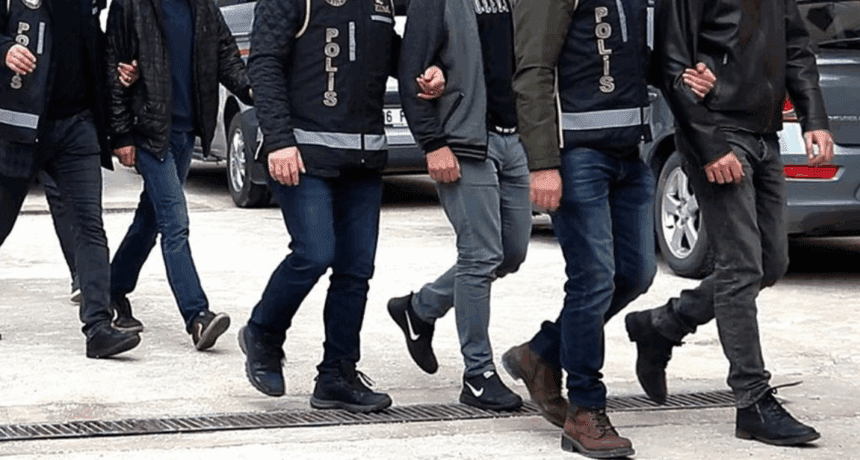
Turkish police have detained 151 people in nationwide operations over alleged links to the faith-based Gülen movement, Interior Minister Ali Yerlikaya said on Wednesday, January 28, 2026. In a post on X, Yerlikaya said raids were carried out across 46 provinces, including major cities such as Ankara, İstanbul, İzmir and Antalya.
Yerlikaya said 82 of the detainees had been formally arrested and that 54 others were released under judicial supervision, while procedures for the remaining suspects were continuing. He described the operation as targeting people either sought by authorities or facing finalized prison sentences, and said those detained were suspected of involvement in alleged “confidential” Gülen-linked networks operating in areas such as the judiciary, military, education and student structures.
The minister did not specify when the raids took place or the exact period covered by the “last two weeks” referenced in subsequent reports, beyond announcing the results on Wednesday.
According to Yerlikaya’s statement, some suspects were accused of using ByLock—an encrypted messaging application that Turkish authorities have long described as a tool used by Gülen movement supporters—as well as communicating through pay phones (often referred to in Turkey as “ankesör” or “contour” phone investigations).
The Gülen movement, inspired by the late Muslim cleric Fethullah Gülen, was once allied with President Recep Tayyip Erdoğan’s political movement before relations deteriorated sharply after corruption investigations in December 2013 that implicated senior government figures and people close to Erdoğan. Erdoğan dismissed those probes as a conspiracy and began a sweeping campaign against what he called a “parallel structure” within the state.
Turkey officially designated the Gülen movement as a terrorist organization in May 2016, months before the failed July 15, 2016 coup attempt that Ankara blames on Gülen and his followers—an accusation the movement has denied. Gülen, who had lived in self-imposed exile in the United States for years, died in October 2024, according to multiple reports.
The “payphone investigations” cited in many Gülen-linked cases are based largely on call records rather than call content. Prosecutors allege that an organizer used a single payphone to place consecutive calls to multiple contacts, and that phone numbers appearing immediately before or after a suspect’s number in the call log can also indicate Gülen-linked communication. Critics argue that the approach relies on inference and association, since authorities typically do not have the content of the calls.
ByLock has also remained a central pillar in post-coup prosecutions. In a landmark ruling in the case of former teacher Yüksel Yalçınkaya, the European Court of Human Rights (ECtHR) found that Turkey violated several rights under the European Convention on Human Rights when the applicant’s conviction relied decisively on alleged ByLock use, criticizing what it described as a uniform approach that treated ByLock evidence as largely determinative without sufficient individualized assessment.
Recent ECtHR materials tracking follow-up cases have continued to focus on convictions based “decisively” on ByLock use, underscoring the scale of similar applications pending before the court. Turkish officials have rejected the court’s approach in the past, arguing that domestic courts evaluate evidence within Turkey’s legal framework.
Despite the ECtHR rulings, detentions and arrests tied to alleged ByLock use and payphone call patterns have continued, including the latest sweep announced by Yerlikaya.
Figures attributed to Turkey’s Justice Ministry and cited in recent reporting suggest that more than 126,000 people have been convicted since 2016 on charges related to alleged Gülen links, with thousands still incarcerated and tens of thousands more facing ongoing prosecutions or investigations. The ministry has not included those broader figures in Yerlikaya’s announcement.