
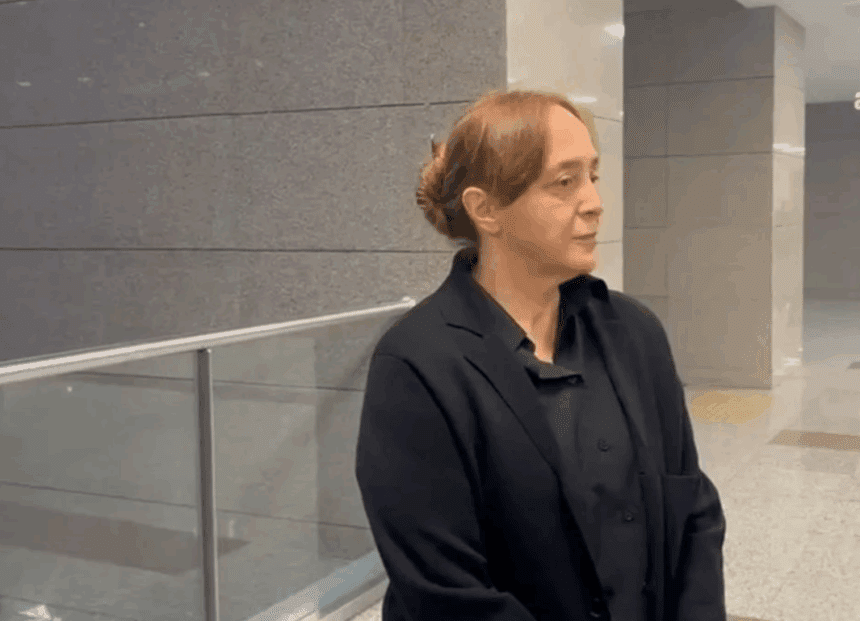
A court in Istanbul on Wednesday sentenced celebrity talent manager Ayşe Barım to 12 years and six months in prison on charges of aiding an alleged attempt to overthrow the government during the 2013 Gezi Park protests, Turkish and international media reported.
The verdict was issued by the Istanbul 26th High Criminal Court, which said it initially imposed an aggravated life sentence for the underlying “attempt to overthrow” charge, then reduced the punishment after concluding Barım’s conduct amounted to “aiding” rather than principal participation, and applied an additional reduction when determining the final term.
Barım, 55, was not taken into custody following the ruling. The court ordered that judicial control measures remain in place in the form of a ban on leaving the country, citing her illness, ongoing treatment and documentation in the case file, including a forensic medicine report referenced in state media coverage.
In her defense, Barım denied directing actors under her management to join the demonstrations and said the case lacked concrete evidence, according to accounts of the hearing. Defense lawyers argued prosecutors had not established the legally required element of force or violence and maintained that artists attended the protests of their own initiative.
Prosecutors alleged Barım used prominent performers she represented to help coordinate participation and amplify the protests both online and on the ground, and they had sought an aggravated life sentence ahead of the final hearing.
The Gezi Park protests erupted in late May 2013 after a small sit-in opposed plans to redevelop a rare green space near central Istanbul’s Taksim area. Police efforts to disperse demonstrators helped ignite nationwide protests that broadened into anger over governance, policing and civil liberties—an episode that remains among the most politically consequential mass protests in modern Turkey.
Barım’s case is among a series of long-running prosecutions tied to Gezi. The most prominent defendant, Osman Kavala, is serving an aggravated life sentence linked to the protests. The European Court of Human Rights ruled in 2019 that Kavala’s detention pursued an improper purpose and called for his release, a decision that later became the focus of enforcement pressure from the Council of Europe, including the launch of infringement proceedings over Turkey’s failure to implement the court’s judgment.