
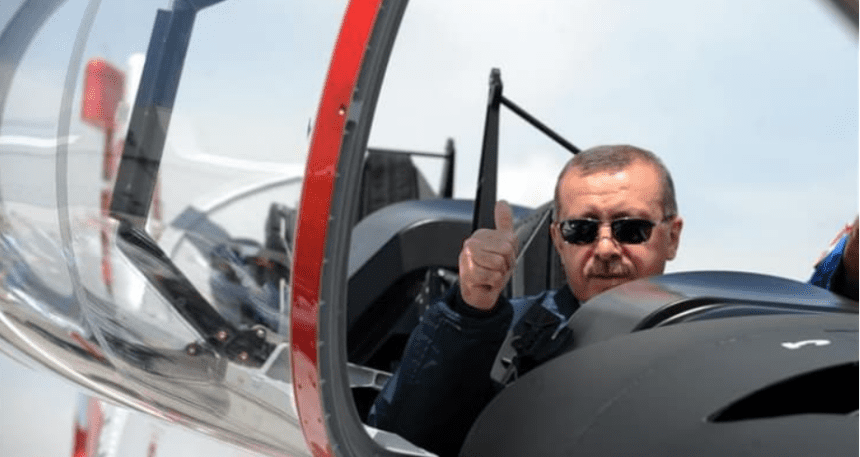
A new wartime-themed assessment by Genar has presented President Recep Tayyip Erdoğan as the preferred leader to govern Turkey in the event of a regional war, offering a political reading that places security, continuity and centralized leadership above economic discontent. In a March 24 column summarizing findings from the latest Genar Turkey Report, Genar head İhsan Aktaş wrote that the firm had asked two key questions in February, before the war began, and that 54% of respondents said Erdoğan should lead the country in the event of a possible conflict in the region.
The same text framed that result not simply as a polling finding, but as proof of what it described as the electorate’s “prudence” in times of danger. Aktaş argued that although pensioners and economic problems were still central issues before the elections, voters had ultimately prioritized governance capacity and risk management, and he explicitly linked that logic to the ruling alliance’s parliamentary victory and Erdoğan’s re-election in the presidential runoff. In the same set of findings, 57% said a possible U.S.-Israeli intervention against Iran would pose a threat to Turkey’s security, while 73.5% supported political consensus on national issues during periods of external threat.
What gives the survey added political significance is the timing of its release. A question posed in February as a hypothetical wartime scenario is now being circulated after missile incidents that brought the regional conflict much closer to Turkey itself. On March 13, Turkish authorities said NATO air defenses had intercepted a third ballistic missile fired from Iran toward Turkey, after earlier interceptions on March 4 and March 9. Turkish officials said an explosion was heard near Incirlik Air Base in Adana after the third incident, while Iran denied targeting Turkey.
At the same time, Ankara has tried to maintain a careful balance between warning about the dangers of escalation and stressing that Turkey should not be drawn directly into the conflict. On March 11, Erdoğan said the war had to be stopped before the region was “thrown into the fire” and said Turkey was acting cautiously to protect itself from the flames surrounding it. A week later, Turkey said NATO was deploying another Patriot missile defense system to Adana, alongside existing defenses, to strengthen protection around Incirlik and southern Turkish airspace.
That atmosphere was reinforced further on March 17, when a presidential decision published in the Official Gazette created a stricter legal framework for the transit and re-export of war vehicles, weapons, ammunition, military explosives, spare parts and related technologies through Turkey’s customs territory. Under the new rules, such shipments require a conformity letter from the Trade Ministry after consultation with other state institutions, and the framework can also be applied to items not formally listed if they are suspected of having military use or of posing wider security or foreign-policy risks. Formally, the measure is a regulatory framework rather than an emergency wartime order. Politically, however, its timing has intensified debate over Turkey’s logistical role in a widening regional conflict.
Seen in that sequence, Genar’s wartime poll appears to serve a broader political function than simply measuring public sentiment. It helps shift the center of debate away from inflation, pensions and domestic hardship and toward leadership under external threat. By presenting Erdoğan as the figure most suited to manage war risk, missile spillover and regional uncertainty, the narrative does more than defend his current position; it may also help normalize the idea that prolonged insecurity requires prolonged rule. That is ultimately an analytical inference, but it is grounded in the survey’s own framing, its explicit linkage of wartime preference to past electoral legitimacy, and the increasingly security-driven context in which it is now being promoted.