
A former spokesman for one of Israel’s most prominent hospitals has claimed that an Israeli physician secretly traveled to Turkey at Mossad’s request and helped save Turkish President Recep Tayyip Erdoğan’s life after he developed cancer.
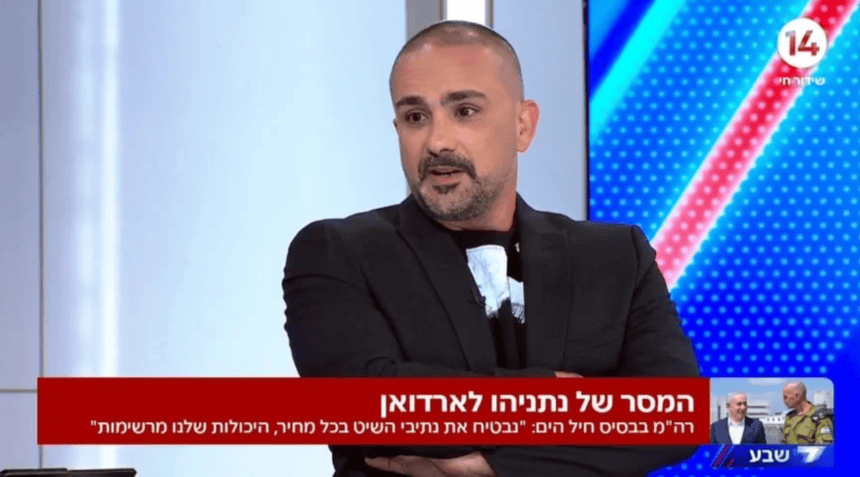
Avi Shushan, who served as spokesman for Tel Aviv Sourasky Medical Center, widely known as Ichilov Hospital, made the disclosure during a July 7 appearance on Channel 14’s current-affairs program Seven.
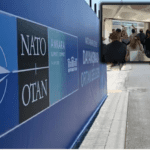
The panel was discussing Erdoğan’s appearance at the NATO summit in Ankara when Shushan said the Turkish president had become seriously ill approximately six or seven years earlier.
According to Shushan, Mossad arranged for a specialist from Ichilov Hospital to travel to Turkey as a representative of the Israeli state. He said the mission was approved by Prime Minister Benjamin Netanyahu and that the Israeli doctor’s intervention saved Erdoğan’s life.
“Israel saved Erdoğan,” Shushan said, adding that Mossad had sent a doctor from Israel. He also said Israeli journalists had approached him for confirmation when the purported intervention occurred, but that he declined to discuss the matter publicly at the time.
Shushan did not identify the physician, produce medical records or explain the treatment Erdoğan allegedly received. However, his former position at Ichilov would likely have placed him close to the hospital’s leadership and within the communications chain surrounding the treatment of a politically sensitive foreign patient.
His statement that journalists had already learned of the episode and sought confirmation when it occurred also suggests that the account may have circulated within Israeli medical and media circles for years rather than emerging as a new and unsupported rumor.
During the discussion, Channel 14 host Yaakov Bardugo expanded on Shushan’s account, saying Erdoğan remained alive because of a Jewish doctor, Israel, Netanyahu and former Mossad director David “Dedi” Barnea.
Bardugo’s statement was subsequently attributed to Shushan in some reports. Shushan himself made the central allegation about the doctor, Mossad and Netanyahu, while Bardugo introduced Barnea’s name and delivered the broader political commentary.
The claim has not been publicly confirmed by the Turkish presidency, Ichilov Hospital, Netanyahu’s office, Mossad or the physician involved. Nevertheless, earlier Israeli reporting provides significant circumstantial support for the existence of a discreet medical relationship between Erdoğan and a senior Ichilov doctor.
In January 2022, Ynet reported that Erdoğan was receiving medical advice from Prof. Itzhak Shapira, then deputy director-general of Ichilov Hospital and head of its medical-tourism program.
Shapira, a cardiologist who advised international political figures on medical matters, had reportedly met Erdoğan in the United States. Both Shapira and the hospital declined to comment on the relationship.
The 2022 report did not identify Erdoğan’s condition as cancer, say that Shapira had performed surgery or connect the relationship to Mossad. It nevertheless independently established that Erdoğan had sought assistance from a senior physician at the same hospital later identified by Shushan.
That overlap makes the new allegation more plausible than an entirely isolated claim. It indicates that a medical channel between Erdoğan and Ichilov existed, although the extent of the treatment and the involvement of Israeli intelligence remain unknown.
Shushan’s approximate timeline would place the purported intervention around 2019 or 2020. His account therefore appears to describe a medical crisis separate from Erdoğan’s publicly acknowledged intestinal operations in late 2011 and early 2012.
The earlier procedures generated extensive speculation that Erdoğan had colon cancer. Turkish officials and Erdoğan’s doctors said surgeons had removed intestinal polyps but found no cancer, while Erdoğan angrily rejected reports that he was terminally ill.
Shushan’s allegation raises the possibility that Erdoğan subsequently experienced another serious illness that was never disclosed to the Turkish public.
Erdoğan’s health has long been treated as a matter of state sensitivity. In November 2021, Turkish police initiated legal proceedings against 30 social-media users after posts suggested that the president had died. Authorities accused them of spreading manipulative information and insulting Erdoğan.
The secrecy surrounding Erdoğan’s medical condition makes independent verification particularly difficult. It also means that the absence of an official acknowledgment cannot, by itself, establish that Shushan’s account is false.
The alleged intervention would fit a broader pattern in Turkish-Israeli relations, in which fierce public hostility has repeatedly coexisted with discreet medical, intelligence, military and commercial contacts.
Erdoğan and Netanyahu have spent years attacking one another in increasingly personal terms. Erdoğan has called Netanyahu a war criminal, compared him to Adolf Hitler and accused Israel of committing genocide in Gaza. He has also described Hamas as a Palestinian liberation movement rather than a terrorist organization.
Netanyahu has responded by accusing Erdoğan of supporting Hamas, repressing political opponents and lacking the moral authority to criticize Israel. More recently, Netanyahu reportedly appealed to US President Donald Trump to restrain Erdoğan’s increasingly hostile position toward Israel and opposed the potential sale of F-35 fighter jets to Turkey.
Yet behind the increasingly theatrical confrontation between the two leaders, practical links between their countries have proved more resilient than their rhetoric suggests.
Erdoğan’s government announced a complete suspension of imports from and exports to Israel on May 2, 2024, saying that trade would not resume until Israel permitted sufficient humanitarian assistance into Gaza and agreed to a permanent ceasefire. Before the suspension, bilateral commerce was worth approximately $7 billion annually.
Almost immediately after the announcement, however, Turkish exporters told Reuters they were examining ways to continue supplying Israeli customers through third countries. The proposed arrangements involved rerouting Turkish products through alternative ports and markets before their eventual delivery to Israel.
Subsequent trade figures intensified suspicions that at least part of the suspended commerce had been redirected through backdoor channels.
Turkish exports officially recorded as destined for the Palestinian territories increased by 526 percent during the first nine months of 2024, reaching $571.2 million. The increase occurred mainly after the government announced the Israeli trade embargo.
Because goods imported by Palestinian businesses must generally pass through Israeli-controlled ports, customs systems and territory, opposition politicians and activists questioned whether Palestinian companies were being used as intermediaries for products ultimately intended for the Israeli market.
The Turkish government denied that the figures demonstrated continued trade with Israel, saying the shipments were intended solely for Palestinian buyers. However, Ankara later introduced additional checks and required greater verification of exports registered for the Palestinian territories.
Reuters reported that officials were concerned about goods continuing to reach Israel. From June through September 2024, monthly Turkish exports recorded for the Palestinian territories averaged approximately $127 million, compared with only $12 million a month during the first four months of the year.
The introduction of stricter controls showed that concerns about the circumvention of the embargo were not limited to opposition rhetoric. Turkish authorities themselves considered the possibility serious enough to change export procedures.
The available evidence does not establish that every shipment registered for Palestinian buyers was secretly destined for Israel. It does show that commercial flows connected to the Israeli-controlled market expanded dramatically after the supposed suspension and that exporters actively sought third-country routes to preserve existing business.
Turkey also formally intervened in South Africa’s genocide case against Israel at the International Court of Justice in August 2024. Israel rejects the accusation of genocide and argues that its military operations have been acts of self-defence directed against Hamas.
Despite Ankara’s legal and rhetorical campaign against Israel, a 2025 report by UN Special Rapporteur Francesca Albanese included Turkey within a wider network of states whose trade routes, ports or supply chains allegedly continued to support Israel during the destruction of Gaza.
The report, titled Gaza Genocide: a collective crime, argued that the military, economic and political support of third states had enabled Israel’s actions and urged governments to suspend military, commercial and diplomatic relations with it. Those were the special rapporteur’s findings, not a final judgment by the International Court of Justice.
The contrast is striking. Erdoğan publicly presents himself as one of Netanyahu’s fiercest opponents, while Netanyahu portrays Erdoğan as an increasingly hostile regional threat. Yet medical assistance, intelligence channels and indirect commerce appear to have continued beneath the surface of that confrontation.
This gap between public rhetoric and private cooperation gives additional weight to Shushan’s disclosure. Israel and Turkey have repeatedly demonstrated that political attacks do not necessarily prevent them from maintaining discreet contacts when those contacts serve strategic, economic or personal interests.
Shushan has not conclusively proven that Erdoğan suffered from cancer or that Mossad organized the treatment. But his institutional position, his claim that journalists knew about the episode at the time and the independently reported relationship between Erdoğan and a senior Ichilov physician make the account difficult to dismiss as a baseless invention.
Taken together, the available evidence strongly suggests that Erdoğan received significant medical assistance from an Israeli doctor and that senior Israeli officials may have facilitated the relationship. Whether the treatment cured cancer and directly saved Erdoğan’s life remains undisclosed, but the central allegation is consistent with the secretive and often contradictory nature of relations between Ankara and Tel Aviv.