
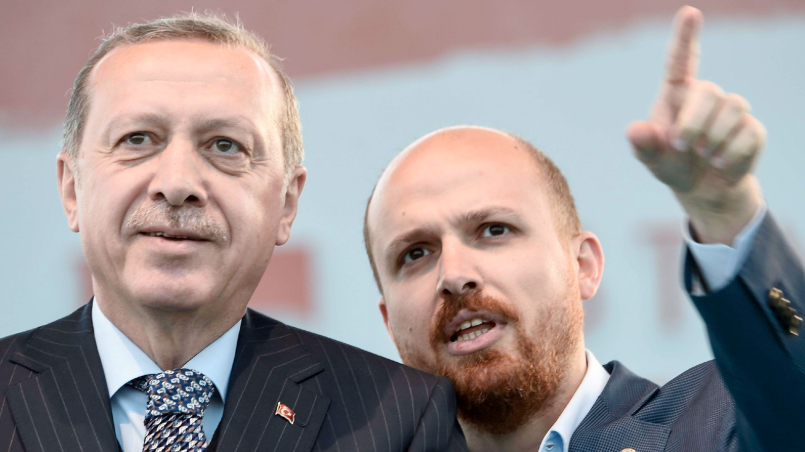
President Recep Tayyip Erdoğan’s drive to anoint his son Bilal as successor has dramatically raised the stakes in Turkey’s politics. Troubled by health problems and intent on creating a family dynasty, Erdoğan has been grooming his younger son, Necmettin Bilal, as an “undeclared crown prince” to eventually take over. This bid for dynastic succession is unfolding against the backdrop of dismantled democratic institutions, a fractured opposition, and massive family wealth concentrated by Erdoğan’s regime.
To secure this transition, Erdoğan has turned inward, seeking not only to crush external challengers but also to discipline or eliminate rival power centers within his own camp. In doing so, he is reviving the authoritarian methods last deployed during the post-2016 purges against the Gülen movement—this time not in the name of regime survival, but to guarantee the Erdoğan family’s continued control of the state.
Neutralizing the Opposition Threat
Over the past few years Erdoğan has systematically crippled the political opposition, clearing the field of any popular challenger who could threaten his plans. A prime example is Istanbul Mayor Ekrem İmamoğlu, a rising star who twice beat Erdoğan’s party in Istanbul’s mayoral race.In late 2022, a Turkish court convicted him on charges of “insulting” election officials – over a remark criticizing those who annulled the 2019 vote – sentencing him to prison and imposing a political ban in a verdict widely decried as politically motivated. İmamoğlu appealed and stayed in office, but Erdoğan’s government opened a flurry of new investigations into everything from procurement deals to his university degree, clearly aiming to tarnish and disqualify him from a future presidential run. By March 2025, this pressure climaxed in a dramatic dawn raid: İmamoğlu was detained and jailed along with dozens of his staff and associates on allegations of corruption and terror links.
Other opposition figures have taken note. Ankara’s mayor Mansur Yavaş, another popular figure often mentioned as a potential presidential candidate, has voiced solidarity with İmamoğlu and condemned the crackdown – but very cautiously. Yavaş and others clearly understand that if they pose too strong a challenge, they “too could be targets” of similar tactics. In fact, he was formally/legally put under threat of an Ankara-based investigation in October 2025, when the Ankara Chief Public Prosecutor’s Office moved to open a case tied to Ankara Metropolitan Municipality concert spending.
This calculated restraint across the opposition spectrum – from major city mayors to jailed Kurdish leader Selahattin Demirtaş – reflects the climate of fear Erdoğan has created. By jailing, banning or intimidating all prominent opponents, Erdoğan is sending an unmistakable message: no challenger will be allowed to upset the succession plan. The silencing of dissent beyond the ballot box, through courts and police, ensures that heading into a post-Erdoğan transition, no opposition candidate remains standing with the organizational strength or public office to mount a serious bid for the presidency.
Turning Inward: Silencing the Inner Circle
Having cowed the formal opposition, Erdoğan is now turning his purge inwards, toward “inner threats” within his own party and state apparatus that might disrupt a Bilal Erdoğan succession. In recent months, his government has unleashed a wave of crackdowns on prominent individuals and institutions within its own broad camp as well. In a series of highly publicized raids and arrests, Turkish authorities have targeted pro-government media personalities and business conglomerates in what appears to be a purge of “enemies within.” All of these signal that Turkey’s regime is now turning its repressive machinery inward in preparation for a looming succession showdown.
The silencing of the inner circle began with the removal of his influential propaganda czar in July 2025, Communications Director Fahrettin Altun, in what insiders described as an internal power struggle related to succession politics. Altun had been a key architect of Erdoğan’s media dominance and a voice in his inner circle, but he reportedly clashed with figures closer to the Erdoğan family. His abrupt removal exposed a widening rift within Erdoğan’s camp as concerns grew over the president’s health and the question of who would inherit his mantle. The intelligence establishment, now led by Erdoğan’s confidant İbrahim Kalın, further cemented its influence with Altun’s downfall, suggesting that those not fully aligned with the family’s succession plans are being pushed aside. Within this framework, Hakan Fidan’s move from the helm of MİT to the Foreign Ministry appears less as a routine cabinet reshuffle and more as a calculated attempt to neutralize an alternative post-Erdoğan power centre.
A far more explosive episode of internal intrigue had come to light in April 2025, when a mob-linked whistleblower exposed a secret effort to recover a “blackmail archive” of compromising videos involving senior officials. According to former casino tycoon associate Cemil Önal, Foreign Minister Hakan Fidan – Turkey’s ex-spymaster and a presumed heavyweight in post-Erdoğan calculations – sent an envoy to obtain 45 illicit videotapes that could be used to blackmail members of Erdoğan’s ruling party. The envoy, a trusted diplomat with family ties to Erdoğan’s own financial aide, allegedly secured most of the trove but held back five particularly sensitive tapes. When President Erdoğan learned that some footage (reportedly involving the sons of Fidan and a former prime minister) was withheld, he was furious. He immediately recalled and sacked the envoy, and the Foreign Ministry put out a statement angrily denouncing the whistleblower’s claims as “baseless”. No official explanation was given for the envoy’s dismissal. The silence and secrecy around this scandal speak volumes about the stakes: if true, it suggests Fidan may have been quietly amassing kompromat as insurance or leverage – a sign of an emerging parallel power center within the regime. Erdoğan’s swift reaction – firing his own envoy and threatening legal action – implies a zero-tolerance stance toward any such independent scheming. Even a hint that a top lieutenant might be gathering blackmail material was treated as a direct threat to Erdoğan’s authority and, by extension, his succession plans.
This covert struggle over incriminating videos highlights how the mafia-state nexus is enmeshed in the succession fight. The tapes in question originated with a slain mob boss, Halil Falyalı, whose criminal network allegedly funneled money and favours to Turkish officials. That an intelligence veteran like Fidan would go to such lengths to corral these underworld secrets – and that Erdoğan would intervene so decisively – underscores the desperate premium on loyalty and leverage in the palace intrigue of a post-Erdoğan era. It also reflects Erdoğan’s method of “depoliticizing” rival factions: just as he purged Gülenists en masse in 2016, he is now willing to root out or neutralize any clique within his party-state that could rally around an alternative successor. Figures once thought untouchable have seen their prospects dim if they are not in line. Former Interior Minister Süleyman Soylu, for example, was long a powerful AKP baron with his own following, but corruption allegations aired by mobster-turned-whistleblower Sedat Peker badly tarnished Soylu’s name. Soylu has since been sidelined, his ambitions effectively neutered by scandal, which conveniently removed a potential rival (or kingmaker) from the chessboard. Even Berat Albayrak – Erdoğan’s own son-in-law and a former finance minister once touted as heir – fell from grace after economic policy failures, eliminating another in-house competitor. In the end, only the family and its most loyal proxies remain standing. Through a mix of firings, scandals, and quiet threats, Erdoğan is cleansing the ranks to ensure no power base within the AKP or state bureaucracy can challenge the elevation of Bilal.
One of the most striking episodes came in December 2025, when Mehmet Akif Ersoy – the editor-in-chief of the mainstream news channel Habertürk TV – was detained and later formally arrested in a sensational narcotics probe. Ersoy, a well-known Islamist journalist, was accused by Istanbul prosecutors of mixing cocaine use with the sexual exploitation of women in his circle. A court jailed Ersoy and three others pending trial on charges of drug possession and providing venues for drug use, allegations amplified by lurid claims of “group sex” and favoritism in the TV industry. Ersoy vehemently denied the accusations as a “very ugly” smear campaign, insisting he had never used narcotics and that his personal relationships were normal, consensual affairs. Nonetheless, pro-government media blared every salacious detail of the case, and Turkey’s politicized judiciary treated Ersoy’s case as if it were a matter of national security. In an extraordinary move, the Savings Deposit Insurance Fund (TMSF) summarily removed Ersoy from his post as Habertürk’s chief editor the day after his detention.
The context behind this purge is revealing. Habertürk’s parent company, Can Holding, had only recently come under state investigation. In September 2025, Turkish prosecutors launched a massive financial crimes probe into Can Holding – a large private conglomerate that had in 2024 acquired several major TV channels, including Habertürk, Show TV, and Bloomberg HT. On September 11, 2025, gendarmerie teams simultaneously raided Can Holding facilities across multiple provinces, detaining top executives and prompting courts to seize 121 companies linked to the group. These seizures swept up not just the media outlets but also Istanbul Bilgi University – a prestigious private university owned by the conglomerate – and a nationwide chain of private schools. All were placed under TMSF trusteeship, effectively putting them under government control. Officially, Can Holding’s owners and managers are accused of running a “criminal organization” engaged in “aggravated fraud, tax evasion, fuel smuggling and laundering of criminal proceeds,” with investigators alleging some ₺88 billion ($2.1 billion) in suspicious transactions.
The Habertürk saga is a case in point. The same week Ersoy was arrested, Istanbul prosecutors – pointedly bypassing the regular police in favour of the gendarmerie – hauled in several other television presenters on drug-use suspicions as part of an expanding probe into media circles. And in the background loomed the Can Holding case, which had already ensnared a prominent figure: Professor Remzi Sanver, a former rector of Bilgi University. Sanver, an academic and the Grand Master of the Freemasons in Turkey, was detained in October and later arrested alongside Can Holding’s chairman. Pro-government outlets immediately seized on Sanver’s Masonic connection.
Most recently, in mid-December 2025, authorities turned their sights on another media enterprise – GAIN, a popular digital streaming platform. In a dawn operation, gendarmerie units raided GAIN’s offices and parent company, detaining three executives on accusations of running an illegal betting ring and money laundering. Prosecutors claim that GAIN’s holding company had funneled over ₺1 billion of unaccounted cash into the platform within months, and a court promptly appointed the TMSF as trustee over seven affiliated companies. With 3.3 million subscribers and a reputation for edgy original content, GAIN had emerged as an influential new media player. Now, like Habertürk, it has effectively been brought under state supervision.
Taken together, these episodes form a pattern. High-profile figures who were not known for opposing Erdoğan – on the contrary, many had been part of the AKP-aligned elite – are suddenly being treated as enemies of the state. The Erdogan government’s message to the broader elite is unmistakable: no one is untouchable. Even lifelong insiders and loyalists can be brought down overnight, should they pose a threat to the interests of the ruling family or its succession plans.
The timing is also difficult to ignore. Bilal Erdoğan’s markedly increased public visibility—through speeches, policy-themed appearances, and language increasingly suggestive of a future leadership role—has unfolded in parallel with a wave of arrests, investigations, and regulatory crackdowns targeting media figures and influential networks within the regime’s own orbit.
The Putin Factor and the Eurasianist Gambit
Complicating this already fraught picture is the geopolitical undercurrent to Turkey’s succession drama – specifically, the role of Russia and Turkey’s so-called “Eurasianist” faction. Hakan Fidan is at the center of this dimension. He is often seen as enjoying a close rapport with Moscow’s security establishment. Fidan’s central role in Erdoğan’s dirty work—both domestically and abroad—particularly his involvement and role in the staged 2016 coup attempt, has rendered him too valuable, and too powerful, to be abruptly sidelined. It is therefore unsurprising that Erdoğan himself once described Fidan as “the state’s secret-keeper.” Precisely because of this accumulated power and institutional memory, the recent wave of crackdowns targeting inner circles should be understood not as an open assault on Fidan, but as a gradual strategy of containment—designed to erode his independent influence and preempt any presidential ambitions in the post-Erdoğan era.
Yet Fidan’s prominence and his perceived Russian ties make him a wildcard in the succession. Vladimir Putin appears to hold Fidan in high regard, treating him almost like a statesman-in-waiting. In June 2024, Putin hosted Fidan at the Kremlin for talks on global diplomacy – a rare honor for a mere foreign minister – and went out of his way to endorse Turkey’s strategic aspirations in Fidan’s presence. “We welcome Turkey’s interest in the work of BRICS… we will fully support this aspiration,” Putin told Fidan during their meeting, embracing Ankara’s bid to join the BRICS bloc as a counterweight to the West. Such public chumminess was a diplomatic coup for Fidan, bolstering his image as the man who can bridge East and West. It also sent a subtle signal: Moscow sees Fidan as a reliable partner. Meanwhile, within Turkey, the Eurasianist camp – a loose constellation of ultra-nationalist, anti-West figures in the military and bureaucracy – is believed to favour Fidan as a successor over any Erdogan family member. These Eurasianists, who advocate pivoting Turkey firmly into the Russia-China orbit, view Fidan (with his KGB-esque background and non-ideological technocratic style) as their kind of leader. In their eyes, Bilal Erdoğan – an “Islamist” with little experience – cannot guarantee the same strategic deftness or secular nationalist credentials that Fidan can. Thus, an implicit alliance of convenience may be forming between pro-Fidan elements in Ankara and the Kremlin: both see continuity of the Erdoğan era’s independent foreign policy in Hakan Fidan, and both would likely prefer him at the helm rather than an untested Erdoğan scion.
This perception was made unusually explicit with the recent publication in Moscow of a book titled “Hakan Fidan: Lines Toward the Portrait of Turkey’s Possible Future President,” authored by Armenian former intelligence colonel Gevorg Minasyan and Turkologist Angela Simonyan.
The book—based entirely on open sources and introduced at one of Moscow’s most prominent bookstores—presents Fidan not as a technocratic diplomat, but as a strategic actor shaped by intelligence culture, comparative security doctrines, and long-term statecraft. Its contributors include retired officers from Russia’s Foreign Intelligence Service (SVR) and analysts affiliated with MGIMO, Russia’s elite diplomatic academy—an institutional ecosystem closely aligned with the Kremlin’s strategic worldview. The framing itself is revealing: Moscow is not speculating about Erdoğan’s successor in abstract terms, but actively modeling Fidan as a plausible post-Erdoğan decision-maker
For Erdoğan, this is a dangerous undercurrent. He has built a cordial, if wary, relationship with Putin – Turkey is a NATO member but also cooperates with Russia on energy and regional conflicts – yet he cannot accept the notion of Putin playing kingmaker in Turkish politics. Any perception that an alternative succession is being promoted by Moscow or its fellow travellers in Turkey’s deep state would deeply unsettle Erdoğan. Recent events in the region have only underscored this precarious balance. In the past week, Russian forces attacked Ukraine’s Black Sea ports, damaging three Turkish-owned cargo ships in the process.
The Russian strike that damaged Turkish-owned ships in Ukraine’s ports happened “hours after” Erdoğan raised the issue personally with Putin in Ashgabat and asked for a limited ceasefire on attacks against ports and energy facilities. The next day, Ukraine said a Russian drone hit the Turkish civilian vessel Viva on the grain corridor route to Egypt.
Ankara, walking a tightrope between Russia and its Western allies, issued sharp warnings against Moscow’s escalation. When an unidentified drone later approached Turkish airspace from the Black Sea conflict zone, Turkey scrambled F-16 fighters; ultimately, it shot down the drone. Though the drone’s origin wasn’t confirmed, many suspect it was Russian. At the same time, a Turkish military C-130 transport plane mysteriously crashed in neighbouring Georgia in November (en route back from Azerbaijan), killing all 20 personnel on board. The crash, while officially under investigation as an accident, further heightened the sense of security jitters spilling over from the volatile Black Sea region.
Finally, the Ashgabat optics themselves served as the clearest illustration of the Putin–Fidan dynamic. After Erdoğan left the room, Putin’s decision to walk out alongside Hakan Fidan—engaging him in visible, informal conversation—was not accidental protocol. In Kremlin signaling culture, such moments matter. They conveyed trust, continuity, and a quiet message that Moscow views Fidan not merely as a foreign minister, but as a durable interlocutor whose relevance may extend into the post-Erdoğan era.
Equally telling was the silence that followed Hakan Fidan’s major public appearance on 15 December 2025 in Ankara. Despite delivering the opening address of the 16th Ambassadors Conference—traditionally one of the most politically amplified events in Turkey’s foreign-policy calendar—Fidan’s speech received notably limited coverage from pro-government television channels and media outlets, a sharp contrast to previous years when similar addresses were broadcast live and framed as extensions of Erdoğan’s strategic vision.
The roots of today’s suspicions surrounding Hakan Fidan can be traced back to the Selam–Tevhid investigation, a sprawling counterintelligence case in the early 2010s centered on alleged Iranian networks operating in Turkey. Although the investigation was later folded into the broader post-2016 purge narrative and recast as a Gülenist plot, it left a lasting imprint in Western and Israeli intelligence circles: the perception that Turkey’s intelligence leadership was unusually tolerant of Iranian operational space. It was in this climate that Israeli intelligence officers were reported to have joked to CIA counterparts that Fidan was “the MOIS station chief in Ankara”—a pointed reference to Iran’s Ministry of Intelligence and Security. The phrase mattered not because it was a proven fact, but because it crystallized a perception: that Fidan was a figure comfortable operating beyond a strictly NATO-centric lane. Over time, this image aligned him—fairly or not—with a broader Eurasianist strategic current that treats Iran, Russia, and increasingly China not as ideological allies but as counterweights to Western pressure.
Erdoğan has often quoted a Turkish proverb: “The wolf befriends the lamb – one day, not forever.” It means alliances are transient when survival is at stake. Erdoğan used that line to rationalize breaking past partnerships (with liberals, with Gülenists) when they outlived their usefulness. Now it applies to his own circle. The regime’s wolves have started eating their own lambs, and even each other. It is a spectacle at once compelling and alarming. For Turkey’s future, much hangs in the balance. Will Erdoğan’s bid to secure his legacy through a family succession succeed, at the cost of further hollowing out the republic’s institutions? Or will the centrifugal forces he’s unleashed spiral beyond anyone’s control, leading to a dramatic fracture in the ruling party?
In this context, the recent purges of inner circles are not random acts of moral cleansing or anti-corruption zeal, but preemptive succession management. They aim to narrow the post-Erdoğan field by weakening alternative power centers—particularly one that enjoys quiet but visible recognition from Moscow. Russia’s calibrated attention to Fidan, paradoxically, may have accelerated Ankara’s efforts to fence him in: in an era of dynastic ambition, even being viewed abroad as “presidential material” can become a liability at home.
By: News About Turkey (NAT)