
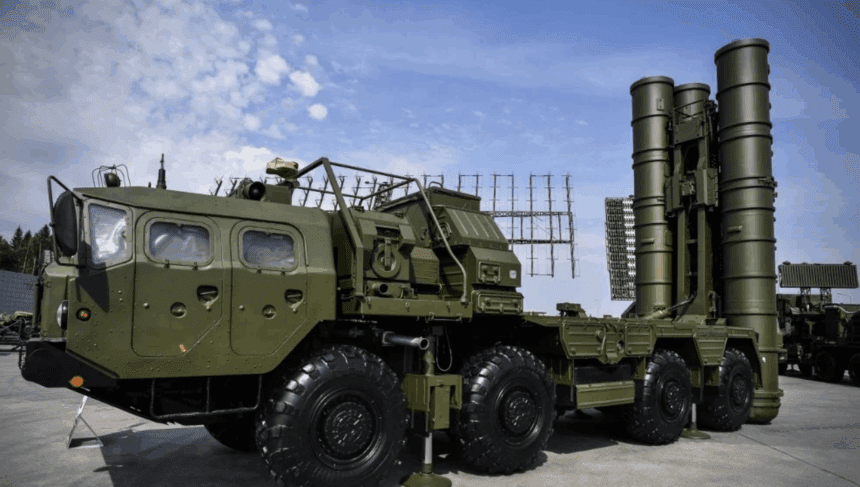
Turkey is reportedly exploring a way out of the S-400 impasse that has poisoned its relations with Washington and other NATO allies for years: sending the Russian-made air-defense system back to Russia.
According to Bloomberg, Turkish officials have been discussing options to return the S-400s—along with seeking reimbursement for the billions spent—potentially through financial offsets tied to Turkey’s oil and natural gas trade with Russia. Bloomberg also reports that President Recep Tayyip Erdoğan raised the matter with Russian President Vladimir Putin during a recent meeting in Turkmenistan, although the Kremlin has denied that any such request was made.
The timing is not accidental. Ankara has been pushing to restore defense ties with the United States and reopen a path back into the F-35 program, which it was removed from in 2019 after acquiring the S-400. The rupture was later cemented by U.S. CAATSA sanctions imposed on Turkey’s defense sector—measures that Turkish officials now say could be lifted “very soon” if the two sides find a workable formula.
Washington’s bottom line has remained blunt: Turkey cannot possess the S-400 and simultaneously regain access to the F-35 ecosystem. U.S. Ambassador to Turkey Tom Barrack—close to President Donald Trump—has repeated that the legal requirement is unchanged, while also suggesting Ankara is nearing a decision and that the dispute could be resolved within “four to six months.”
For Ankara, the prize is bigger than symbolism. Rejoining the F-35 track would mean access to the most advanced fighter jet in frontline service, and—just as importantly—relief from the technology and procurement constraints created by sanctions. Turkey has tried to bridge the gap by pursuing F-16 modernization, exploring Eurofighter options, and accelerating its indigenous KAAN fighter project, but none of these fully substitute for the F-35 in capability and alliance interoperability.
The S-400 is the core obstacle because it collides with NATO’s most sensitive concern: operating a Russian air-defense system alongside Western aircraft risks exposure of signatures, tactics, and data flows that Moscow could exploit. Turkey has argued it does not actively use the system and has insisted it will not be integrated into NATO architecture, but U.S. officials have treated “possession” itself—not merely activation—as the red line.
The most difficult part of the Bloomberg scenario is not Ankara’s desire—it is Moscow’s incentive. Russia may be reluctant to accept a return that looks like a political climbdown for Turkey under U.S. pressure, or that sets a precedent for other buyers. On the other hand, if the arrangement is packaged as a commercial settlement (repayment, offsets, or other compensation), the Kremlin could decide that money and leverage matter more than optics. Even then, the process would likely be slow, technical, and politically choreographed, with both sides trying to avoid looking like they yielded.
If Ankara is serious, expect a sequence of signals rather than a single dramatic announcement: a credible “physical removal” plan that satisfies U.S. legal requirements; a quiet, face-saving mechanism with Moscow; and parallel steps on sanctions relief and defense procurement that allow each capital to claim victory at home.