
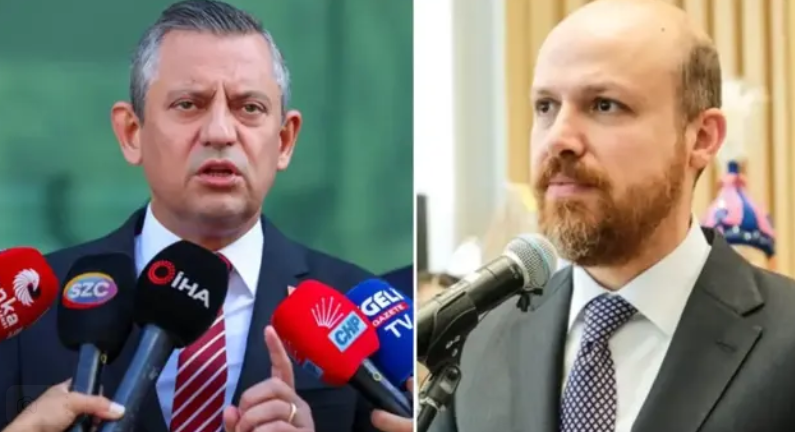
In authoritarian or hybrid regimes, succession is not announced—it is normalized. It advances quietly through repetition, symbolism, and, crucially, through the opposition’s willingness to fight on the wrong terrain. That is why Özgür Özel’s reaction to the Galata Bridge rallies matters beyond the immediate controversy. By treating the episode primarily as a dispute over permits and double standards, Özel did more than miss the point—he helped translate a succession rehearsal into the language of normal democratic procedure.
The day after the third “Gaza rally” on the Galata Bridge, Özel framed the core issue as administrative inequality: “If we look at it objectively, the permission granted yesterday was the right decision; the earlier refusals were a major mistake.”
He then underlined a moral posture that sounds generous, even statesmanlike: “We are not in a position to say, ‘You didn’t allow us, so don’t allow them either.’”
And finally, he delivered the line that—unintentionally—captures the political asymmetry everyone can see: “If the CHP requests permission, the bridge is prohibited; but when the request comes from the President’s son… ‘that permission will be granted.’”
Each of these sentences is defensible in isolation. Together, they reveal the strategic problem: Özel is arguing about the rules of access to a stage whose political purpose he refuses to name.
The rally was not just Gaza. It was choreography
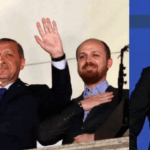
The Galata Bridge event(s) was not merely a Gaza solidarity march. It was a visibility ritual—a carefully staged spectacle in which Bilal Erdoğan is positioned as a moral actor, a “civil society” figure, a public personality whose presence is treated as natural, even expected. Gaza was the perfect banner for that performance precisely because it is morally untouchable in Turkish public life. It discourages scrutiny and grants instant ethical legitimacy.
Özel’s comments—especially the insistence that “permission was right” and should be granted to everyone—sound like a principled defense of freedoms of assembly and expression. But in Turkey’s political conditions, procedural language often becomes a substitute for political resistance. When the opposition leader treats the spectacle as basically normal and only objects to its unequal administration, he is no longer contesting the stage—he is negotiating the seating plan.
That is how normalization works.
The trap: turning legitimacy into “fairness”
Authoritarian succession projects do not need formal endorsement from the opposition. They need something simpler: for the opposition to treat the successor’s public appearances as part of ordinary politics—events whose legitimacy is assumed, while the debate centers on whether the process is fair.
This is exactly what happens when Özel’s critique boils down to: the permit should be granted equally. He is not saying, “This is a grooming exercise.” He is not saying, “Civil society is being instrumentalized to manufacture legitimacy for an heir.” He is not saying, “A ‘president’s son’ being placed at the center of public ritual is itself the political message.”
And he is also not saying the other, even more corrosive truth: Gaza is being exploited—ritualized as a domestic legitimacy resource—exactly the way Erdoğan has instrumentalized high-emotion causes for decades. Özel speaks as if this is simply a question of fair access to public space, as if the state’s selective generosity is the main scandal. But the deeper scandal is that a moral catastrophe is being turned into a succession prop: the cause becomes a stage, the march becomes a broadcast, and the grief becomes political capital.
Instead, he says: grant everyone the same permission.
In other words, Özel is not challenging the use of Gaza as a regime technology; he is merely challenging the inequality of who gets to use it. That is how “procedural opposition” ends up laundering the choreography: it turns a dynastic rehearsal into a debate about administrative neutrality, and it turns the exploitation of a moral cause into a complaint about equal treatment under the rules—rules the regime writes, suspends, and redeploys at will.
Gaza as moral shield, the opposition as moral alibi
Özel also argues that all voices—from right or left—should be amplified for Gaza, and that protesting Israel’s aggression is inherently valuable. That is morally intuitive. But it is also precisely why Gaza is such a powerful domestic instrument: it can convert political staging into ethical imagery.
Once a succession rehearsal is wrapped in a sacred cause, any attempt to interrogate the choreography risks being painted as hostility to the cause itself. When Özel calls what happened “important” and “the right thing,” he provides an alibi the regime benefits from at exactly this moment: the public hears not “this is a succession stage,” but “this is a legitimate civic act—just administered unfairly.”
That shift is decisive. It reassures the audience that nothing structurally abnormal is occurring—only an inconsistency in permitting. And when the opposition leader supplies that reassurance, he inadvertently becomes part of the publicity machine that makes succession feel normal.
By: News About Turkey (NAT)