
A court in Ankara has remanded 103 people in custody on terrorism-related charges following mass raids carried out ahead of the NATO summit scheduled for July 7–8 in the Turkish capital, deepening concerns among rights groups, lawyers and opposition voices that summit-related security measures are being used to suppress dissent.
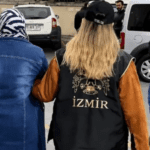
The operations, conducted on June 23 and 24 by police and gendarmerie units under the coordination of the Ankara Chief Public Prosecutor’s Office, targeted hundreds of people accused of links to armed organizations. According to the prosecutor’s office, 225 people were detained as part of an investigation into the alleged activities of terrorist organizations across the country.
Of those whose police and gendarmerie procedures had been completed, 135 were transferred to the Ankara Courthouse. Prosecutors released six people, while 129 were referred to a criminal judgeship of peace with a request for pretrial detention. The court ordered the imprisonment of 103 people and placed 26 others under judicial control, including house arrest. Proceedings for other detainees were still continuing.
Those remanded include Ankara University economics professor Assoc. Prof. Emel Memiş Parmaksız, Kaos GL editor-in-chief and journalist Yıldız Tar, TEMA Foundation Ankara representative Nevzat Özer, Umut-Sen spokesperson Burcu Arıkan, Halkevleri executive Hediye Yıldırım, and Progressive Lawyers Association lawyers Semra Demir and Kürşat Bafra.
Official line: anti-terror operation
State and pro-government outlets reported the case as a counterterrorism operation. TRT Haber, citing the prosecutor’s office, said the investigation was aimed at exposing the activities of terrorist organizations. Yeni Şafak, citing IHA, reported that the suspects were being investigated over alleged links to ISIS, TKP/ML, MLKP and DHKP-C.
The prosecutor’s office did not initially present the operation as a NATO summit measure. However, independent outlets reported that the formal arrest request included the claim that suspects could carry out attacks “in an effort to portray the Republic of Turkey as a country associated with terrorism.”
The court justified the detention orders by citing the alleged existence of strong suspicion of crime, the seriousness of the charges, the possibility of flight, incomplete evidence in the file, and the view that judicial control measures would be insufficient at this stage.
Detainees deny allegations
The detainees whose statements were reported by Turkish outlets rejected the accusations.
Yıldız Tar, a journalist and LGBTI+ rights advocate, reportedly told the court that they had only encountered the alleged organization through this investigation. Tar said they were a journalist whose work required covering social movements and public events.
Assoc. Prof. Emel Memiş Parmaksız also denied any link to TKP/ML or any other armed organization. She said she was a scientist and had provided training on budgeting and aging to more than 350 public officials from institutions including the Interior Ministry, Justice Ministry, Presidency Strategy and Budget Directorate, and AKP Women’s Branches.
The questioning of Memiş reportedly focused on whether she had links to TKP/ML, used a code name, received armed or unarmed training, took instructions, participated in actions, or had relatives in an armed organization. She denied all such allegations.
TEMA Ankara representative Nevzat Özer, one of the environmental activists remanded, said he had worked as a volunteer for the foundation for 30 years and had heard the name of the alleged organization for the first time through the case.
Reports also highlighted the cases of elderly TEMA volunteers and retirees. Some were placed under house arrest, including people in their seventies, one of whom reportedly said she had joined TEMA only because she loved trees and nature.
Lawyers and rights groups see political context
Rights groups and lawyers argue that the timing of the raids cannot be separated from the NATO summit and the extraordinary security environment created in Ankara.
The Ankara Governor’s Office announced a 13-day ban on public gatherings, demonstrations, press statements, sit-ins, hunger strikes, rallies, leaflet distribution, banners, tents and similar activities across the city from June 28 to July 10. The governor’s office said the measures were necessary to protect national security, public order, citizens’ safety, the rights and freedoms of others, and the security of delegations attending the summit.
Human Rights Watch described the mass detentions, protest bans and social media restrictions as part of a crackdown ahead of the summit. The organization said the operation reflected the Turkish authorities’ intolerance toward freedom of expression and assembly and urged NATO allies to raise rights concerns with Ankara.
Lawyers from the Progressive Lawyers Association also criticized the arrests outside the courthouse, arguing that the summit was being used to turn daily life in Ankara into a security lockdown. They said the arrests targeted lawyers, environmentalists, workers’ rights advocates, students and political activists.
Some detainees reportedly reacted angrily after the rulings, saying the authorities were acting because foreign leaders, including U.S. President Donald Trump, were expected to attend the summit.
Summit security expands across Ankara
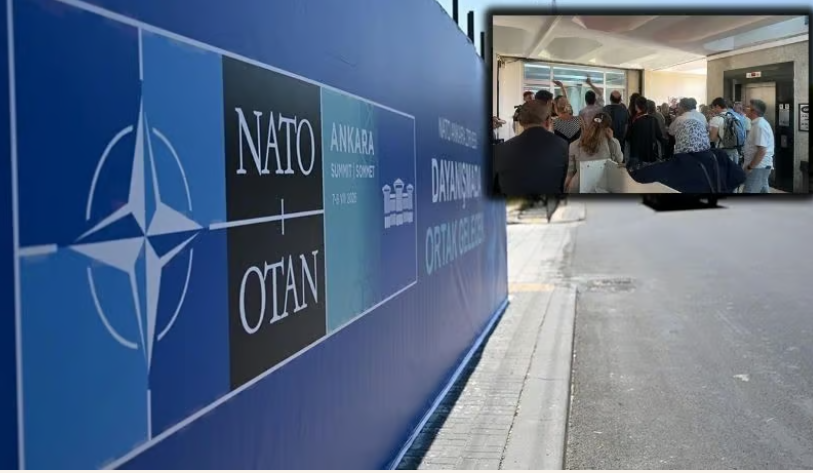
The NATO summit will be held at the Beştepe Presidential Compound and is expected to bring together leaders of all 32 NATO member states, along with invited leaders, ministers, diplomats, international organizations and thousands of foreign guests.
According to the Turkish Presidency’s Communications Directorate, 56,288 security personnel — 48,841 police officers and 7,447 gendarmerie personnel — will be assigned during the summit. The directorate also said nearly 3,000 journalists, camera crews, photographers, digital media representatives and international broadcasters had applied for accreditation.
The summit will also bring major traffic restrictions. Authorities have prepared an online traffic map showing temporary road closures and alternative routes. Drone flights are banned without permission from the governor’s office, and access to sensitive areas, including the summit venue, hotels and convoy routes, will be restricted.
The Communications Directorate said Ankara will host extensive public diplomacy and media operations during the summit, including outdoor displays across the city, side events and international media facilities.