
Lindsey Graham, the veteran Republican senator who evolved from a neoconservative foreign-policy hawk and fierce critic of Donald Trump into one of the president’s closest congressional allies, died on Saturday, July 11, after what his office described as a “brief and sudden illness.” He was 71 and had served in Congress for more than three decades.
In Turkey, Graham will largely be remembered for years of rhetoric and legislative initiatives that Ankara regarded as hostile to its security and defense interests.
Some hardline Turkish media outlets portrayed his death as the demise of an “enemy of Turks,” while more restrained coverage recalled his long record of supporting sanctions, opposing Turkey’s military operations in Syria and seeking to block Ankara’s access to advanced U.S. weapons.
Yet Graham’s final days also revealed a significant change in his positions toward both Turkey and Syria. At the NATO summit in Ankara, he signaled support for resolving the dispute over Turkey’s acquisition of F-35 fighter jets. He also offered unexpected backing to Syrian President Ahmed al-Sharaa, whose government he had sought to sanction only months earlier.
A longtime critic of Turkey
Graham’s disputes with Ankara centered primarily on northern Syria, Washington’s partnership with the Kurdish-led Syrian Democratic Forces, Turkey’s purchase of the Russian-made S-400 air-defense system and its subsequent removal from the F-35 fighter-jet program.
When Turkey launched a cross-border operation in northeastern Syria in October 2019, Graham strongly supported economic sanctions against Turkish officials and the Turkish economy. He accused Turkey of attacking Kurdish forces that had assisted the United States in the campaign against Daesh.
Graham also threatened to seek Turkey’s suspension from NATO if Ankara continued targeting the Kurdish forces supported by Washington.
Together with Democratic Senator Chris Van Hollen, he backed legislation proposing sanctions on senior Turkish officials, restrictions on military transactions and measures targeting parts of Turkey’s economy.
Although Graham generally referred to the U.S.-backed groups as “the Kurds,” Turkey maintained that the dominant component of the SDF was the YPG, which Ankara considers the Syrian branch of the outlawed Kurdistan Workers’ Party, or PKK.
Graham’s position was therefore viewed in Turkey not merely as support for Kurdish communities but as political and military backing for an organization Ankara considers a terrorist threat.
Meetings with Erdoğan
Despite those disagreements, Graham maintained direct contact with Turkish President Recep Tayyip Erdoğan and other senior officials.
During a visit to Ankara in January 2019, Graham met Erdoğan to discuss Washington’s planned military withdrawal from Syria, the fight against Daesh and Turkey’s security concerns along its southern border.
The two also attended a classical music concert by Turkish pianist Fazıl Say. Erdoğan’s decision to seat Graham beside him was viewed as an attempt to establish a personal relationship with one of the most influential foreign-policy voices in the U.S. Senate.
Graham met Erdoğan again in New York in September 2022 during the United Nations General Assembly. By that time, he had publicly supported the Biden administration’s proposal to sell F-16 aircraft and modernization equipment to Turkey.
These meetings demonstrated Ankara’s repeated efforts to persuade Graham that Turkey remained an essential NATO ally despite their disagreements over Syria and Russian weapons.
Late shift on Turkey and the F-35
Graham’s position appeared to soften considerably during the NATO summit held in Ankara on July 7 and 8, 2026.
Speaking during the summit, he indicated that he was open to Turkey eventually receiving F-35 fighter jets and expressed hope that a solution capable of securing Senate approval could be found.
The remarks represented a notable change for a senator who had previously supported restrictions on advanced weapons transfers to Ankara.
Graham continued to describe Turkey as an important NATO ally, although he acknowledged that deteriorating relations between Turkey and Israel could make congressional approval more difficult.
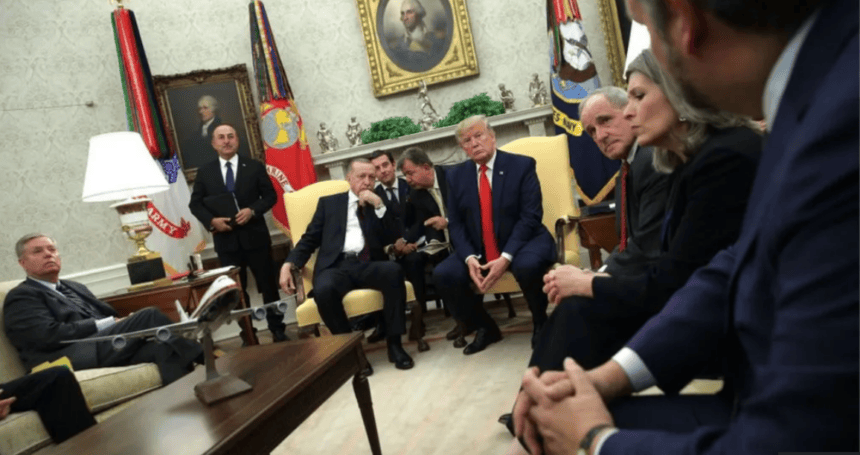
His comments came as Trump announced that his administration intended to lift the CAATSA sanctions imposed on Turkey and consider restoring Ankara’s access to the F-35 program. Trump nevertheless acknowledged that legal and congressional obstacles remained unresolved.
U.S. legislation still restricted the transfer of F-35 aircraft while Turkey retained the S-400 system. Trump’s announcement therefore represented a political commitment rather than the immediate completion of the sanctions-removal and aircraft-sale processes.
For Ankara, however, Graham’s willingness to contemplate a deal was important. A senator who had long supported sanctions and military restrictions appeared ready to accept Trump’s attempt to rebuild strategic relations with Turkey.
Graham also changed his position on Syria
Graham made an equally striking shift toward Syria’s new government just three days before his death.
On July 8, following meetings held during the NATO summit in Ankara, Graham said Syrian President Ahmed al-Sharaa deserved an opportunity to rebuild and reunify the war-torn country.
Graham said he left his meeting with al-Sharaa feeling encouraged and concluded that supporting the new Syrian leader was in the national-security interests of the United States.
He argued that a fragmented Syria would benefit Washington’s adversaries, while al-Sharaa offered what Graham considered the best available chance of creating a functioning and unified Syrian state.
Graham also credited al-Sharaa with sharply reducing Iran’s influence in Syria. He urged Israel to recognize the regional benefits of weakening Tehran’s position and to give the new Syrian government space to improve conditions for the Syrian population.
The statement marked a significant reversal.
Graham had previously been one of the most vocal skeptics of Syria’s post-Assad government. He had sought binding conditions on the removal of sanctions and repeatedly warned that al-Sharaa’s previous affiliations and the composition of the new government required close scrutiny.
In January 2026, after Syrian government forces fought the Kurdish-led SDF, Graham threatened to revive Caesar Act sanctions and make them even more severe.
He and Democratic Senator Richard Blumenthal subsequently introduced the Save the Kurds Act. The proposed legislation sought sanctions against Syrian government officials, financial institutions and foreign parties providing military or financial support to Damascus.
Only months later, Graham was arguing that the same Syrian government should receive U.S. backing.
His July statement aligned him more closely with the positions of Trump and Erdoğan. Both presidents supported engagement with al-Sharaa and favored a unified Syrian state under the authority of the government in Damascus.
The shift was also relevant to Turkey’s conflict with the YPG. Ankara has consistently opposed a separate armed or autonomous Kurdish structure in northeastern Syria and has supported integrating the region under the authority of the Syrian central government.
Graham did not abandon his concern for the Kurdish population, but his endorsement of al-Sharaa indicated that he had become more willing to accept a Damascus-led solution instead of treating the SDF as Washington’s principal long-term partner in Syria.
The change was particularly notable because it came so soon after the Save the Kurds Act and only days before Graham’s sudden death.
S-400 dispute and CAATSA sanctions
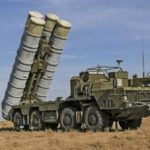
Graham was also one of the most prominent congressional advocates of sanctions over Turkey’s purchase of the S-400 missile-defense system from Russia.
In 2019, Graham and Van Hollen urged the U.S. administration to impose sanctions, arguing that Turkey’s acquisition and testing of the system required action under the Countering America’s Adversaries Through Sanctions Act.
Turkey was removed from the multinational F-35 program in 2019, and formal CAATSA sanctions were imposed in December 2020.
The consequences extended beyond Turkey’s ability to purchase F-35 aircraft. Ankara argued that the restrictions damaged its defense industry, disrupted cooperation among NATO allies and forced it to seek alternative suppliers.
Trump’s July 2026 pledge to remove the sanctions raised hopes in Ankara that the dispute could finally be resolved. However, congressional approval, legal restrictions and the unresolved status of Turkey’s S-400 systems continued to complicate the process.
The progress was also expected to affect other defense projects, including Turkey’s efforts to obtain U.S.-made engines and other components for the domestically developed KAAN fighter aircraft.
Close relationship with Israel
Graham’s strong support for Israel and close relationship with Prime Minister Benjamin Netanyahu also shaped Turkish perceptions of him.
Netanyahu described Graham after his death as one of Israel’s greatest friends. Graham had consistently defended Israeli military operations and advocated a hard line against Iran and groups aligned with Tehran.
His support for Netanyahu became increasingly controversial in Turkey amid widespread public anger over Israel’s military campaign in Gaza.
This made Graham’s final statement on Syria all the more striking. While continuing to acknowledge Israel’s security concerns, he urged Israeli leaders to recognize that al-Sharaa’s weakening of Iranian influence could benefit Israel and the broader region.
His argument suggested that supporting a stable Syrian government might serve Israeli security more effectively than continuing to isolate Damascus.
Final trip was to Kyiv
Although Graham attended the NATO summit in Ankara shortly before his death, Turkey was not his final foreign destination.
After leaving Ankara, he travelled to Kyiv, where he met Ukrainian President Volodymyr Zelenskyy on July 10. He died the following day.
His final overseas trip reflected his broader political identity as one of the Senate’s most interventionist foreign-policy figures and a determined supporter of Ukraine.
A mixed legacy
Graham leaves behind a deeply mixed legacy regarding Turkey.
For much of his career, he championed sanctions and weapons restrictions that Ankara regarded as direct challenges to its national security. He supported the YPG-dominated SDF, opposed Turkey’s military operations in Syria and pressed successive U.S. administrations to punish Ankara over the S-400 purchase.
At the same time, he maintained communication with Erdoğan, acknowledged Turkey’s legitimate border-security concerns and eventually supported the proposed sale of F-16 aircraft.
In his final days, his position evolved further. He expressed openness to resolving the F-35 dispute, reaffirmed Turkey’s importance as a NATO ally and endorsed engagement with Syria’s new government.
His late shift did not erase the years of confrontation that defined his relationship with Ankara. However, it suggested that Graham had come to accept some elements of the regional strategy promoted by Erdoğan and Trump: improved U.S.-Turkey defense ties, engagement with al-Sharaa and the restoration of a unified Syrian state with diminished Iranian influence.
For Turkey, Graham will therefore be remembered both as one of its most determined opponents in Washington and as a politician who, shortly before his death, appeared to reconsider some of the positions that had placed him at odds with Ankara.