
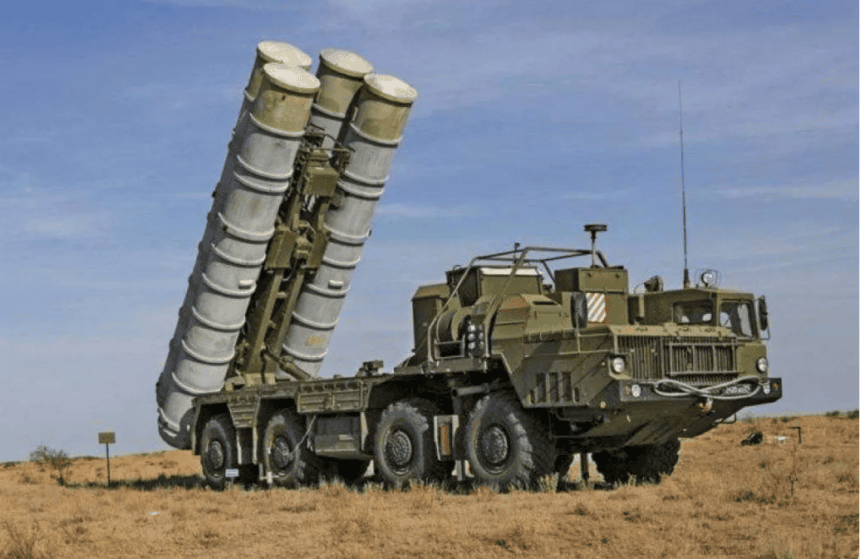
Turkey has reportedly reached an agreement to sell its Russian-made S-400 air-defence systems to a Gulf country, potentially removing the main obstacle to the lifting of US sanctions and Ankara’s return to the F-35 fighter program. However, Turkey, Russia and the two countries identified as possible buyers—the United Arab Emirates and Qatar—have not publicly confirmed a completed transaction.
The claim was reported by Abdülkadir Selvi, a pro-government Hürriyet columnist widely regarded as close to President Recep Tayyip Erdoğan’s political circle and as a journalist who frequently reflects the thinking of the Turkish government.
Selvi has repeatedly disclosed details from meetings involving Erdoğan and senior members of the ruling Justice and Development Party, giving his columns particular significance when they concern sensitive government decisions.
According to Selvi, Turkey sold the S-400 batteries to an unidentified Gulf country after the final details were resolved during overnight negotiations.
He said some of his sources identified the United Arab Emirates as the buyer, while others named Qatar. Selvi indicated that the transaction could soon be formally announced, although no government involved had confirmed the identity of the purchaser or published the terms of the reported agreement.
The absence of an official announcement means the precise status of the transaction remains uncertain. The parties may have reached a political understanding or an agreement in principle without completing the legal transfer of ownership, Russian re-export approval or the physical removal of the equipment from Turkey.
Reuters consequently described Turkey as potentially preparing to announce a resale rather than independently confirming that the transaction had already been completed.
Kremlin confirms discussions with Ankara
Russia has nevertheless confirmed that it is discussing the future of the S-400s with Turkey.
Asked whether Turkey had sought Moscow’s permission to transfer the systems, Kremlin spokesman Dmitry Peskov described the matter as “extremely sensitive.”
Peskov said Russia had been in contact with the Turkish government and would continue its discussions with Ankara. He did not confirm that Moscow had approved a resale or identify the country that might receive the equipment.
The statement was significant because it represented the Kremlin’s clearest public acknowledgment that the future of Turkey’s systems was under discussion.
Russian consent is considered essential because the original sale included end-user restrictions governing the ownership and possible re-export of the equipment. Turkey would therefore be unable to transfer the S-400s legally without reaching an understanding with Moscow.
Russia would also want guarantees that the system’s radars, command equipment and interceptor technology would not be handed over to the United States or examined by Western intelligence services.
At the same time, permitting a transfer to a Russian-approved Gulf country could help Moscow preserve its relationship with Ankara and potentially create a new customer for maintenance, technical assistance, spare parts and interceptor missiles.
UAE appears to be the leading candidate
Although Selvi mentioned both the UAE and Qatar, the Emirates appears to be the more frequently cited candidate in Turkish reporting.
The UAE already operates a layered air-defence network centred on American-made Patriot and Terminal High Altitude Area Defense systems. However, the growing threat from ballistic missiles, cruise missiles and long-range drones has increased pressure on Gulf governments to expand their defensive capabilities.
An S-400 acquisition could provide the UAE with another long-range surveillance and interception system while avoiding the delay involved in ordering newly manufactured batteries directly from Russia.
The UAE has also demonstrated a willingness to diversify its military suppliers rather than relying entirely on the United States and Europe.
However, an Emirati purchase would create serious complications in the UAE’s defence relationship with Washington.
The Emirates hosts US aircraft and military personnel at Al Dhafra Air Base. American officials could object to the presence of Russian radar equipment or Russian technicians near facilities used by the United States.
Washington’s central concern is that the S-400’s radars could collect electronic information about advanced American aircraft, including their radar signatures and operating characteristics.
That concern led the United States to remove Turkey from the F-35 program in 2019 after Ankara took delivery of the Russian systems. Turkey had been a manufacturing partner in the program and had already ordered aircraft when it was expelled.
The UAE previously negotiated to purchase F-35s from the United States. Acquiring the same Russian system that blocked Turkey’s participation could undermine any future Emirati attempt to revive an F-35 agreement.
A possible arrangement could involve placing the S-400 batteries at an isolated facility, disconnecting them from American-built command networks or keeping them in storage rather than integrating them into the UAE’s operational air-defence structure.
There has been no public confirmation that Washington has approved such a formula.
Qatar remains a possible alternative
Qatar has also been mentioned as a potential buyer, although the evidence supporting the Qatar option is less substantial.
Doha has a documented history of considering the S-400. Qatar’s ambassador to Moscow said in January 2018 that negotiations with Russia over purchasing the system had reached an advanced stage. In March 2019, Qatar’s foreign minister said the government was still studying a possible purchase.
Those talks did not produce a publicly announced contract, but Qatar’s earlier interest means it cannot be ruled out as the purchaser of Turkey’s existing batteries.
Turkey and Qatar also have close political and defence relations. Turkey operates a military base in Qatar, while the two countries cooperate extensively in military training, defence production and regional policy.
However, Qatar hosts Al Udeid Air Base, one of the United States’ most important military installations in the Middle East and a major command centre for US regional operations.
Stationing an operational Russian radar system near Al Udeid would likely cause serious concern in Washington. The United States would probably demand strict guarantees concerning the system’s location, operating modes, access to radar data and the presence of Russian technical personnel.
The Qatar possibility rests largely on Selvi’s unnamed sources and Doha’s previous interest in the system. The UAE therefore appears to be the leading reported candidate, while Qatar remains a plausible alternative.
Selling the systems could provide Turkey with two benefits
Selvi presented the proposed transaction as offering Turkey a double advantage.
By relinquishing the S-400s, Ankara could meet US demands for the systems to be removed from Turkish ownership and territory. It could also recover part of the approximately $2.5 billion it agreed to pay Russia for the batteries.
“By getting rid of the S-400s, Turkey will not only escape the CAATSA sanctions,” Selvi wrote. “At the same time, it will make money by selling the S-400s.”
The reported sale could therefore be politically easier for Erdoğan to defend domestically than surrendering the systems to the United States, dismantling them without compensation or returning them to Russia.
Erdoğan has long defended the original purchase as an expression of Turkey’s sovereignty and its right to choose its defence suppliers. An outright reversal could expose the government to accusations that it wasted billions of dollars and damaged Turkey’s relationship with Washington without receiving a lasting strategic benefit.
Selling the batteries to a Gulf government would allow Ankara to portray the outcome as a commercial and strategic decision rather than a concession to American pressure.
Earlier alternatives failed to resolve the dispute
Before the reported Gulf proposal emerged, Turkey and the United States considered several possible solutions.
These reportedly included keeping the batteries in storage, removing key components, dismantling their launch capability or leaving the systems in Turkey while guaranteeing that they would not be activated.
Such options were considered problematic because US law focuses not only on whether the S-400 is operational but also on whether Turkey continues to possess the system and associated equipment.
The batteries have not been integrated into Turkey’s regular air-defence network. Their inactive status, however, has been insufficient to remove the legal restrictions imposed by Washington.
The third-country option gained momentum because it could provide clearer evidence that Turkey no longer possesses or controls the systems.
The United States would still need to determine whether the transfer was permanent and whether Turkey retained any ownership rights, operational authority or ability to recover the equipment.
F-35 return is not automatic
Even a completed sale would not guarantee Turkey’s immediate return to the F-35 program.
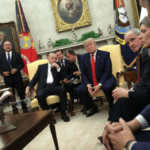
US President Donald Trump said during his meeting with Erdoğan that he intended to lift sanctions on Turkey and would consider allowing Ankara to acquire the F-35.
Turkish Foreign Minister Hakan Fidan subsequently said political will existed on both sides to resolve the CAATSA and F-35 disputes and that officials were working toward a result.
However, the legal restriction on transferring F-35 aircraft to Turkey remains in force.
Under Section 1245 of the US National Defense Authorization Act for fiscal year 2020, the defence and state secretaries must certify to Congress that Turkey:
- – no longer possesses the S-400 system or associated equipment and personnel;
- – has credibly committed not to reacquire it; and
- – has not obtained other Russian military equipment that could compromise the F-35.
A 90-day period must then pass following the certification before the statutory restriction can be waived.
Congress could also use separate arms-sale procedures to object to a future F-35 transaction, particularly if lawmakers concluded that the Gulf transfer was temporary, reversible or designed merely to bypass the law.
CAATSA sanctions and F-35 restrictions are separate
The CAATSA sanctions imposed on Turkey and the statutory prohibition on transferring F-35s are related but legally distinct.
Washington imposed CAATSA sanctions in December 2020 on Turkey’s Presidency of Defence Industries and several senior officials because of Ankara’s significant defence transaction with Russia.
The sanctions included restrictions on US export licences and financial dealings involving the Turkish defence procurement authority.
Removing the S-400s could provide the Trump administration with a basis for lifting or modifying those sanctions. However, the F-35 prohibition would still require the separate certification to Congress and the completion of the statutory waiting period.
A reported sale would therefore begin a legal and political process rather than instantly restore Turkey’s participation in the fighter program.
The exact status of the deal remains unclear
Selvi’s report should be treated seriously because of his access to Erdoğan’s political and government circles. His columns have often disclosed discussions or decisions before they were officially announced.
His claim nevertheless remains an attributed report rather than government confirmation.
The Kremlin has confirmed negotiations with Turkey but has not announced approval. The Turkish government has not identified the buyer. Neither the UAE nor Qatar has acknowledged purchasing the systems.
It is therefore possible that the political and commercial terms have largely been settled while contractual, technical or diplomatic details remain unresolved.
The most accurate assessment is that Turkey has reportedly reached or is close to reaching an agreement to transfer the S-400s to a Gulf country, with the UAE emerging as the most likely destination.
A confirmed sale would represent the most important breakthrough in the S-400 dispute since Turkey received the systems in 2019. It could remove the central obstacle to lifting US sanctions and reopen negotiations over Ankara’s return to the F-35 program.
Until the governments involved disclose the agreement and explain its terms, however, the identity of the purchaser, the status of Russian approval and the ultimate fate of the batteries remain officially unconfirmed.