
Burhanettin Duran, head of the Turkish Presidency’s Directorate of Communications, on Sunday urged opposition leader Özgür Özel to stop “heeding speculation and disinformation” after Özel alleged that Turkish authorities waited for President Recep Tayyip Erdoğan’s approval for more than two hours before shooting down a drone that entered Turkish airspace from the Black Sea.
The government’s rebuttal leaned on familiar messaging: officials insist the Air Forces Command can act under standing rules of engagement and does not require presidential authorization—framing the controversy as an opposition-fueled misinformation episode rather than a command-and-control failure.
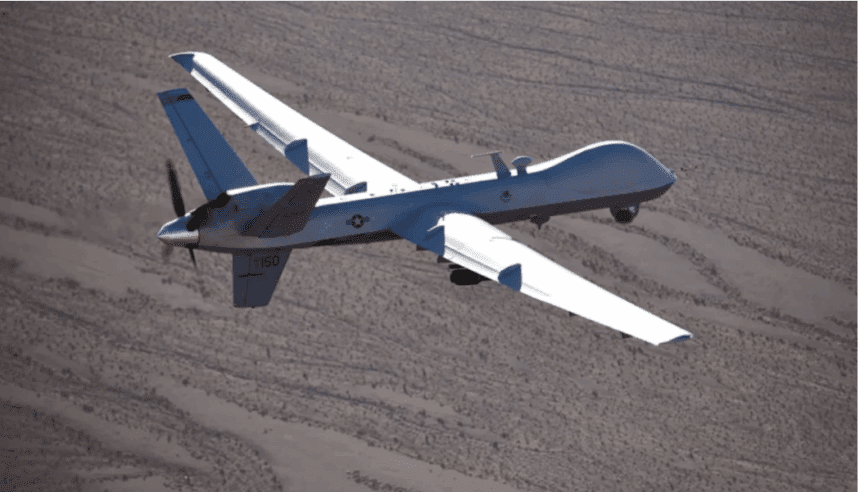
But the government’s counterattack has not resolved the core issue now dominating public debate: the absence of verifiable detail. Turkey’s Defense Ministry has acknowledged that an “out of control” UAV approached from the Black Sea on Dec. 15 and was destroyed by scrambled F-16s, yet it has not publicly identified the drone’s origin, operator, model, or payload, nor provided a detailed timeline showing when the drone was first detected, when it was classified as hostile or unsafe, and why the intercept occurred where it did.
That information gap has become politically combustible because the intercept was not described as a coastal encounter. Reporting cited in Turkey indicates the drone was downed inland between Ankara’s Elmadağ district and neighboring Çankırı, and the incident briefly affected civil aviation around Ankara’s Esenboğa airport—facts that make “we intervened in time” a harder claim to assess without disclosure of radar tracks, intercept geometry, and decision logs.
The government has also argued that the episode reflects the broader spillover risk of the Russia–Ukraine war and insisted Turkey’s defenses are layered and effective. Yet even defense-focused reporting quoting the ministry emphasized how challenging small, low-signature drones can be to detect and track—an acknowledgment that can cut both ways, reinforcing the need for transparency on what exactly happened and what went right or wrong.
The controversy widened after additional UAV debris was found in western Turkey. Turkish authorities said wreckage discovered in Kocaeli was preliminarily assessed as a Russian-made Orlan-10 reconnaissance drone, while a third drone discovery in Balıkesir’s Manyas district added to questions about how often such incursions occur and what Turkey’s early-warning picture actually looks like.
Against that backdrop, a senior Russian diplomat speaking anonymously to Cumhuriyet suggested the incidents could be a “provocation,” a line that appeared designed to discourage the matter from hardening into a direct Ankara–Moscow confrontation—while still leaving Turkey without clear answers about responsibility.
For critics, Duran’s broadside illustrates a deeper pattern: labeling challenges as “disinformation” while keeping the underlying facts classified or undisclosed. In this reading, the state is trying to win the narrative war first—without meeting the basic accountability test that would settle the dispute: publishing a credible operational sequence (detection time, tracking duration, decision authority, intercept time/location) and what the wreckage reveals.
Until that happens, the government’s insistence that “official channels” are the only trustworthy ones may persuade loyal audiences—but it is unlikely to silence suspicion in a country where security incidents routinely become proxies for larger questions about competence, civilian oversight, and the reliability of state messaging