

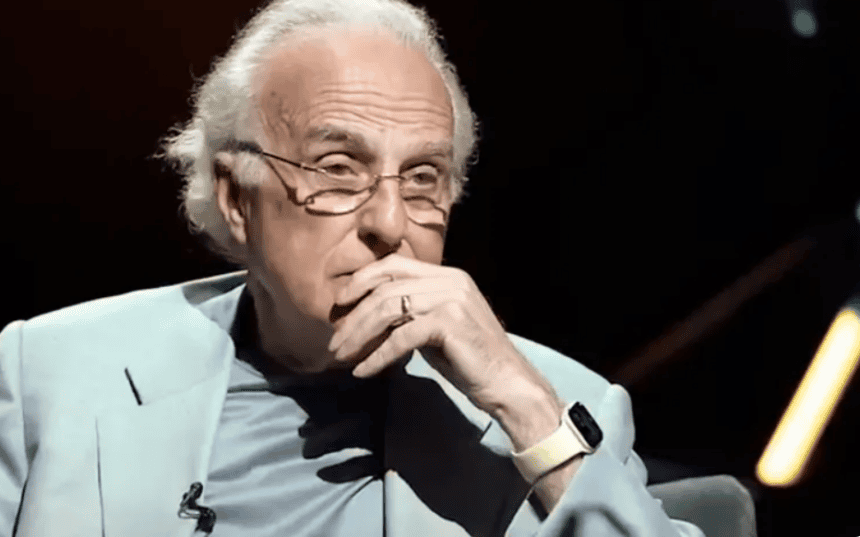
John L. Esposito, one of the most influential American scholars of Islam and a prominent defender of the Hizmet movement’s global educational and interfaith mission, died on July 15 at the age of 86.
Esposito died in Philadelphia from complications following heart surgery, according to Georgetown University. He was Distinguished University Professor Emeritus of Religion and International Affairs, professor of Islamic studies and founding director of Georgetown’s Prince Alwaleed bin Talal Center for Muslim-Christian Understanding.
During a career spanning more than five decades, Esposito worked to challenge Western stereotypes about Islam and to promote a more informed understanding of Muslim societies. His scholarship reached far beyond academia, influencing generations of students, journalists, religious leaders and policymakers.
He was also one of the earliest prominent Western academics to examine the Gülen movement, also known as Hizmet, as a significant religious, educational and civil-society movement rather than through a narrow political or security framework.
A scholar who challenged Western assumptions about Islam
Born into an Italian-American Catholic family in Brooklyn in 1940, Esposito studied under Palestinian-American scholar Isma’il Raji al-Faruqi, whose influence helped shape his commitment to presenting Islam through its own religious and intellectual traditions.
After nearly two decades teaching world religions at the College of the Holy Cross in Massachusetts, Esposito joined Georgetown University, where he spent the remainder of his academic career.
In 1993, he founded the Center for Muslim-Christian Understanding, later renamed the Prince Alwaleed bin Talal Center for Muslim-Christian Understanding. The institution became internationally recognized for its research on Islam, Muslim-Western relations and interfaith dialogue.
Esposito also founded the Bridge Initiative, a Georgetown research project dedicated to documenting and challenging Islamophobia. Georgetown described him as a globally influential scholar who advised the US State Department and other governments, served as an ambassador for the United Nations Alliance of Civilizations and participated in international initiatives on pluralism and deradicalization.
A practising Catholic, Esposito frequently argued that commitment to one’s own faith did not require hostility toward another. His Catholic identity, he said, encouraged rather than obstructed his work on interreligious understanding.
More than 50 books on Islam and Muslim societies
Esposito authored, co-authored or edited more than 50 books, translated collectively into dozens of languages.
His best-known works include Islam: The Straight Path, The Islamic Threat: Myth or Reality?, What Everyone Needs to Know About Islam, The Future of Islam and Islamophobia: The Challenge of Pluralism in the 21st Century.
He also served as editor-in-chief of several major reference works, including The Oxford Dictionary of Islam, The Oxford History of Islam and The Oxford Encyclopedia of the Islamic World.
His 2007 book Who Speaks for Islam? What a Billion Muslims Really Think, co-authored with Dalia Mogahed, drew on more than 50,000 interviews conducted in over 35 predominantly Muslim countries.
The book used public-opinion research to challenge sweeping claims about Muslim attitudes toward democracy, religious freedom, political violence and relations with Western societies.
Early academic engagement with the Gülen movement
Esposito played an important role in introducing the Gülen movement to English-speaking academic audiences.
In 2003, he and political scientist M. Hakan Yavuz edited Turkish Islam and the Secular State: The Gülen Movement, one of the first major English-language academic volumes devoted to Fethullah Gülen’s ideas and the social movement inspired by them.
The book examined Hizmet’s religious origins, educational philosophy, understanding of modern science, relationship with Turkish secularism and expansion through schools and civil-society initiatives in Turkey, Central Asia and the Balkans.
Published by Syracuse University Press, the volume described the movement as combining devotion to Islam with a strong commitment to modern education and scientific learning. It explored how Gülen’s followers translated his teachings into schools, dialogue organizations and other institutions in Turkey and abroad.
Esposito’s engagement with Hizmet reflected his wider scholarly method. Rather than approaching Muslim movements primarily through questions of terrorism, political control or geopolitical rivalry, he examined their ideas, institutions and social contributions.
“We need the Gülen movement in this age”
Esposito was particularly positive about Hizmet’s emphasis on education and interfaith dialogue.
In a 2011 interview published during a visit to Turkey, he praised the movement’s international schools and argued that their contribution extended beyond Turkey.
“They have one goal. That is to enlighten the world with education. This is why we need the Gülen Movement in this age,” he said, according to an account of the interview republished by Hizmet News.
Esposito argued that Hizmet had contributed significantly to Turkey’s international recognition through its schools, dialogue organizations and civil-society projects.
He described the movement’s educational mission as global rather than narrowly national. In his assessment, Hizmet-inspired institutions sought to address ignorance, poverty and social division—problems he considered major drivers of conflict.
His support focused especially on schools established by educators and volunteers inspired by Gülen’s teachings.
Esposito praised those institutions for offering high-quality education to students from different religious, ethnic and cultural backgrounds. He noted that Muslim, Christian and Jewish students could study together without their identities being treated as barriers.
The schools, he said, did more than provide academic instruction. They also taught what he called “the language of love.”
He said he avoided meeting Gülen to preserve his independence
Despite his positive assessment of Hizmet, Esposito said he deliberately avoided developing a personal relationship with Fethullah Gülen.
In the same interview, he explained that Gülen lived relatively close to his home in the United States and that arranging a visit would have been easy. He nevertheless decided against meeting him because he feared that a personal association could cause others to question his academic objectivity.
The distinction was important to Esposito. He wanted his assessment of Hizmet to rest on its ideas, institutions and record rather than on friendship with its spiritual inspiration.
His support for the movement’s educational mission was therefore not presented as the product of personal loyalty to Gülen. It grew from his study of Hizmet’s schools, social activities and interfaith work.
A movement later subjected to a sweeping crackdown
Esposito’s academic work on Hizmet preceded the dramatic political conflict that later developed between the movement and the government of President Recep Tayyip Erdoğan.
The Gülen movement and Erdoğan’s Justice and Development Party had previously cooperated against Turkey’s military-backed secular establishment. Their relationship collapsed amid growing disputes over political power and corruption investigations implicating Erdoğan’s government in 2013.
Following the failed coup of July 15, 2016, Erdoğan accused Gülen and his followers of organizing the attempt. Gülen and the movement repeatedly denied involvement in the coup or any terrorist activity.
The Turkish government subsequently designated the movement a terrorist organization and carried out a sweeping crackdown. Thousands of schools, charities, businesses and media organizations associated with Hizmet were closed or seized, while large numbers of alleged followers were dismissed, detained or prosecuted.
Esposito’s earlier work remains significant because it documented the movement during a period when its international identity was associated primarily with education, dialogue and voluntary service.
His writings provided a scholarly counterpoint to later attempts to reduce Hizmet entirely to the political and security accusations made by the Turkish government.
Building institutions against Islamophobia
Esposito’s concern with Hizmet’s educational work formed part of a broader commitment to resisting prejudice and promoting pluralism.
The Bridge Initiative remembered him as an “activist-scholar” whose work sought not only to explain Islam but to produce practical change. It credited him with building institutions that monitored Islamophobia and challenged the exclusion of Muslim communities from public life.
At Georgetown, Esposito helped raise more than $30 million for the study of Islam, Muslim-Christian relations and Islamophobia, including major endowments supporting the Alwaleed Center and the Bridge Initiative.
He also mentored thousands of students and served on numerous graduate committees, contributing to the development of several generations of scholars of Islam and international affairs.
Esposito was the only scholar elected president of both the Middle East Studies Association of North America and the American Academy of Religion, according to Georgetown.
His honors included the American Academy of Religion’s Martin E. Marty Award for the Public Understanding of Religion, Pakistan’s Quaid-i-Azam Award for contributions to Islamic studies, seven honorary doctorates and Georgetown awards for teaching and research.
Tributes from across the Muslim world
Tributes following Esposito’s death emphasized his role as both a scholar and a bridge-builder.
Malaysian Prime Minister Anwar Ibrahim said his friendship with Esposito extended back more than five decades and described him as a true friend of the Islamic world. Anwar said Esposito’s scholarship became especially important after the September 11 attacks, when fear and misinformation increasingly shaped Western discussions of Islam.
Palestinian-American academic Sami Al-Arian remembered Esposito as a close friend, scholar and humanitarian who “built bridges in an age of walls.”
The Council on American-Islamic Relations said his work had helped educate students, policymakers, journalists and religious leaders at a time when prejudice and inaccurate portrayals of Islam frequently dominated public discourse.
Esposito’s intellectual legacy includes not only his many books and institutions but also his insistence that Muslim communities should be understood through careful scholarship rather than fear or political hostility.
His positive engagement with Hizmet reflected that conviction. He saw its schools and dialogue initiatives as examples of how religious inspiration could be translated into education, service and cooperation across cultural boundaries.
Esposito is survived by Jean Esposito, his wife of 61 years.