

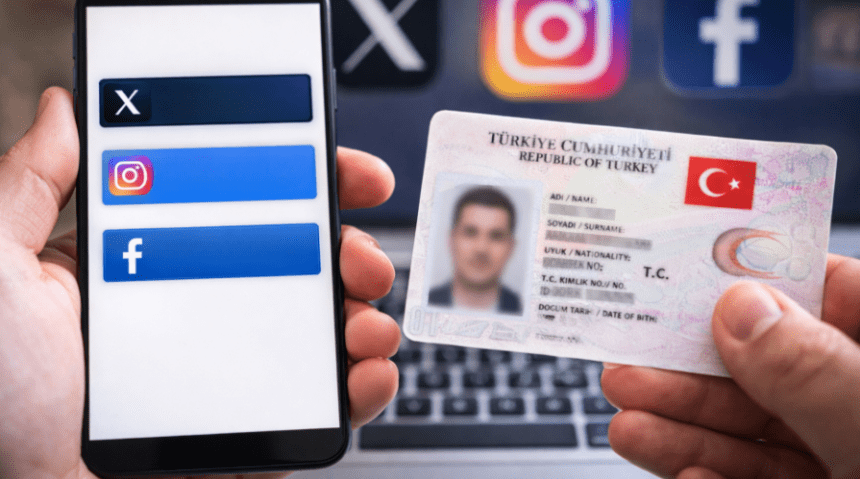
Turkey plans to require social media users to verify their identities with Turkish national ID numbers within about three months, Justice Minister Akın Gürlek said on Friday, outlining a step that would sharply reduce anonymous online activity and deepen state oversight of digital speech. Speaking at a panel in Diyarbakır on April 3, Gürlek said the government had reached agreement with social media platforms on mandatory identity verification and that fake or anonymous accounts would be closed if they failed to comply during the transition period.
The measure does not appear to be in force yet. Earlier statements by Gürlek in February said the plan was still being prepared as legislation and would be included in an upcoming judicial reform package. At that stage, he said the Information and Communication Technologies Authority (BTK) would oversee implementation after parliament passed the regulation and would give existing accounts a transition period before restrictions were applied.
Friday’s remarks were more specific than his earlier comments. In February, Gürlek said identity verification would become essential for anyone posting or commenting on social media and argued that users should not be able to publish through fake names or foreign-based anonymous accounts. His latest remarks suggest the government now sees the plan moving from legislative preparation toward practical rollout, even though the legal basis still appears to depend on parliamentary approval.
The proposal would go beyond a separate bill submitted to parliament in March that seeks to ban social media access for children under 15, require age-verification systems and parental controls, and give platforms six months to comply. That draft would allow penalties including fines of up to 3% of global revenue or bandwidth restrictions for companies that fail to meet the new rules.
Taken together, the initiatives would extend a broader tightening of Turkey’s digital regulatory environment. Over recent years, Ankara has built a framework that compels major platforms to appoint local representatives, respond to content-removal demands and face penalties if they do not comply. Digital rights monitors say these rules have steadily expanded state leverage over online speech and platform governance.
The latest plan comes in an already restrictive online environment. Turkish authorities have blocked more than one million websites and domains since 2007, alongside extensive restrictions on social media content, including URLs, accounts, and individual posts.Independent assessments have also pointed to throttling and blocking measures during politically sensitive periods, reinforcing concerns that a national ID login requirement would further weaken anonymity and increase self-censorship online