
Turkey is preparing a major security lockdown in Ankara ahead of next month’s NATO leaders summit, where US President Donald Trump is expected to press allies for major changes to the alliance, higher defense spending and stronger support for Washington’s strategic priorities.
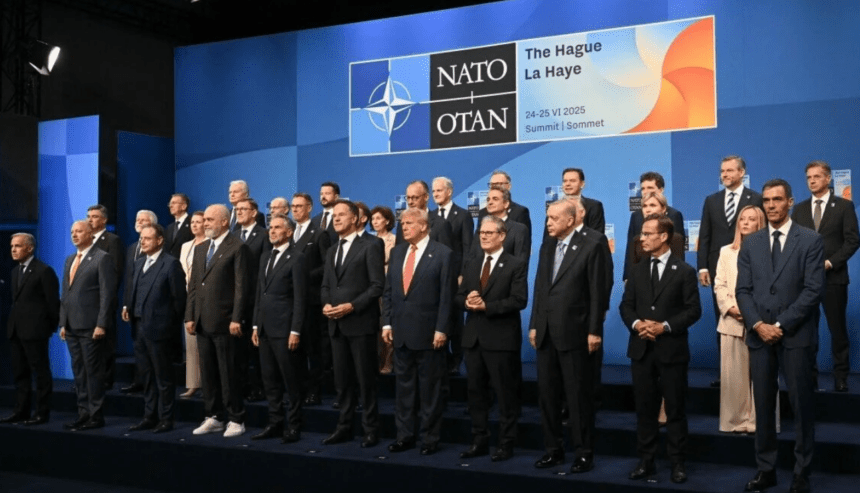
The 36th NATO Summit will be held on July 7 and 8 at the Beştepe Presidential Compound, the residence and offices of Turkish President Recep Tayyip Erdoğan. The meeting will be chaired by NATO Secretary-General Mark Rutte and will bring together leaders from the alliance’s 32 member states.
The summit is already shaping up to be one of the most politically sensitive NATO gatherings in recent years. Secretary of State Marco Rubio told US lawmakers Wednesday that Trump would attend the Ankara summit and use the meeting to make clear his demand for significant changes inside the alliance.
Rubio, testifying before the House Foreign Affairs Committee on the State Department’s budget, said the Trump administration had no intention of abandoning NATO but would continue to push allies to shoulder more responsibility.
“The United States is still in the NATO alliance, and we’ll be there in Turkey to talk about all these topics,” Rubio said. “The president himself will be attending the next NATO meeting of heads of state, where all these points will be made clear.”
Trump has long criticized NATO allies over defense spending, arguing that European members have relied too heavily on American military power while failing to contribute enough to their own defense. His criticism has intensified during his second term amid disputes over allied support for the US position in the war against Iran.
According to Rubio, one of Trump’s main frustrations is that some NATO members have refused to allow the United States to use military bases or airspace during the crisis. Several allies have also declined to send naval forces to help reopen the Strait of Hormuz for energy tankers. European governments have been cautious about direct involvement in US-Israeli operations against Iran, fearing escalation and facing public opposition at home.
The Ankara summit’s location adds another layer of strategic significance. Turkey borders Iran and has long played a central role in NATO’s southern flank, Black Sea security, Middle East-related planning and regional military logistics. As one of NATO’s most important military powers, Turkey is also a symbolic venue for discussions on burden-sharing, regional security and collective defense.
For Erdoğan, hosting the summit offers an opportunity to present Turkey as an indispensable NATO member located at the crossroads of Europe, the Black Sea, the Caucasus, the eastern Mediterranean and the Middle East. Ankara is likely to emphasize its geographic position, military capacity and diplomatic channels with multiple regional actors.
At the same time, Turkey’s own relations with Washington remain complicated. The two allies have clashed over Syria policy, US support for Kurdish-led forces in northern Syria, Turkey’s purchase of Russia’s S-400 air defense system and Ankara’s removal from the F-35 fighter jet program. The United States began excluding Turkey from the F-35 program in 2019, arguing that the Russian system was incompatible with the fifth-generation aircraft and NATO security standards.
Turkish authorities are also preparing sweeping security measures for the summit. According to official statements and state media reports, Ankara will impose “red zones” around critical sites, restrict access to major routes and deploy approximately 40,000 police and gendarmerie personnel during the event.
The red zones are expected to include the area around Ankara Esenboğa Airport, the route from Etimesgut Airport, the Söğütözü neighborhood where the presidential compound is located, official motorcade routes and the areas surrounding 15 hotels where foreign delegations will stay.
Vehicle and pedestrian access to those areas will be controlled. Plainclothes police will also take part in the security operation. Authorities will install additional surveillance cameras at 100 points across the city, supplementing Ankara’s existing urban security camera network.
Extraordinary security measures will be applied at and around Esenboğa Airport, with restrictions expected on some international flights. Security checks at entry points to Ankara will also be intensified, meaning travelers entering the capital by road, rail or air may face additional controls during the summit period.
Demonstrations and marches will not be allowed in Ankara from July 1 to July 15. Turkish authorities have frequently used security grounds to restrict public gatherings during major international, diplomatic or political events. The ban is likely to draw criticism from rights groups and opposition figures, who have long accused the government of using security concerns to limit peaceful protest.
Separate security plans will also be prepared for cultural and social programs attended by the spouses of visiting leaders. State media reported that Turkish authorities would exchange information with other countries to prevent possible protests by individuals who had participated in demonstrations abroad and were being monitored by security services.
Interior Minister Mustafa Çiftçi chaired a high-level security meeting on May 25 to review preparations for the summit. The Interior Ministry said the Security Directorate General and the Gendarmerie General Command presented their plans and that preparations were being handled “in all aspects” to ensure the summit takes place in peace and security.
The lockdown is not limited to policing. NATO’s own media advisory warned that many roads in Ankara will be closed for security reasons on July 7 and 8, and that access to the international media center will only be possible through official shuttles.
The summit has already affected public services and national exams. Turkish media reported that civil servants in nine Ankara districts — Altındağ, Çankaya, Etimesgut, Gölbaşı, Keçiören, Mamak, Pursaklar, Sincan and Yenimahalle — will be placed on administrative leave from July 6 to 12, except for those assigned to summit duties or critical public services.
The same presidential instruction reportedly advised that exams, symposiums, panels, graduation ceremonies, festivals, concerts, entertainment programs, celebrations and similar public events should not be planned during the summit week.
Turkey’s Student Selection and Placement Center, ÖSYM, also postponed several national exams because of summit-related measures. The 2026 Ministry of Education Academy Entrance Exam and Teaching Field Knowledge Test sessions, originally scheduled for July 12, were moved to July 26. The second 2026 Academic Personnel and Graduate Education Entrance Exam was moved from July 26 to August 2.
Another issue adding to the political sensitivity of the summit is the transformation of Etimesgut Military Airfield into a VIP and state-protocol airport near Erdoğan’s Beştepe palace complex.
Officially, the project is being presented as part of Ankara’s preparations for the NATO summit. Foreign leaders, delegations and security teams need a secure and convenient arrival point close to the summit venue, instead of relying only on Esenboğa Airport, Ankara’s main international airport. From a protocol and security perspective, Etimesgut offers a major advantage because it is much closer to Beştepe.
But the scale, timing and permanence of the project suggest that it may be more than a temporary arrangement for a two-day summit. Reports say the work includes extending the runway to 3,000 meters, widening it to accommodate larger aircraft, rebuilding aprons and taxiways, constructing a state guesthouse, creating VIP protocol areas and opening new access roads.
The financial size of the project has also drawn attention. Reports based on public tender information say three separate contracts were launched between 2025 and 2026, with a combined value of around 9.5 billion Turkish lira. The work reportedly includes runway, apron and taxiway construction, a state guesthouse, connection roads and second-stage airfield improvements.
The timing raises further questions. The NATO summit ends on July 8, but some road connection work is reportedly scheduled to continue until September, almost two months after the summit. Critics argue that this suggests the project is not merely a temporary logistical solution for NATO but part of a longer-term transformation of Ankara’s state-protocol aviation infrastructure.
The project has already affected daily life in Ankara. Public bus routes have reportedly been revised because of construction work around the airfield. Urban-planning critics warn that the post-summit use of Etimesgut as a VIP airport and state guesthouse could create a new security corridor between the airfield and the presidential compound.
For critics, this is the most politically revealing part of the NATO preparations. The summit gives the government a powerful official justification for extraordinary security and infrastructure measures. Yet the permanent facilities being built at Etimesgut suggest that Ankara may be using the summit to create a long-term VIP gateway for presidents, ministers, foreign delegations and state aircraft visiting Erdoğan’s palace.
In that sense, the NATO summit is not only reshaping Ankara for two days in July. It is also accelerating a broader reorganization of the capital around presidential security, protocol routes and high-level state mobility.
Beyond the logistical disruption, the political stakes of the summit are unusually high. Trump’s attendance is expected to reassure allies that Washington remains inside NATO, but Rubio’s testimony made clear that the administration sees the alliance as needing major reform.
One sensitive issue is defense spending. Trump is expected to push European allies to increase military budgets and assume greater responsibility for the defense of Europe. Many European countries have already increased military spending since Russia’s full-scale invasion of Ukraine, but Washington continues to argue that the burden is still not fairly shared.
Another issue is NATO’s strategic direction. The alliance is trying to balance multiple challenges at once: Russia’s war against Ukraine, instability in the Middle East, security in the Black Sea, Arctic competition and internal disputes over how closely allies should align with US policy outside Europe.
Rubio’s testimony also highlighted tensions over Greenland, a semi-autonomous Danish territory that Trump has repeatedly described as strategically important for US national security. Asked by Democratic Representative Sarah McBride whether he recognized that Greenland is part of Denmark, Rubio replied, “For now.” He said talks with Denmark and Greenland over collective defense and missile defense were “in a good place” and taking place monthly.
The Greenland remarks point to another source of anxiety inside NATO. Denmark is a founding member of the alliance, and Trump’s repeated interest in controlling Greenland has caused friction with Copenhagen and concern among European allies about the future of US policy toward allied territory.
Taken together, the disputes over defense spending, Iran, Greenland and US-Turkey tensions suggest that the Ankara meeting will not be a routine diplomatic summit. It may become a decisive test of whether NATO can maintain unity under pressure from both external threats and internal disagreements.
For Turkey, the summit is both an opportunity and a challenge. Ankara will try to use the event to demonstrate that it remains a central NATO power despite years of tensions with Washington and European capitals. But the scale of the security lockdown, the protest ban and the Etimesgut airport project also show how the summit is being used to reshape the capital’s security and protocol architecture.
The Ankara summit will be the second NATO summit hosted by Turkey, after İstanbul in 2004. More than two decades later, the alliance returns to Turkey at a moment of deep uncertainty. NATO is larger than ever, with 32 members, but it is also facing some of its most serious political strains since the end of the Cold War.
Trump’s presence in Ankara will ensure that the summit receives intense global attention. His message to allies is expected to be blunt: NATO can continue, but only if it changes. Whether European allies, Turkey and the United States can turn that pressure into a common strategy may determine the future direction of the alliance.
For Ankara, however, the summit will leave behind more than diplomatic communiqués. It will also leave a city marked by red zones, expanded surveillance, restricted public space and a new VIP aviation infrastructure rising beside Erdoğan’s palace.