

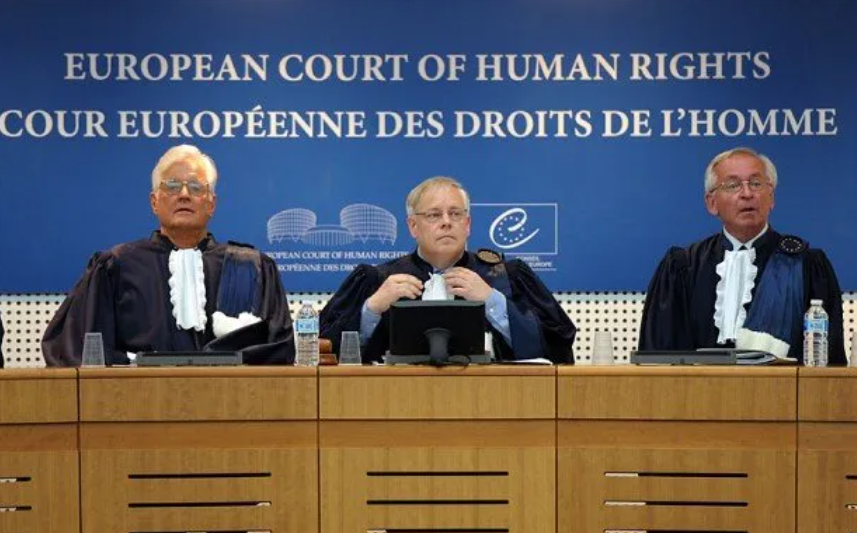
The European Court of Human Rights (ECHR) on 16 December 2025 delivered three final “committee” judgments covering 2,420 applications against Türkiye, finding violations of the European Convention on Human Rights linked to terrorism convictions that relied decisively on alleged use of the encrypted messaging app ByLock.
In the grouped cases — Bozyokuş and Others v. Türkiye (application no. 39586/20 and 131 others), Karslı and Others v. Türkiye (no. 18693/20 and 1,435 others), and Seyhan and Others v. Türkiye (no. 57837/19 and 851 others) — the Court held unanimously that there had been a violation of Article 7 (“no punishment without law”) and/or a violation of Article 6 §1 (right to a fair trial). The Court said the judgments are final.
What the cases were about
According to the Court, the applicants — 2,420 Turkish nationals — were prosecuted after the 15 July 2016 coup attempt and charged under Article 314 §2 of the Turkish Criminal Code with membership in an armed terrorist organisation described by Turkish authorities as the “FETÖ/PDY.”
The applicants were subsequently convicted based decisively on their alleged use of ByLock, which Turkish courts treated as a tool designed for the exclusive use of FETÖ/PDY members. The ECHR also noted that the Turkish Constitutional Court summarily dismissed the applicants’ individual applications challenging those convictions.
The ECHR’s core finding: “categorical” ByLock reasoning
The Court said the legal framework for these cases was already set by its landmark Grand Chamber judgment in Yüksel Yalçınkaya v. Türkiye (2023), which found that treating ByLock usage as near-automatic proof of terrorist-organisation membership breached the legality principle and fair-trial protections.
In Yalçınkaya, the Grand Chamber held that there had been a violation of Article 7 and Article 6 §1 (as well as Article 11), concluding that the Turkish judiciary’s “uniform and global” approach to ByLock evidence effectively created an expansive, unforeseeable interpretation of criminal liability.
In Tuesday’s mass rulings, the Court said it saw no reason to depart from Yalçınkaya — or from its later Demirhan and Others v. Türkiye (2025) judgment, which likewise found Article 7 and Article 6 violations in ByLock-based convictions and underlined the existence of a systemic problem.
Crucially, the ECHR emphasized that it did not rule out that some applicants’ files might contain other evidence. But it found the decisive issue was that ByLock use had served “on its own” as conclusive proof of all elements of the offence in practice — an approach the Court said ran against the purpose of Article 7 and/or unduly restricted defence rights under Article 6.
Why Article 7 matters here
Article 7 enshrines the legality principle: acts that were not crimes at the time cannot later be treated as crimes through expansive interpretation. In Yalçınkaya, the Court also stressed that Article 7 cannot be derogated from, even in an emergency, underscoring its “non-negotiable” status within the Convention system.
Remedy: reopening of proceedings, not compensation
On remedy, the Court held that the finding of a violation was, by itself, sufficient just satisfaction for any damage sustained. It pointed to the possibility under Turkish law of reopening domestic proceedings following the Strasbourg judgments, describing this as “in principle” the most appropriate form of redress. It also declined to award costs and expenses in these follow-up cases.
The judgments will now move into the execution phase supervised by the Council of Europe’s Committee of Ministers, as is standard for final Strasbourg rulings.
The scale: thousands pending, potentially far more
The Court has repeatedly warned about the scale of ByLock-related litigation. In Demirhan (July 2025), it noted that, after Yalçınkaya, it had already given notice to the Turkish Government of 5,000 similar applications, with thousands more continuing to accumulate.
And in Yalçınkaya (September 2023), the Court stated there were approximately 8,500 similar applications already on its docket and added that, since Turkish authorities had identified around 100,000 ByLock users, many more applications might potentially be lodged.
Reactions
Turkish rights advocates and media outlets described the rulings as a major escalation in the Court’s post-Yalçınkaya line of case-law. Turkish journalist outlets reporting the decision highlighted that Strasbourg grounded the new violations in Articles 6 and 7 and that the decisions may open paths to retrial in domestic proceedings.
Human-rights lawyer Hakan Kaplankaya, commenting publicly on the rulings, said the judgments are final and argued that domestic authorities must move quickly to remedy the harms through reopening proceedings and ending wrongful convictions.