
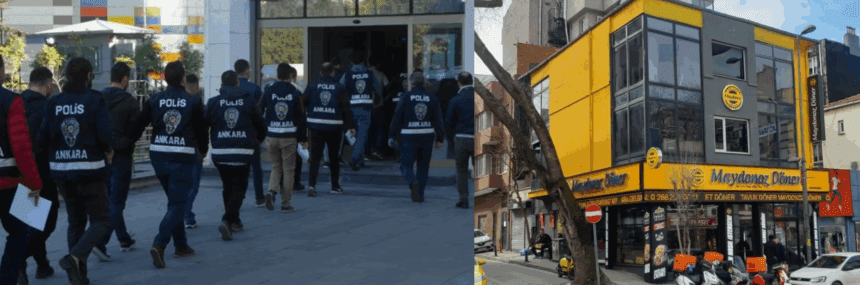
Turkish authorities have detained 63 people over the past two weeks and arrested 41 of them on allegations of links to the faith-based Gülen movement, Interior Minister Ali Yerlikaya said on Monday, as the state-run Savings Deposit Insurance Fund (TMSF) prepared a high-profile tender to sell the seized Maydonoz Döner fast-food group for a starting price of 2.36 billion Turkish lira (about $74 million).
Yerlikaya said the latest operations were carried out across 29 provinces, including Ankara, Antalya, Istanbul and Izmir. He added that four suspects were released under judicial supervision and that procedures are continuing for others.
The detainees are accused of providing financial support to the movement and disseminating propaganda content on social media. The report said investigators also cited alleged contact through pay phones and the encrypted messaging app ByLock—two investigative tracks that have become common in post-2016 Gülen-related prosecutions.
On the same day, a tender notice cited by SCF said the TMSF would auction the Maydonoz Döner group—an asset bundle that includes the Maydonoz Döner and My Fried Chicken brands—on April 1, with franchise agreements, processing facilities and intellectual property rights to be transferred to the winning bidder. The sale package also includes affiliated companies Somca Gıda, Altı G Gıda, Sümer Entegre Et, Enerca Gıda and Deta Ambalaj, as well as integrated production and packaging assets.
Turkish media reports on the tender said bids must be submitted by March 31 (16:00 local time) and that bidders are required to post a 236 million lira guarantee, with the auction set to take place at TMSF headquarters in Istanbul.
Maydonoz Döner is reported to operate about 390 branches in 65 provinces and five countries via a franchise model, making it one of the larger fast-food networks to be placed under trusteeship and put up for sale in recent years.
Authorities first moved against the chain’s franchise network in February 2025, detaining 353 people in coordinated raids across 31 provinces amid allegations that the franchise structure was used to finance the Gülen movement, SCF reported. Further detention rounds followed in May and June 2025, and prosecutors later prepared an indictment for 70 suspects, including dozens held in pretrial detention on charges such as membership in an armed organization and alleged terrorism-financing violations.
The TMSF was originally established to insure bank deposits and manage failed financial institutions, but Turkish courts have increasingly appointed the fund as trustee for companies seized during criminal or terrorism-related investigations—allowing it to run firms temporarily and, if confiscation is upheld, sell them through public tenders.
The legal foundations of many post-coup Gülen cases—particularly those relying on ByLock—remain contested internationally. In the landmark Yüksel Yalçınkaya v. Türkiye judgment, the European Court of Human Rights found violations including the right to a fair trial and the principle of “no punishment without law” in a conviction tied to alleged ByLock use and related evidence.
The broader crackdown dates back to the rupture between President Recep Tayyip Erdoğan and the movement inspired by the late cleric Fethullah Gülen after the December 2013 corruption probes, and intensified following the failed July 2016 coup attempt, which Ankara blamed on Gülenists—an allegation the movement denies.