
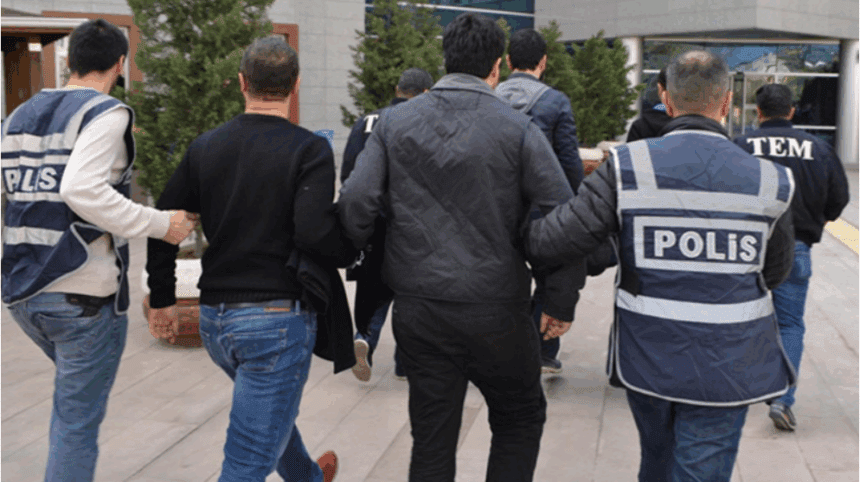
Turkish police detained 93 current and former tax inspectors in coordinated raids across 11 provinces on Friday as part of an Istanbul-based investigation into alleged links to the Gülen movement, prosecutors said.
The Istanbul Chief Public Prosecutor’s Office said warrants were issued for 94 suspects connected to the Ministry of Treasury and Finance (Turkey), including people still in active service as well as others previously dismissed from public employment. Prosecutors said one suspect was believed to be abroad.
Prosecutors alleged the suspects relied on public kiosks and payphones — along with a prepaid, card-based system — as a method of contact designed to avoid direct, traceable communication. The case file also includes witness statements alleging membership or involvement in the movement, according to the prosecutor’s statement.
The operation is the latest in a long-running series of investigations that Turkish authorities frame as part of an effort to dismantle networks they say infiltrated state institutions. Ankara accuses the Gülen movement of orchestrating the failed July 2016 coup attempt — an allegation the movement denies.
How “payphone investigations” work
Turkey’s “payphone” cases are built on call-record patterns rather than call content. A frequently cited investigative theory is that an alleged handler used a single payphone to place consecutive calls to multiple contacts; if one number is identified as belonging to a Gülen-linked suspect, numbers dialed immediately before or after can be treated as similarly suspect, even though authorities do not have recordings or the substance of the calls.
A submission to UN-linked human-rights mechanisms describing Turkey’s practice says the country’s Court of Cassation has treated payphone call records as evidentiary only when certain criteria are met — for example, calls made outside business hours and showing periodic patterns — but critics argue the approach still risks guilt by association when combined with broad inferences from call order.
Background: from political rupture to mass prosecutions
President Recep Tayyip Erdoğan and the Gülen movement were once politically aligned, but the relationship collapsed after a 2013 corruption investigation that targeted Erdoğan’s inner circle — a turning point Ankara later portrayed as an attempted “judicial coup” by Gülenist actors.
Turkey formally labeled the movement a terrorist organization in 2016, and the crackdown accelerated after the coup attempt later that year.
In a July 2025 televised interview, Justice Minister Yılmaz Tunç said courts had issued 126,796 conviction decisions involving civilians, while 11,085 people remained in prison and 58,000 suspects were still under investigation, with another 24,000 cases continuing in the courts.
Rights groups and legal observers have repeatedly raised due-process concerns about how Turkey’s anti-Gülen prosecutions use forms of “pattern” evidence. In a landmark ruling focused on the ByLock messaging app (a separate evidentiary track from payphones), the European Court of Human Rights found that Turkey violated fair-trial and related rights where convictions relied heavily on categorical assumptions about app use — a decision Turkey’s government criticized.
For now, prosecutors in the tax inspector operation have not released individual names or detailed allegations beyond the claims of covert communication and ‘witness’ testimony. The detainees are expected to be processed through Turkey’s counterterrorism procedures as the investigation continues