
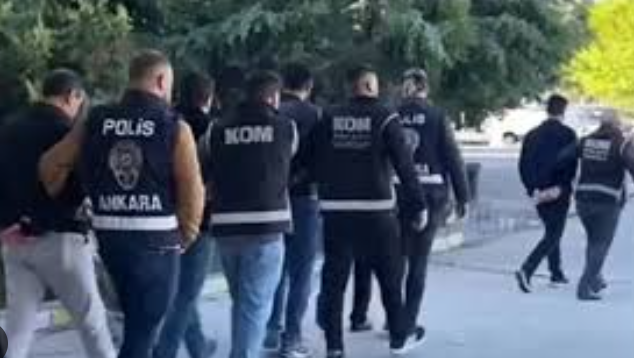
Turkish authorities have detained 25 people and ordered the detention of nine others in two separate investigations targeting alleged members of the Gülen movement, extending a years-long crackdown that has continued despite European court rulings questioning some of the evidence used in such cases.
The İstanbul Chief Public Prosecutor’s Office issued warrants for 25 suspects, including seven current and four former civil servants dismissed under emergency decrees after the failed coup attempt of July 15, 2016. Prosecutors accused them of activities allegedly linked to the movement, including contact through payphones, stays in shared student apartments, work at Gülen-linked companies, deposits in the now-defunct Bank Asya and use of the encrypted messaging application ByLock.
In a separate investigation, the Ankara Chief Public Prosecutor’s Office ordered the detention of nine people over alleged use of ByLock, which Turkish authorities have long described as a covert communication tool used by followers of the movement. The latest move suggests prosecutors are still relying heavily on the app in Gülen-related cases even after repeated rulings from the European Court of Human Rights that its use alone cannot automatically establish membership in a terrorist organization.
President Tayyip Erdoğan has pursued followers of the movement, inspired by the late Muslim cleric Fethullah Gülen, since corruption investigations in 2013 implicated members of his family and inner circle. Erdoğan dismissed those investigations as a Gülenist conspiracy and dramatically widened the crackdown after the 2016 coup attempt, which Ankara says Gülen orchestrated. The movement denies involvement in the coup or any terrorist activity.
The legal controversy surrounding ByLock was sharpened by the European court’s Grand Chamber ruling in Yüksel Yalçınkaya v. Türkiye in September 2023. The court found violations of the rights to a fair trial, to no punishment without law and to freedom of association, and said the problems in Turkey’s use of ByLock evidence were systemic. It said Ankara needed to take broader measures, noting that roughly 8,500 similar applications were pending before the court.
The new operations come against the backdrop of a vast post-coup purge. Justice Minister Yılmaz Tunç told state-run Anadolu in July 2025 that Turkish courts had convicted 126,796 civilians over alleged Gülen links since 2016, with 11,085 people still in prison and more than 24,000 others still facing ongoing legal proceedings. Another 58,000 remained under active investigation, nearly a decade after the coup attempt.
Critics say those figures show the scale of a crackdown that has outlasted the immediate post-coup emergency period and continues to sweep up civil servants, former public employees and other civilians on the basis of patterns of association that rights groups and European judges have said require far more individualized scrutiny.