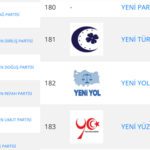

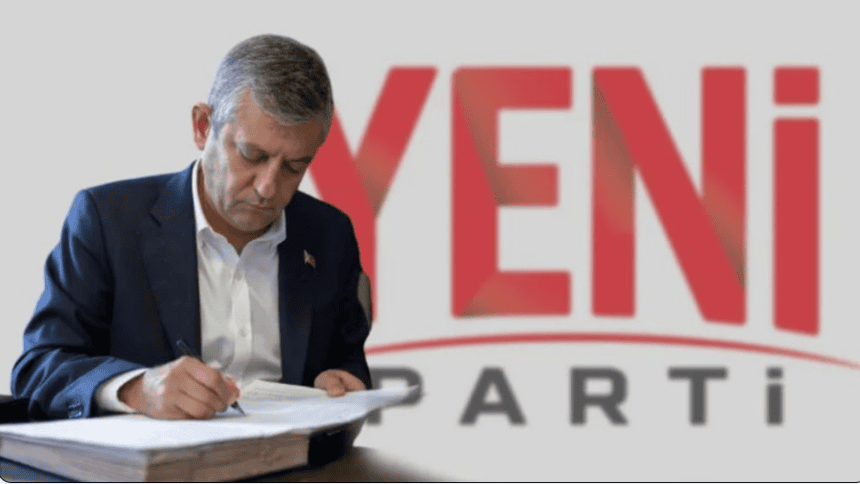
Özgür Özel’s departure from the Cumhuriyet Halk Partisi (Republican People’s Party, CHP) and the establishment of Yeni Parti (New Party) have been presented as a moment of democratic renewal. Following the controversial court decision that annulled the CHP’s 2023 congress and restored Kemal Kılıçdaroğlu to the party leadership, Özel and ninety other CHP deputies resigned and created a new political organization. The new formation will become the principal parliamentary opposition, while only 44 deputies remain in the CHP.
The circumstances surrounding the split are unquestionably disturbing. Judicial interference in the internal affairs of an opposition party raises profound concerns about democratic competition, party autonomy and the political use of the courts. Özel and his supporters can reasonably argue that they were forced to create an alternative organization after the leadership elected by CHP delegates was removed through judicial intervention.
Yeni Parti has started its political life with a new name, but not with a new beginning. Its founders are overwhelmingly the same politicians who occupied positions inside the CHP only days earlier. Rather than assembling a broad coalition drawn from civil society, democratic activism, trade unions, academia, independent conservative movements, Kurdish political circles and younger generations, the party has simply transferred most of the former CHP parliamentary group into a different legal structure.
This is not yet the creation of a new national movement. It is a parliamentary migration.
A New Party Without New People
Yeni Parti also appears excessively dependent on the Özgür Özel–Ekrem İmamoğlu political axis. Its immediate justification is understandable. Özel was removed after a highly controversial court ruling that annulled the CHP’s 2023 congress, while the legal and political pressure directed against CHP municipalities and İmamoğlu has raised profound concerns about judicial independence and democratic competition. Critics have described the intervention as part of a broader campaign against Turkey’s principal opposition movement.
However, resistance to an undemocratic intervention does not automatically make every strategic response democratic. A party founded primarily to preserve one leadership group’s parliamentary power risks becoming a vehicle for personalities rather than principles. Yeni Parti has immediately taken most of the CHP’s deputies and claimed the status of the main opposition, but numerical superiority is not the same as ideological legitimacy.
Some of its founders previously belonged to İYİ Parti (Good Party), Demokrasi ve Atılım Partisi (Democracy and Progress Party, DEVA), Demokrat Parti (Democrat Party) and other political organizations. But they are not joining Yeni Parti as representatives of independent parties or social movements. They entered the new organization as sitting CHP deputies who had already been incorporated into Özel’s parliamentary network.
Their personal political histories may be diverse, but personal diversity is not the same as social representation.
Yeni Parti has not been established through a national convention bringing together liberal democrats, social democrats, conservative reformers, Kurdish representatives, women’s organizations, trade unions, youth movements and independent civil-society figures. It was established by parliamentarians deciding whether to remain in the CHP or follow Özel into another party.
That may be sufficient to establish a parliamentary group. It is not sufficient to establish a Türkiye partisi (a party representing the whole of Turkey).
A genuine party of Turkey would allow different political and social constituencies to participate directly in writing its programme, selecting its leadership and defining its institutional structure. Yeni Parti has instead created the organization first and will apparently invite society to join later.
This is the opposite of political renewal from below. It is another party constructed from above.
Tuncay Özkan and the Wrong Face of Renewal
The contradiction between Yeni Parti’s democratic language and its actual founding personnel is most clearly embodied by Tuncay Özkan.
He is not simply an experienced journalist who later became a politician. He founded Kanaltürk television, established the Biz Kaç Kişiyiz? (How Many of Us Are There?) movement and played a leading role in the Cumhuriyet Mitingleri (Republic Rallies).
Through television, political campaigning and mass mobilization, Özkan became one of the most recognizable media figures associated with hard ulusalcılık (hard-line secular nationalism). He was not a marginal participant in that movement. He helped organize it, popularize its language and transform it into a visible political force.
The Republic Rallies were officially presented as a defence of secularism and the constitutional order. Defending secular government was legitimate, particularly amid concerns about the growing concentration of power under the Justice and Development Party. But the wider political culture surrounding hard ulusalcılık often extended far beyond the defence of secular institutions.
It promoted an intensely state-centred understanding of citizenship. Political society was frequently divided between the supposed defenders of the Republic and groups portrayed as internal or foreign-supported threats. Religious conservatives, Kurdish political movements, liberal intellectuals, minority-rights advocates and supporters of European-oriented reform were regularly treated with suspicion.
Pluralism was not always understood as the legitimate coexistence of different identities. It was often presented as a danger whenever it challenged the ideological authority of the state.
Özkan became one of the principal screen faces of that political atmosphere. His public identity was built through confrontation, nationalist mobilization and a style of politics that frequently converted ordinary political disagreements into existential battles over the survival of the Republic.
The terms ulusalcılık (hard-line secular nationalism) and Avrasyacılık (Eurasianism) are not identical. Not every ulusalcı has supported Turkey’s withdrawal from NATO or complete strategic alignment with Russia and China. Nevertheless, the two currents have repeatedly overlapped in their suspicion of Western institutions, European integration, liberal reformism, Kurdish political demands and internationally supported civil society.
Özkan can therefore reasonably be described as one of the most prominent protagonists of the hard ulusalcı political environment from which contemporary Turkish Eurasianism drew much of its popular rhetoric and political energy. He was often identified with the CHP’s ultra-nationalist wing.
That makes him an extraordinarily inappropriate symbol for a party claiming to represent democratic renewal.
A party seeking support from liberals, moderate conservatives, Kurdish citizens, European-oriented social democrats and younger voters should have begun with figures associated with constitutionalism, reconciliation, institutional restraint and democratic pluralism.
Instead, one of the most recognizable founders of Yeni Parti is a politician identified with the confrontational and state-centred political struggles of the early 2000s.
The problem is not that a democratic party must exclude every nationalist politician. A broad party can contain nationalists, liberals, conservatives and social democrats. The problem is that Yeni Parti has shown no evidence of critically confronting the authoritarian and exclusionary tendencies associated with some of the political traditions represented by its founders.
It has simply moved the same figures into a new organization and declared the result a new beginning.
Unresolved Allegations and the Absence of Transparency
The controversies surrounding Özkan are not limited to ideology. Over the years, he has faced serious public allegations concerning personal wealth, political influence, media control and relations with municipal institutions.
During the 2023 election, sensational allegations circulated claiming that he had received $95 million, manipulated opposition election-night information and improperly influenced the transmission of ballot records.
The accusations concerned a senior CHP figure who exercised considerable influence over the party’s media and communications strategy. A democratic political organization should have responded by commissioning an independent review, publishing relevant financial information and clarifying any relationship between party officials, media organizations and election-data operations.
Instead, the controversy was answered primarily through personal denials, insults against the accusers and claims that the allegations were part of a coordinated conspiracy.
An earlier controversy involved allegations that municipal licensing procedures in Buca, İzmir, had been used to place a valuable petrol station under Özkan’s influence or control. Both Özkan and the municipal administration rejected the claims. The municipality argued that the relevant commercial and leasing arrangements had a longer history and denied that the property had been improperly transferred to him.
Again, these allegations cannot responsibly be presented as proven facts.
But the political question remains: why were matters involving a senior party figure, a CHP-controlled municipality, commercial licensing and an asset worth millions not subjected to a visibly independent examination?
A party committed to transparency should not require the public to choose between believing sensational accusations and accepting angry denials. It should disclose documents, identify ownership structures, publish municipal decisions and invite independent scrutiny.
Yeni Parti claims to represent a new democratic culture. Yet it has brought Özkan into its founding structure without demonstrating that these old controversies were ever examined through a credible institutional process.
That is not accountability. It is political amnesia.
The 2023 Election and the Failure of Opposition Accountability
The most consequential questions surrounding Özkan concern his role during the 2023 presidential and parliamentary elections.
Özkan was Kılıçdaroğlu’s chief adviser responsible for media and institutional communications. He was therefore one of the senior figures responsible for how election-night information was presented to the public.
The 2023 election was not conducted on a level democratic playing field. International observers concluded that Erdoğan and the governing parties enjoyed an unjustified advantage through biased media coverage, the use of public resources and restrictions affecting opposition parties, civil society and independent journalism.
Statistical research also identified unusual voting patterns in smaller and more remote electoral districts. One election-forensics study estimated that a limited portion of electoral units may have been affected by practices consistent with ballot stuffing in Erdoğan’s favour. The study identified approximately 342,000 statistically anomalous excess votes in the second round.
The evidence therefore supports the conclusion that the election was profoundly unfair and that the irregularities identified so far may represent only the visible tip of the iceberg. Nearly all major surveys conducted before the 2023 election showed Kemal Kılıçdaroğlu ahead of Recep Tayyip Erdoğan. Although opinion polls alone cannot prove that the election result was stolen, the sharp difference between those surveys and the official outcome should have led to a much broader, more transparent and determined investigation by the CHP.
But this makes the CHP leadership’s response more—not less—important.
Many opposition voters had entered election night expecting a Kılıçdaroğlu victory. They were then confronted with delayed information, contradictory figures, confusion over the opposition’s data system and the overwhelming dominance of Anadolu Ajansı (Anadolu Agency) in shaping the public narrative.
In this atmosphere, Özkan publicly declared that the CHP would not allow even a single vote to be stolen. He characterized claims of stolen votes as manipulations intended to create chaos.
That was an astonishingly categorical assurance.
Even assuming that the CHP’s numerical data were ultimately accurate, its communication strategy visibly failed. The party did not provide the public with a clear, real-time account of what was happening. It allowed the government-aligned information system to dominate the night and failed to explain why the initial expectations of opposition leaders differed so dramatically from the emerging official count.
Kılıçdaroğlu himself also failed to mount the determined challenge that the circumstances required. He described the election as deeply unfair, yet he did not organize a sustained legal and political campaign demanding full transparency. Given that most major pre-election surveys had placed him ahead, the CHP should have conducted and published a comprehensive ballot-box-by-ballot-box investigation. Such an inquiry could either have substantiated suspicions of manipulation or restored public confidence in the declared result. Instead, the party left many of the most serious questions unanswered.
After the election, Özkan became one of the principal targets of criticism over the CHP’s communications operation. He initially maintained that he remained in his position. In June 2023, however, Kılıçdaroğlu terminated the positions of all advisers and chief advisers appointed before June 4, a decision that included Özkan.
Now, only three years later, Özkan appears as one of the founding faces of a party claiming to represent democratic renewal. The controversies surrounding his election role, his dismissal and the accusations concerning his political influence have apparently been erased by the act of changing parties.
Why the Remaining CHP May Appear More Liberal
The remaining CHP faces a profound legitimacy crisis of its own. Kılıçdaroğlu’s restoration through a court judgment cannot substitute permanently for a democratic mandate from party delegates. No party leadership installed through judicial intervention can automatically claim democratic superiority.
But the departure of the Özel bloc may nevertheless create an unexpected opportunity for the reduced CHP.
Some of the most combative, leader-centred and hard-nationalist personalities have left. The remaining party may now have greater room to develop a clearer social-democratic, parliamentary and institutionally liberal identity. It may become less dependent on political theatre, mass mobilization around a single presidential candidate and the constant personalization of opposition politics.
Remaining in the CHP does not necessarily mean supporting the court’s intervention. Some deputies may have stayed because they regard the CHP as a historic political institution larger than any temporary leader. Others may believe that abandoning the party under external pressure effectively rewards the attempted judicial capture of opposition politics.
Their democratic credibility, however, will depend entirely on what happens next.
The CHP must hold a free and genuinely competitive kurultay (party congress). All factions must be permitted to organize. Delegates must be able to choose the leadership without judicial or administrative interference. There must be no retaliation against members who supported Özel.
If Kılıçdaroğlu relies indefinitely on the court judgment, the CHP cannot credibly describe itself as democratic. But if it uses the present crisis to rebuild internal democracy and submit its leadership to a fresh vote, it could emerge as the more institutionally liberal of the two parties.
Yeni Parti has more deputies. The CHP may still have a stronger opportunity to prove that a political party is an institution rather than the personal property of whichever leader currently controls its parliamentary group.
For now, Yeni Parti represents a new party without a new beginning—the same faces, the same unresolved questions and many of the same political habits behind a new name.
By: News About Turkey (NAT)