
Turkey’s opposition is now being subjected to the political and judicial machinery that Recep Tayyip Erdoğan constructed after July 15, 2016. Yet the CHP still refuses to confront the official story that gave this machinery its legitimacy.
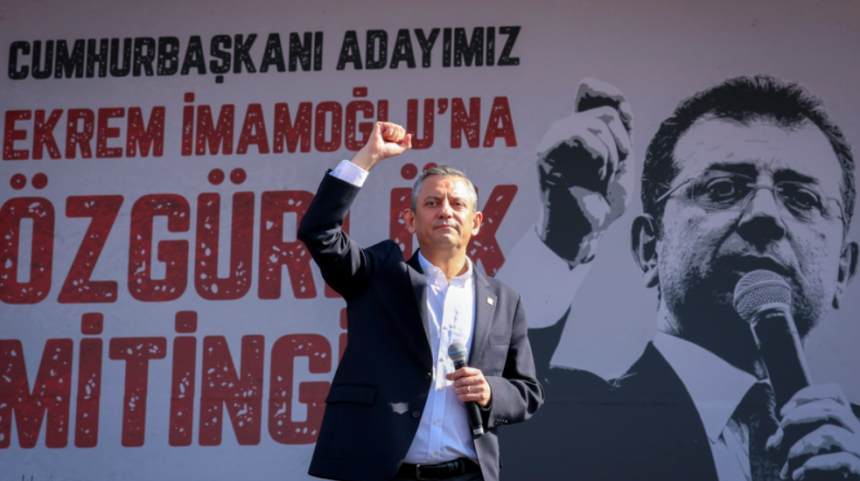
Ekrem İmamoğlu, the elected mayor of Istanbul and Recep Tayyip Erdoğan’s most formidable electoral rival, has been imprisoned since March 2025. As of July 2026, he is defending himself against 142 charges in a case built around a 3,900-page indictment. The government presents the proceedings as an ordinary corruption prosecution. İmamoğlu and the CHP describe them as a politically engineered campaign intended to remove Erdoğan’s strongest potential presidential challenger.
The pressure extends far beyond İmamoğlu. Hundreds of CHP members, municipal officials and elected representatives have been detained. So far, authorities have detained hundreds of people, including dozens of mayors and party officials. Elected mayors have been suspended, municipal mandates have been overridden, and the threat of government-appointed trustees has spread from predominantly Kurdish municipalities to CHP-controlled local governments.
Then came the direct assault on the CHP itself.
On May 21, 2026, an appeals court annulled the CHP’s November 2023 congress, removed Özgür Özel and the party’s elected leadership, and restored former chairman Kemal Kılıçdaroğlu. The ruling also invalidated later congresses at which Özel had been re-elected. Human Rights Watch described the decision as part of a broader effort to sideline the principal opposition party, while the CHP called it a judicial coup.
Erdoğan’s political system is no longer satisfied with prosecuting opposition politicians. It increasingly claims the power to determine who may govern municipalities, who may run against the president and even who may lead the country’s largest opposition party.
Yet neither the CHP nor any other opposition movement can understand what is happening today without confronting what happened after July 15, 2016.
The road to İmamoğlu’s prison cell, the removal of elected mayors and the judicial ousting of Özel did not begin in 2025 or 2026. The foundations were laid when Erdoğan transformed July 15 into an unquestionable state doctrine—and when much of the opposition helped him do it.
The CHP’s responsibility began at Yenikapı
The CHP should never have accepted July 15 as a genuine military coup attempt. It was not a coherent operation designed to seize and hold state power. It was a controlled and deliberately doomed operation whose failure was built into its structure, while soldiers—especially conscripts, pilots and lower-ranking personnel—were deceived about the real nature of the assignments they were ordered to carry out.
The party therefore had no reason to begin from Erdoğan’s premise that Turkey had narrowly escaped a conventional military takeover. The deaths, gunfire, deployment of tanks, explosion at Parliament and other acts of violence demanded investigation and individual accountability. But condemning the violence did not require accepting the government’s explanation of who organized it, who gave the operational orders or who ultimately benefited from and controlled its outcome. Even the most dramatic events of the night should not be treated as closed questions merely because Erdoğan’s courts assigned responsibility.
The public still cannot know with confidence who ordered every bombing, who authorized every flight, who fired every decisive shot or how the separate operations in Ankara, Istanbul and Marmaris were coordinated. Erdoğan’s government announced its conclusions almost immediately, then used emergency courts and mass prosecutions to convert those conclusions into an official history. What Turkey never received was a genuinely independent truth-seeking inquiry capable of testing the state’s account against all military records, intelligence communications, radar data, flight logs, ballistics reports and witness testimony.
The alleged operation against Erdoğan in Marmaris is among the clearest examples of why the official narrative cannot be accepted at face value.
The government described the Marmaris mission as an attempt to assassinate Erdoğan. Gökhan Şahin Sönmezateş, the brigadier general who commanded the team sent there, gave a different account. He said his orders were to take Erdoğan into custody and transport him safely to Ankara.
Sönmezateş testified that his unit was ready at approximately 10:25 p.m. but was kept waiting at Çiğli Air Base for around four hours. He said the team took off at approximately 2:25 a.m.—long after Erdoğan had reportedly left his hotel and after his aircraft had departed from Dalaman. According to Sönmezateş, the order to wait came through the Akıncı Air Base operations centre. He repeatedly asked who had deliberately delayed the team and why it was finally sent to a location where Erdoğan was no longer present.
This was not a minor operational error. If the purpose was genuinely to capture or kill Erdoğan, keeping the assigned team on the ground for approximately four hours while its supposed target escaped makes no military sense.
It does, however, make sense if the team was being used as part of a controlled spectacle: delayed until Erdoğan was safe, then sent toward an empty hotel so that the government could later claim that the president had escaped assassination by only minutes.
Sönmezateş said that he and the soldiers under his command had been sent into a trap. He maintained that they were dispatched only after Erdoğan had left Marmaris and after the whole country knew that he was travelling to Istanbul. He also said he would not have taken those soldiers to the hotel had he known what was occurring.
The deaths of two police officers at the hotel also require renewed investigation. The official indictment attributed the fatal confrontation to the military team sent to the area. But in his May 2026 retrial testimony, Sönmezateş alleged that the wounds and weapons evidence did not correspond with the prosecution’s account. He claimed that one officer had been killed with a knife, another with a shotgun, and that an unidentified weapon found at the scene was acknowledged by neither the military nor the police. He consequently described the killings as unresolved.
There have also been allegations of unexplained helicopter activity and gunfire in the hotel area before the Sönmezateş team arrived.
A genuine inquiry would reconstruct the Marmaris operation minute by minute. It would determine when Erdoğan left the hotel, when each helicopter departed, who ordered the four-hour delay, who supplied the final coordinates, what aircraft were present over the area, which weapons were fired and which projectiles killed the two police officers.
It would also explain why a team supposedly sent to seize Erdoğan was dispatched after its target had already escaped.
Instead of demanding answers, Kemal Kılıçdaroğlu stood beside Erdoğan at the government-organized Yenikapı rally on August 7, 2016. By doing so, the CHP helped transform a controlled operation designed to fail—and an alleged presidential abduction or assassination mission full of unresolved contradictions—into the founding myth of Erdoğan’s new political order.
Yenikapı was presented as national reconciliation. In reality, it was a ceremony of submission to Erdoğan’s official version of July 15.
The message imposed on the country was unmistakable: accept Erdoğan’s narrative in full or risk being accused of siding with the alleged coup plotters. Questions about the intelligence received by Hakan Fidan, Hulusi Akar’s conduct, the unexplained delay in Marmaris, the operation’s military absurdities, the provenance of the bombs and gunfire, and the soldiers who said they had been misled were pushed outside the boundaries of legitimate public debate.
By attending Yenikapı, the CHP enabled Erdoğan to claim that his account had been endorsed by almost the entire political establishment. The pro-Kurdish HDP did not attend, but the presence of the CHP and other opposition parties manufactured the appearance of a broad national consensus.
That appearance was politically indispensable to Erdoğan. It allowed him to portray emergency decrees, mass arrests, torture, dismissals, property confiscations and institutional seizures not as the construction of an authoritarian regime, but as the legitimate response of a united nation.
The CHP’s mistake was not that it condemned the bloodshed. Its historic mistake was accepting Erdoğan’s explanation of that bloodshed and legitimizing a narrative written by the principal political beneficiary of the operation.
A genuine democratic opposition should have declared that every death and act of violence required investigation, while refusing to call July 15 a credible coup attempt until an independent inquiry had determined who organized the events, who controlled their timing, who gave the orders, who deceived the soldiers and why crucial operations were allowed to proceed only after their supposed objectives had become impossible.
Instead, the CHP accepted Erdoğan’s framing and helped turn an operation organized to fail into an untouchable state doctrine.
Erdoğan recruited the CHP to sell the official account abroad
Erdoğan did not merely expect the CHP to stand beside him inside Turkey. He wanted the party to use its relationships abroad to reinforce the government’s account.
Özgür Özel himself acknowledged this in a 2026 speech in Brussels. He recalled that after July 15, Erdoğan’s side approached the CHP because European and international counterparts knew and trusted the party. According to Özel’s account, the government asked the CHP to help explain the coup to the outside world and seek international solidarity.
The CHP should now reveal the full details of those conversations.
What exactly did Erdoğan’s government ask it to tell European politicians? Was it asked merely to confirm that armed violence had occurred, or to validate the government’s attribution of organizational responsibility? Was it encouraged to dismiss reports of torture, arbitrary detention and collective punishment? What information did CHP officials possess at the time, and what doubts did they withhold in the name of national unity?
Erdoğan wanted the opposition to tell Europe that Turkey had experienced a genuine coup and that the government was defending democracy. But a truthful message would have contained two parts: Turkey had suffered a violent attack, and Erdoğan was exploiting that attack to dismantle democratic safeguards.
The CHP largely delivered the first message while failing to defend the second with sufficient courage.
Erdoğan immediately called July 15 “a gift from God”
Erdoğan’s own words revealed how quickly he recognized the political usefulness of the night.
Within hours, he called the uprising “a gift from God,” explaining that it would provide an opportunity to cleanse the military. Erdoğan did not respond only as a ‘victim’ or as a president demanding an investigation. He immediately identified the event as an opportunity.
And he used it accordingly: Emergency rules, decrees, mass dismissals, arrests, torture, institutional closures and asset confiscations followed.
July 15 enabled Erdoğan to restructure the military, judiciary, bureaucracy, universities, media and civil society under extraordinary conditions. It provided the political atmosphere in which legal safeguards could be depicted as obstacles to national survival.
The CHP helped him confer democratic legitimacy upon that transformation.
The opposition must examine the controlled-operation hypothesis
An opposition committed to truth must be willing to investigate whether July 15 was simply an attempted coup that Erdoğan exploited afterward—or an operation whose planning, timing or development was known, manipulated, controlled or deliberately allowed to proceed by senior state officials.
The conduct of Fidan and Akar raises questions that have never been answered convincingly.
Information concerning suspicious military activity reached the intelligence authorities during the afternoon of July 15. Fidan met with Akar, yet Erdoğan and then-prime minister Binali Yıldırım were reportedly not informed through the most urgent channels at the earliest possible moment. Akar and Fidan were among the most important witnesses, but neither appeared to answer questions in person before the parliamentary investigation commission. Official parliamentary records show that opposition members sought to have them invited, and later parliamentary interventions repeatedly criticized their failure to testify.
Why did the two most important military and intelligence officials not appear before the commission?
What precisely did Fidan know, and when did he know it? What did he tell Akar? What actions were ordered after their meeting?Why was the prime minister seemingly left out of the most critical information loop by the MIT head who reports to him? Why were preventive measures insufficient to stop soldiers, aircraft and armored vehicles from being deployed?
The CHP’s own commission members and its leader later described July 15 as a “controlled coup”: an operation that was foreseen, not prevented and whose consequences were abused.
But the CHP never followed its own conclusion to its logical end.
If the operation was “controlled,” who controlled it? If it was foreseen, who received the warning? If it could have been prevented, who decided not to prevent it fully? If its consequences were deliberately exploited, at what point did exploitation begin?
The “FETÖ” label helped eliminate individual responsibility
The CHP’s continued use of the acronym “FETÖ” represents another serious failure.
The term is not a politically neutral description. It is the designation adopted by the Turkish state for the Gülen or Hizmet movement. Turkey designated the movement a terrorist organization before July 15 and subsequently attributed the coup to it, while the movement denied organizational involvement.
There is evidence that individuals associated with the movement participated in the coup attempt. That does not establish the criminal guilt of every teacher, journalist, business owner, bank customer, charity volunteer or civil servant who had some connection to a movement-affiliated institution.
A British parliamentary inquiry concluded that evidence indicating the involvement of individual Gülenists was largely anecdotal or circumstantial and remained inconclusive regarding the movement as a whole or its leadership.
Criminal responsibility must be individual. It cannot be imposed through employment, religious association, family relationships, education, banking activity or social contact.
Yet the acronym “FETÖ” embeds the government’s verdict into the name itself. Once a person is placed beneath that label, the need for individualized evidence disappears from public discussion.
The CHP criticized parts of the crackdown while continuing to repeat Erdoğan’s terminology. It therefore challenged some consequences of the system without challenging the intellectual machinery that made those consequences possible.
What the CHP and the wider opposition must now do
The first step must be an honest admission: going to Yenikapı was a historic mistake.
The CHP should acknowledge that its participation helped Erdoğan convert an inadequately investigated event into the sacred foundation of his authoritarian system. It should disclose what Erdoğan’s government asked CHP representatives to communicate abroad and reveal all information its officials possess concerning July 15.
The party should demand a new, genuinely independent investigation with access to intelligence records, military communications, government correspondence and uncensored testimony. Erdoğan, Akar, Fidan and other central officials should be questioned publicly.
CHP municipalities and representatives should withdraw from government-scripted July 15 commemorations. Those who were killed during this so-called coup attempt should be remembered, but honouring them does not require endorsing Erdoğan’s official narrative or legitimizing the repression of Erdoğan’s regime.
The opposition should also stop using “FETÖ” and abandon every form of collective guilt. A genuine democratic break requires the CHP and every opposition party to stop using “FETÖ.” They should not use a government-manufactured label to pronounce millions of individual verdicts in advance.
It should commit to reviewing emergency-decree dismissals, arbitrary prosecutions, asset confiscations, torture allegations, enforced disappearances and convictions based primarily on association. That commitment must include victims whom CHP voters may dislike politically or ideologically.
The same standard must apply to Gülenists, Kurds, secularists, conservatives, socialists, journalists, soldiers, civil servants and members of the CHP itself.
Erdoğan’s greatest protection is selective opposition
Erdoğan has survived because political groups have often defended only their own victims.
Many nationalists remained silent when Kurdish mayors were replaced by trustees. Many secularists looked away when religiously conservative citizens associated with the Gülen movement were subjected to collective punishment. Some groups that had previously suffered abuses felt no obligation to defend those who had once supported Erdoğan. Others assumed that cooperation with the government would protect them.
Erdoğan converted these divisions into a governing strategy.
The CHP now faces a decisive choice.
It can argue that the machinery created after July 15 is legitimate but has been mistakenly directed against the CHP and its politicians. Or it can declare that the machinery itself is illegitimate, regardless of whom it targets.
The first position asks Erdoğan’s system for mercy.
The second seeks to dismantle it.
Neither the CHP nor any other opposition party can defeat Erdoğan merely by collecting more votes. Elections cannot remove an authoritarian order that can imprison candidates, cancel municipal mandates, appoint trustees, annul party congresses and choose the leadership of the opposition.
A genuine struggle against Erdoğan must therefore begin with the event he called “a gift from God.”
It must begin with the CHP’s role at Yenikapı, the unanswered questions surrounding Erdoğan, Akar and Fidan, the allegations of manipulated soldiers, the torture and collective punishment that followed, and the politically loaded vocabulary that made millions of people presumptively guilty.
The opposition cannot dismantle Erdoğan’s regime while continuing to protect its founding narrative.
The road beyond Erdoğan begins where his present order began: July 15, 2016.
Silence, compromise and participation in Erdoğan’s ceremonies have not protected the opposition. They did not prevent İmamoğlu’s imprisonment, the removal of elected mayors, trustee appointments or interference in the CHP’s leadership.
As the Turkish proverb says, “Fear cannot avert death”—Korkunun ecele faydası yoktur. Fearful silence only gives authoritarianism more time to grow.
Özgür Özel and other opposition leaders must understand that Ekrem İmamoğlu and the opposition figures already targeted will not be the last.
Silence does not disarm authoritarianism. It invites the next attack.
By: News About Turkey (NAT)