
Turkey’s secular opposition has never had more reason to understand the dangers of a politicized judiciary than it does today. Since late 2024, the Republican People’s Party has been subjected to what international rights organizations and opposition figures describe as an unprecedented judicial offensive. Hundreds of CHP members, municipal employees and elected officials have been detained or jailed in successive investigations. Istanbul Mayor Ekrem İmamoğlu, Recep Tayyip Erdoğan’s most formidable electoral rival, was detained in March 2025 and remains imprisoned while standing trial in an enormous corruption case involving more than 400 defendants. His university diploma—a legal requirement for presidential candidacy—was annulled immediately before his detention. İmamoğlu denies the charges against him, which include allegations that he headed a criminal organization involved in bribery and tender manipulation, and argues that the cases are designed to remove Erdoğan’s strongest potential challenger from politics. Human Rights Watch has described the broader campaign against the CHP as an unprecedented assault on the main opposition, while Erdoğan’s government rejects accusations of political interference and insists that Turkish prosecutors and courts operate independently.
Nor did the pressure stop with İmamoğlu. Successive operations reached CHP-run municipalities across the country. By July 2025, roughly 500 people were detained in the widening investigations, at least 220 jailed and 14 elected opposition mayors imprisoned pending trial. The campaign continued into 2026. During the past two years, investigations predominantly targeted opposition-run municipalities, leading to the arrest of hundreds of elected mayors and officials.
Then the judiciary reached the CHP as an institution.
On May 21, 2026, an Ankara appeals court annulled the CHP’s 2023 congress, effectively removing Özgür Özel from the chairmanship and restoring former leader Kemal Kılıçdaroğlu. The decision reversed an earlier ruling that had rejected allegations of misconduct surrounding the congress and plunged Turkey’s largest opposition party into an extraordinary leadership crisis. Özel called the intervention a judicial attack on the electorate’s will, while tens of thousands later demonstrated in Ankara in his support.
Unable to regain control of the CHP, Özel left and, together with 90 former CHP lawmakers, established Yeni Parti on July 24. İmamoğlu, from prison, resigned his 17-year CHP membership and joined the new formation on August 13, declaring that a “new path” was being opened toward a more democratic Turkey. Reuters described the breakup as the culmination of an unprecedented legal crackdown that had jailed hundreds of CHP members and elected officials since 2024.
There can therefore be little doubt that Özel, İmamoğlu and the political movement surrounding them understand what they mean when they speak about politically motivated prosecutions, guilt by association, prejudicial media coverage, prolonged detention and the manipulation of judicial institutions to reshape politics.
They have experienced it themselves.
And that is precisely why their response to the treatment of other communities deserves scrutiny.
The central problem facing both the restored CHP under Kılıçdaroğlu and Özel’s supposedly new political movement is not that they criticize Erdoğan too strongly. It is that the democratic principles they invoke against Erdoğan too often appear strongest when they themselves are the targets. When the state turns against people who come from outside the traditional secular opposition universe—particularly independent Islamic movements—the same instinctive demand for evidence, proportionality, individual responsibility and presumption of innocence frequently becomes weaker.
First it happened to Gülenists.
Then to Alparslan Kuytul and Furkan.
Now the same question confronts the Süleymancılar.
The movements are very different and should not be treated as politically or organizationally identical. Their individual legal cases are also different. But the recurring political lesson is difficult to ignore: religious communities that establish political independence from Erdoğan can find themselves facing overwhelming state power, while Turkey’s secular opposition repeatedly fails to convince them that an opposition government would regard their rights as part of its own democratic struggle.
That failure does not merely betray those communities.
It helps Erdoğan keep them.
Erdoğan’s offensive against the CHP should have changed the opposition
The scale of the current campaign against the CHP makes its failure to learn from earlier victims particularly striking. Özel himself has argued that Erdoğan’s strategy is to leave the opposition without its strongest candidate, without its chosen leadership and ultimately without the organizational capacity to compete. In June, while still fighting the court intervention into the CHP congress, he described the government’s electoral strategy as leaving the party that could defeat Erdoğan “without a candidate, without an institution and without a leader.”
Whether one accepts every element of Özel’s interpretation or not, the political sequence is extraordinary. Erdoğan’s principal rival is in prison. İmamoğlu’s diploma has been cancelled. Hundreds of party officials and municipal employees have been detained. Mayors have been removed or jailed. The CHP congress that replaced Kılıçdaroğlu with Özel was annulled by the courts. Özel ultimately abandoned the party altogether and created a new one. By August 2026, Turkey’s main opposition had effectively been split into two organizations after years of judicial pressure.
This should have generated something larger than outrage over the treatment of CHP.
It should have produced a fundamental reconsideration of the political and judicial system that made such an offensive possible.
Instead, much of the opposition continues to behave as though Erdoğan’s authoritarianism began when prosecutors arrived at CHP municipalities.
It did not.
The structures, narratives and political habits that made today’s repression possible were normalized much earlier—and the opposition itself participated in some of that normalization.
July 15 created the political architecture
The decisive turning point was July 15, 2016.
There is no dispute that military forces attempted to overturn the elected government, that parliament was attacked and that people were killed. But acknowledging those facts is different from accepting every aspect of the political interpretation Erdoğan subsequently imposed on the country. Fethullah Gülen denied directing the attempted coup until his death. The much stronger claim advanced by some Erdoğan critics—that the entire event was personally staged by Erdoğan from beginning to end—has not been conclusively established and should not be presented as settled fact. But serious questions concerning intelligence warnings, prior knowledge, command decisions and how the government handled and later exploited the events have continued to fuel controversy.
What is not controversial is what Erdoğan did afterward.
July 15 became the foundation of a radically transformed political order. Emergency powers facilitated mass dismissals, detentions, closures and institutional restructuring. The government’s designation “FETÖ” expanded beyond those accused of personally participating in military violence and became an enormously powerful category through which social, professional, educational and financial connections to the Gülen movement could acquire criminal significance.
The distinction between individual crime and collective association was progressively weakened.
That distinction should have been the opposition’s red line.
Instead, the CHP helped Erdoğan construct the initial political consensus surrounding the post-coup order. Its deputies correctly opposed military rule, but the party did more than that. CHP representatives joined official efforts to explain Turkey’s July 15 narrative abroad. Özel later recalled that Erdoğan personally asked CHP to use its international relationships to help explain to foreign audiences that democracy had been attacked. CHP deputy Eren Erdem participated in a parliamentary delegation to France and publicly rejected the characterization of the post-coup process as a “witch hunt.”
The significance was enormous. Erdoğan’s July 15 interpretation could now be presented not merely as the government’s narrative but as a national consensus extending to the principal opposition.
That bipartisan legitimacy mattered while an enormous state purge was taking shape.
Kılıçdaroğlu later criticized abuses and even famously introduced the term “controlled coup” into the domestic debate. He spoke about innocent people caught in emergency-decree measures and objected to aspects of collective punishment. But CHP never fully broke with the conceptual foundation of the post-2016 order. Instead of consistently asking whether an entire religious-social movement could legitimately be converted into a terrorist identity, it repeatedly asked why Erdoğan had not uncovered the supposed political wing of “FETÖ”.
That is a fundamentally different criticism.
It accepts the category and argues about its application.
Ten years later, CHP was still participating in Erdoğan’s July 15 political ritual
The tenth anniversary in July 2026 revealed just how little this basic framework had changed—even after Erdoğan’s judiciary had turned directly against the CHP.
On July 15, Özel attended the official “Democracy and National Unity Day” ceremony at parliament, including the commemoration at the July 15 Martyrs’ Monument and the official exhibition inside the assembly. On the same day, he again spoke explicitly about “FETÖ,” arguing that the organization’s various structures had been investigated while its supposed political wing had not.
The political contradiction is extraordinary.
Only weeks earlier, Özel had been removed from leadership of the country’s largest opposition party through a court decision he regarded as an assault on democracy. His political ally İmamoğlu was in prison. Hundreds of opposition figures had encountered prosecutors and police. Özel was accusing Erdoğan of using courts to override elections.
Yet he continued participating in the official ideological ritual constructed around the political turning point from which Erdoğan’s post-coup system drew enormous legitimacy.
The opposition effectively says that Erdoğan has corrupted the judiciary, abused anti-terror laws, punished political opponents and transformed the state into an authoritarian instrument—but every July it still participates in a ceremony literally called “Democracy and National Unity Day,” reproducing much of the vocabulary through which Erdoğan presents the post-2016 order as the product of a great democratic national victory.
That is politically incoherent.
Remembering civilians and parliamentarians who resisted military rule does not require endorsing Erdoğan’s interpretation of everything that followed. An opposition genuinely determined to break with the post-July 15 authoritarian order could mourn the dead while simultaneously demanding a comprehensive historical investigation, refusing collective guilt and rejecting the conversion of “FETÖ” into a political identity applicable to vast numbers of civilians.
Instead, CHP continues to condemn Erdoğan’s authoritarianism while participating in one of its foundational political rituals.
Changing the party name to Yeni Parti does not automatically solve that contradiction.
Gülenists were the first people for whom normal democratic sympathy became optional
The Gülen movement became the first enormous social constituency to experience what happens when the public accepts a category before examining individual conduct.
There are legitimate criticisms to make of the movement’s historical conduct, its previous alliance with the AKP, its influence inside state institutions and the behavior of particular individuals associated with it. None of that requires pretending that teachers, businessmen, journalists, students, spouses, depositors, employees and millions of people with varying degrees of connection to Gülen-linked institutions constituted one criminal personality.
Yet that distinction became politically inconvenient.
The label often came first.
Once somebody was described as “FETÖ’cü,” asking precisely what that individual had done could appear almost unnecessary.
The CHP should have resisted this principle from the beginning.
Instead, parts of the opposition accepted Erdoğan’s category and argued mainly over whether Erdoğan had applied it selectively.
Now the CHP demands precisely the protections Gülenists needed.
When prosecutors connect dozens of people to İmamoğlu and describe them as part of a criminal organization, the opposition says association is not guilt.
Correct.
When journalists publish allegations from İmamoğlu’s prosecution file as though they were established facts, the opposition says an indictment is not a conviction.
Correct again.
When a politician is held for months or years before a final judgment, it says detention cannot become punishment.
Also correct.
The problem is not these arguments.
The problem is how late the opposition discovered their universality.
Furkan was the second warning
The persecution of Alparslan Kuytul and the Furkan movement should have made the problem impossible to ignore.
Kuytul was not a Gülenist. He came from an entirely different Islamic tradition and openly criticized Erdoğan’s government. Police raided the Furkan Foundation in January 2018, detained Kuytul and others, and prosecutors advanced serious terrorism-related and criminal allegations. Kuytul spent approximately 22 months in pretrial detention before being released and was subsequently acquitted in 2020 in the terrorism-related case accusing him of knowingly assisting an armed organization and disseminating terrorist propaganda.
The significance should have been obvious.
Here was a conservative Islamist critic of Erdoğan—not a secular CHP politician—subjected to a dramatic security operation and prolonged detention before some of the most politically explosive allegations against him collapsed in court.
The pressure continued. Furkan supporters were subjected to a violent police intervention during a demonstration in Adana in 2022, with images showing officers using batons and other crowd-control measures. Kuytul was later jailed again in a separate case involving allegations concerning the abduction and mistreatment of a businessman; those allegations were distinct and must be evaluated separately.
The broader political lesson, however, was already visible: being religious did not protect an Islamic movement from Erdoğan when it became politically independent of him.
CHP should have understood the strategic importance immediately.
If secular democrats wanted conservative Muslims to believe that Turkey could have a political future outside Erdoğan, then Furkan supporters needed to see that their fundamental rights mattered even to people who disagreed completely with their theology.
There were opposition politicians who condemned the police violence and individual CHP figures who intervened.
But Furkan never became a defining rule-of-law question for the secular opposition.
Then the same machinery moved closer to the CHP.
Now Süleymancılar face the state
The operation against the Süleymancılar therefore arrives after ten years of warnings.
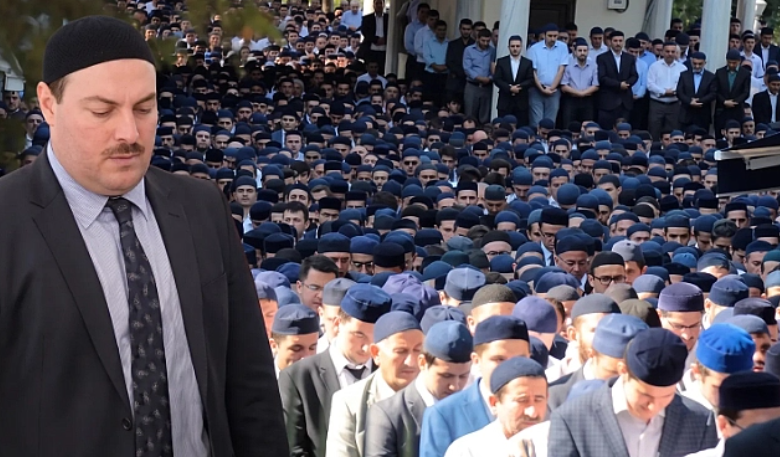
On August 13, Ankara prosecutors issued detention orders for 49 suspects, including Alihan Kuriş, in an investigation extending across 17 provinces and 123 locations. Prosecutors allege organized financial crimes, including money laundering, fraud and tax-related offences, with financial analysis from MASAK forming part of the case. These allegations deserve serious investigation. If individuals committed crimes, their religious identity should provide no protection from prosecution.
But allegations remain allegations.
And the political context cannot simply be ignored.
Süleymancılar had spent years distancing themselves from Erdoğan.Before the 2023 presidential election, nearly all Süleymancı interlocutors expected the community to support Kemal Kılıçdaroğlu instead of Erdoğan. A former member interviewed after the election likewise said they had voted for Kılıçdaroğlu and expected the community to continue supporting whoever appeared strongest against the AKP.
The relationship also extended to Ekrem İmamoğlu. In 2024, Süleymancı circles supported İmamoğlu precisely because their relationship with Erdoğan had long been poor. Immediately before the March 2024 municipal vote, a Süleymancı-linked platform publicly backed İmamoğlu in Istanbul and Mansur Yavaş in Ankara while declaring that it would not support the AKP.
These facts do not establish how every member voted. Religious communities are not perfectly disciplined electoral blocs and ballots are secret.
But the broader direction is clear.
Significant Süleymancı circles crossed one of Turkey’s deepest ideological boundaries and repeatedly supported the secular opposition against Erdoğan.
They supported Kılıçdaroğlu.
They supported İmamoğlu.
They were precisely the conservative voters CHP strategists needed in order to prove that Erdoğan no longer monopolized religious Turkey.
And now the state has turned toward them.
This is where “helalleşme” faces its real test
Kılıçdaroğlu spent years promoting helalleşme, his language of reconciliation with social groups historically alienated from the CHP. The idea was powerful because it acknowledged an uncomfortable reality: conservative citizens had longstanding reasons to distrust a party associated with Turkey’s old secular establishment.
Süleymancı support in 2023 represented exactly the kind of political success that strategy was supposed to produce.
Religious conservatives did not need to become Kemalists.
They did not need to abandon their community.
They merely needed to trust that defeating Erdoğan could lead to a political system in which their rights would be safer.
They crossed the bridge Kılıçdaroğlu asked them to cross.
The question is whether the CHP ever crossed it in the opposite direction.
If Kılıçdaroğlu’s reconciliation meant something deeper than electoral arithmetic, the operation against Süleymancılar should generate a simple response: investigate every credible financial allegation, but do not turn an entire religious community into a criminal category; do not allow guilt by association; do not accept prosecutorial narratives without scrutiny; and do not treat conservative Muslims as less entitled to the presumption of innocence than CHP mayors.
Otherwise, helalleşme begins to look less like political transformation and more like a campaign technique.
The votes were welcome.
The voters remained outsiders.
İmamoğlu has even less excuse for silence
The same contradiction applies even more directly to İmamoğlu.
No major Turkish opposition politician today has more personal experience with the dangers of prosecutorial power. He has been imprisoned for more than a year. He faces a sprawling criminal trial involving hundreds of defendants. He disputes allegations that political and municipal relationships around him constitute a criminal organization. His diploma was annulled immediately before his detention, potentially blocking his presidential candidacy. Rights groups have raised serious concerns about the fairness and political context of the cases.
If anyone understands why an accusation should not automatically become a conviction in the public mind, it is İmamoğlu.
Yet Süleymancı circles helped create the political coalition that made him nationally important. Their support for opposition candidates, including İmamoğlu, reflected exactly the kind of conservative break with Erdoğan that his broad-tent political project depends upon.
That creates no obligation to defend Kuriş personally.
It creates an obligation to defend a principle.
If Erdoğan-era prosecutors must be treated skeptically when they describe the alleged İmamoğlu organization, why should the same prosecutorial system receive automatic credibility when it describes a network around Alihan Kuriş?
If political and professional association is insufficient to establish guilt for CHP municipal employees, it must also be insufficient for members of a religious community.
If pretrial media campaigns are dangerous when İmamoğlu is the defendant, they remain dangerous when the defendant is Süleymancı.
Democracy cannot mean “apply these protections to me.”
It must mean apply them to everybody.
The opposition media make the contradiction even harder to defend
Parts of the secular opposition media have responded to the Süleymancılar investigation with exactly the kind of sensationalism they condemn when government newspapers target CHP figures.
Sözcü announced that Alihan Kuriş’s “dark secrets” had been revealed. Yet the story itself acknowledged that key claims originated in prosecutorial documents and reporting by the strongly pro-government Sabah newspaper, including allegations concerning secret finances, coded practices and claims that Kuriş was presented as a “Mehdi.”
Halk TV, one of the broadcasters most closely associated with the secular opposition audience, quickly filled its Süleymancılar coverage with sensational headlines. Readers encountered stories describing the Kuriş family as “real-estate kings,” reports saying Süleymancılar were caught destroying “sack after sack” of documents, reports of an alleged “arsenal,” secret compartments, large financial networks and renewed comparisons with “FETÖ”.
Another recurring formulation has connected the community to a “new Pennsylvania.”
That is not neutral language in Turkey.
“Pennsylvania” has been transformed through a decade of Erdoğanist political rhetoric into shorthand for Gülen, “FETÖ’, conspiracy, infiltration and treason. Importing the same imagery into coverage of Süleymancılar helps reproduce the psychological architecture through which another religious network can be made collectively suspicious before individual criminal responsibility is established.
Cumhuriyet has provided a more complicated picture. Some of its straight reporting has been conventional, while columnist Murat Ağırel explicitly questioned whether the operation might represent a “tasfiye” or “dizayn”—a purge of the current leadership or an attempt by the state to redesign the community. That skepticism is important because it demonstrates that examining the political dimension of the operation does not require defending any alleged financial crime.
That should be the journalistic standard.
Investigate everything.
But do not convict through headlines.
Every betrayal pushes independent Islamic movements back toward Erdoğan
The opposition’s failure here is not only a moral problem. It is an enormous strategic mistake.
CHP and Yeni Parti say they want to loosen Erdoğan’s grip over conservative society. Yet when Islamic movements actually distance themselves from Erdoğan, the secular opposition often gives them reasons to regret it.
Consider the strategic calculation confronting an independent religious community. Erdoğan may pressure it. The government may interfere with its institutions. Its leaders may resent the AKP. Its members may conclude that the president has become authoritarian and decide to support Kılıçdaroğlu or İmamoğlu.
But then a crisis comes.
Police arrive.
Prosecutors open files.
Media headlines depict the movement as mysterious or criminal.
And the secular opposition whose candidates received those conservative votes becomes hesitant.
What lesson should the community draw?
Not necessarily that Erdoğan is good.
Something politically more important:
Erdoğan may be dangerous, but leaving Erdoğan leaves us unprotected.
That is how the opposition itself can push Islamic movements back toward the president.
Erdoğan does not need every religious community to love him. He needs enough of them to conclude that accommodation with him is safer than trusting the secular opposition.
Every case in which an independent Islamic constituency feels abandoned helps him make that argument.
The Gülen movement became a warning.
Furkan became another.
Süleymancılar is becoming the next.
Instead of demonstrating that a post-Erdoğan Turkey would protect conservative Muslims regardless of whom they vote for, the opposition risks communicating something very different: we need your vote against Erdoğan, but your struggle is not necessarily our struggle.
That is political self-sabotage.
Yeni Parti cannot call itself “new” simply because Özel left the CHP
This is the deeper problem for Özel’s new political project.
Yeni Parti emerged from extraordinary circumstances. Özel was removed from the CHP leadership by a court ruling, Kılıçdaroğlu returned, the party fractured, and Özel departed with 90 lawmakers. Within weeks, İmamoğlu joined the new organization. Yeni Parti rapidly became the second-largest party in parliament and potentially the principal new challenge to Erdoğan.
But institutional novelty is not political renewal.
A new logo is easy.
A new party headquarters is easy.
A new political culture is much harder.
If Yeni Parti retains the old secular establishment’s hierarchy of sympathy—immediate outrage for the rights of CHP politicians, hesitation toward religious conservatives, continued use of the post-July 15 political vocabulary and participation in the same official national myths—then it does not represent a fundamental alternative to the CHP tradition.
It represents a reorganization of it.
Özel says his movement can extend beyond the old CHP constituency. That ambition is strategically necessary. But becoming a party for all Turkey requires more than collecting votes from all Turkey.
It requires treating all citizens as equally entitled to democratic protection.
Gülenists included.
Furkan supporters included.
Süleymancılar included.
The July 15 ritual reveals why the opposition remains trapped
This is why the opposition’s continued participation in the official “Democracy and National Unity Day” deserves much greater attention.
The problem is not commemoration of people who died resisting military intervention. Their deaths can and should be remembered.
The problem is allowing that remembrance to remain permanently embedded inside Erdoğan’s official political narrative.
On July 15, 2026—after İmamoğlu had spent more than a year in prison, after hundreds of CHP figures had encountered judicial pressure, and after the courts had removed Özel as CHP leader—Özel still attended the official ceremony and continued speaking through the “FETÖ” framework.
That reveals the intellectual limitation of the opposition.
It condemns Erdoğan’s authoritarian order while continuing to accept important elements of the political mythology that legitimized its construction.
It criticizes the building while preserving its foundations.
A truly new opposition would separate the memory of July 15’s victims from Erdoğan’s political ownership of July 15. It would insist that opposing a military coup does not require granting any government a permanent monopoly over historical truth. It would reject collective guilt. It would demand individualized criminal responsibility. And it would stop treating a state-created “National Unity” ritual as politically untouchable when the country itself is deeply divided by the authoritarian system consolidated in the years that followed.
Until that happens, Yeni Parti may be organizationally new while remaining intellectually old.
Why Erdoğan can keep “winning”
This helps explain one of the central mysteries of contemporary Turkish politics: why Erdoğan remains politically competitive despite economic crises, institutional deterioration, authoritarianism and growing dissatisfaction.
The answer is not only Erdoğan.
It is also the opposition.
Governments are not defeated merely because voters become unhappy with them. Voters must believe that the alternative represents a safer future.
For millions of religious conservatives, that question is not abstract.
They remember the history of secular state power.
They remember the CHP’s institutional legacy.
They watch how opposition journalists talk about religious communities.
They watch who receives solidarity and who does not.
And when an Islamic movement that challenged Erdoğan later faces enormous state pressure, they watch what the people asking for their votes do next.
If those voters conclude that CHP or Yeni Parti defends democracy selectively, Erdoğan gains something more powerful than another campaign slogan.
He gains confirmation of an old fear.
He can tell conservative society: They may speak differently now, but fundamentally they have not changed. They want your votes, not you.
The opposition should be proving him wrong.
Too often, it proves him right.
First Gülenists. Then Furkan. Now Süleymancılar.
The cases are different.
The principle is the same.
Gülenists needed an opposition willing to distinguish individual criminal conduct from collective identity.
Furkan supporters needed an opposition willing to defend an Islamist movement from disproportionate state power without sharing its ideology.
Süleymancılar now need an opposition willing to insist that financial allegations against individuals cannot become a license to collectively stigmatize a religious community.
Meanwhile, İmamoğlu and hundreds of CHP figures need exactly those same principles.
That should create solidarity.
Instead, it often creates a hierarchy of victims.
And as long as this continues, neither Kılıçdaroğlu’s CHP nor Özel and İmamoğlu’s Yeni Parti can convincingly claim to be a political home for all Turkey.
They may call themselves democratic.
They may speak about pluralism.
They may promise a new beginning.
But conservative voters will judge them not by what they say when İmamoğlu is arrested, but by what they do when somebody very different from İmamoğlu is arrested.
That is where democratic credibility is earned.
The Süleymancılar case is therefore not merely about Alihan Kuriş or one religious community. It is a test of whether Turkey’s opposition has genuinely learned anything from the authoritarian trajectory it now condemns.
So far, the answer is troubling.
First Gülenists. Then Furkan. Now Süleymancılar.
With each episode, Turkey’s secular opposition has had another opportunity to demonstrate that democracy means more than protecting its own constituency.
And with each failure, it sends conservative Islamic movements a message that ultimately benefits Erdoğan: breaking with him may leave you alone.
That is why the political betrayals matter beyond questions of principle. They undermine the very coalition required to defeat Erdoğan. CHP cannot win Turkey by asking conservative voters to overcome their historic distrust while refusing to overcome its own old establishment reflexes. Yeni Parti cannot claim to represent a genuinely new political era while carrying the same selective understanding of whose rights deserve defending. And İmamoğlu cannot convincingly present his own persecution as a struggle for the rights of every Turkish citizen if democratic solidarity becomes less urgent when those citizens belong to an Islamic community that supported him.
The opposition cannot defeat Erdoğan while repeatedly pushing the constituencies that abandon him back into his arms.
Until that changes, the party names may change, the leaders may change and the slogans may change.
But the old path—and the old defeats—will remain.